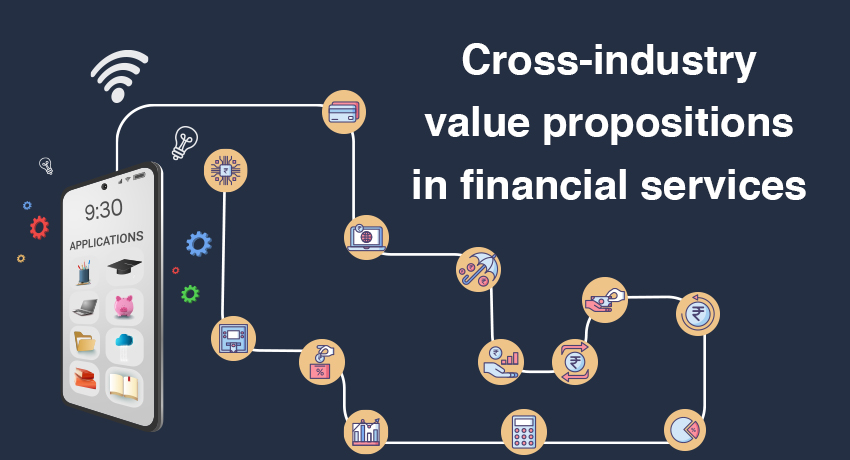
The realm of financial services is turning highly dynamic to match the preferences and needs of the audience. Financial service providers are quickly shifting from product providers to service providers, thus paving the path for the emergence of cross-industry value propositions. Partnerships, alliances and an understanding of value addition have played a major role in facilitating an ecosystem to address and cater to non-financial offerings. Fintechs, followed by traditional financial institutions, started with the intent to introduce financial services as a part of everyone’s everyday life. Terming it embedded finance, they integrated financial services to non-financial businesses for ease of use and to ensure an end-to-end customer journey. From daily necessities to non-essentials, embedded finance covered all the needs. Furthermore, the intent to provide a frictionless experience ensured financial institutions were constantly innovating thereby making themselves relevant in the lives of their customers. The interaction and personalized offerings make them not only the primary bank or insurer but the personalized primary service provider. Fintechs have invested heavily in brand recall, personalization and security to onboard as many customers and build an unforgettable customer experience. This trend is predominantly observed in Asian Markets with service providers like PayTM, PhonePe, Google Pay, etc. For instance, Whatsapp, a messaging platform, has integrated UPI on its platform to offer end users a cross-industry value proposition. Non-financial businesses like Ola and Uber have also integrated payment and insurance options on their platform to allow passengers to complete their customer life cycle on a single platform. Moving towards innovation, Fintechs are now working on further transforming the financial world by building Super Apps and competing with the BigTechs. Although there is talk about BigTech’s monopolizing Super Apps space, several Fintechs are working around it and devising unique propositions that are worth a collaboration. Even public-listed Fintechs like Niyogin with a unique business model are participating in empowering non-financial businesses by offering Banking as a Service (BaaS). Niyogin’s platform, NiyoBlu, offers customers a complete life cycle. Customers can avail of credit, insurance, investments, banking products, payment products and much more on a single platform without having to leave the app. By integrating and embedding all the financial services on a single platform, Fintechs like Niyogin is a winning game because they cater to current customer preferences. As an organization that focuses on financial inclusion, the cross-industry value proposition for Niyogin means to serve the underbanked by empowering small local businesses. Since the focus is on a specific customer segment, Niyogin has successfully built a specialized proposition around the said segment. To conclude, the cross-industry proposition is a tool for Fintech and non-financial businesses alike to expand their service stack and offer their respective clients a bundle of services under a single customer life cycle.
Future Fintech growth drivers
India has attained the title of the world’s third largest Fintech market with 7,460 Fintech companies, following US and China closely with 22,290 and 8,870 Fintechs, respectively. The Indian fintech market received $29 billion in funding across 2,084 deals to date, attaining a 14% share of the global funding and a #2 spot on the deal volume. Furthermore, India’s fintech sector’s CAGR grew by 20%, which was higher than that of the US, UK and China which witnessed a growth of 16%, 15% and 10%, respectively. Recording over $800 billion in annual payments transaction value, Fintech has made a remarkable contribution to the Indian economy by its virtue of state-of-art products and an inclusive approach to cater to every Indian. The future of Fintech in India looks encouraging owing to several economical, regulatory and preferential factors. Listed are a few future Fintech growth drivers – Upstarts have profited from government and regulatory efforts like the Jan Dhan Yojana and Aadhaar implementation to further their mission of inclusivity through financial services. With over 472 Jan Dhan accounts, the government of India has provided Fintechs a base to build upon. Fintechs can leverage the penetration and offer financial services to these individuals easily, for example, Domestic Money Transfers. Millennials and Gen Z are highly receptive and adaptive to innovation and technology. This gives Fintech an edge to build a technology-led financial ecosystem and penetrate every segment of society. For instance, upstarts have designed teen cards for the blooming youth of India. This not only gives the young generation a sense of financial independence but also spreads financial literacy stemming from the provider they choose. Fintechs are now targeting specialized financial domains to strengthen their limited product stack. For instance, platforms with standalone services like wealth management, insurance, credit, peer-to-peer lending, etc are offering customized and tailor-made products to display their strength in specialization while ensuring the customer is covered in every aspect of the said functionality. In a country with one of the fastest-growing start-up ecosystems, the world’s second-largest internet user population and a highly adaptive population, Fintech is not only bringing innovation but also ease and security to the table. Millennials and Gen Z are receptive to change and are keen to switch payment methods, i.e., from cash to digital payments. With existing databases and analysis, Fintechs can leverage the information to design increasingly localized and customized products and services. New business opportunities may emerge through B2B and B2C relationships with firms operating in the banking, e-commerce and logistics space. Upstarts can leverage the ‘digitization revolution’ and can possibly form alliances with non-digital and non-tech companies too to bring their innovation and product to the market. Embedded finance propositions are expected to increase, with banks seeking help from Fintech providers to expand their capabilities with embedded finance, digital wallets, and supply chain solutions. Cloud hosting and Open APIs are enabling Fintechs to launch new products rapidly. Regulators have taken the initiative to leverage technology for facilitating digital penetration. The UPI system was leveraged to introduce UPI123Pay to facilitate the digital enablement of over 40 crore feature phone users in the country. The Payments Infrastructure Development Fund (PIDF) has been created to boost the growth of acquiring infrastructure. RBI has issued guidelines for offline payments, tokenization, and regulatory sandbox. Reimbursement of Merchant Discount Rate (MDR) on RuPay card and UPI transactions have been declared as well. Recently, RBI also proposed to allow the linking of credit cards to the UPI platform. Due to this, credit cards are expected to become more accessible through QR codes without the need for a Point of Sale (POS) machine. Although Fintech business models are not yet designed to generate profits, the future looks quite promising given that the entire financial ecosystem is shifting online. Moreover, with the regulatory framework being put in place by respective regulatory bodies, Fintechs seem to be on a path to success!
Trends in Fintech for 2023
The year 2020 and the succeeding period have been choppy on many fronts. From the outbreak of the pandemic, war threat and crypto market crash to the current speculation of a potential recession, together, the instability on an economic front has massively impacted the financial ecosystem too. Although individuals, businesses and countries at large have been adaptive to this highly dynamic environment, an element of lag persists. Going forward, businesses will further adapt to this volatility and may design flexible services. The way individuals and businesses interact with one another will play a major role in defining the journey of service. On a financial front, this means devising services that have a robust security system, innovative technology and smooth customer journey. The coming years are going to be pivotal in the transformation of the financial ecosystem. Here are a few trends to look out for in 2023 that have the potential to transform finance and technology – Increase in the number of banks that offer embedded solutions Embedded finance is on an upward trajectory over the past year and is expected to gain even more traction given the scenario. Several banks are looking to become service providers to non-financial institutions that are looking for ways to enhance customer experience by offering financial services as a part of their larger offerings. For instance, service providers like Ola and Uber now offer insurance to passengers on their platforms at a very minimal rate. This not only extends their service stack but also ensures a superior CX and reliability. Another relatable example is Whatsapp integrating UPI service on its platform for a quick and hassle-free payment system. With the introduction of Fintech, businesses can expand their product stack substantially while ensuring an enhanced CX. Fintechs to reinvent themselves as data organizations Several Fintechs may reinvent themselves as data organizations that have integrated financial services like payments and other financial services too on their platform to differentiate themselves in the eyes of potential investors and alliances. For instance, businesses that calculate credit scores for consumers also let out their information to their potential clients to target the said audience. While their primary business is ascertaining scores, their secondary business line allows them to reinvent themselves. Stronger focus on developing tech solutions in other countries Currently, India stands second to China in the effective adoption of Fintech. However, several developed countries are still struggling to implement Fintech owing to economic, cultural and psychological factors. Countries that are underdeveloped when it comes to financial services are expected to witness increased interest among investors. For instance, Singapore and India have collaborated to link the United Payments Interface (UPI) and PayNow through the Reserve Bank of India (RBI) and Singapore’s central bank, the Monetary Authority of Singapore (MAS). This will pave way for easier transactions between and within the countries. It is further expected that more deals are likely to happen in developing economies including Southeast Asia, Africa, the Middle East and Latin America. Increased scrutiny by regulators of embedded finance offerings The regulatory awareness and intervention are expected to increase in the coming 6-12 months as the number of non-regulated entities embedding and delivering finance offerings increases. The regulators will seek to protect the customers by clarifying issues like available recourse and accountability for transactions done by Fintechs. The Reserve Bank of India (RBI) has already set strict guidelines for digital lenders in the market. The growth in the number of digital lenders was hampering the interest and safety of the end users and therefore, a robust regulatory framework was required. Even a simple quiver in the financial ecosystem could send trembles across the economy and therefore, it is a vital part of the functioning of every business. Its virtue of having a profound impact on your business makes it a domain worth close tracking!
Digital payment methods bringing inclusivity
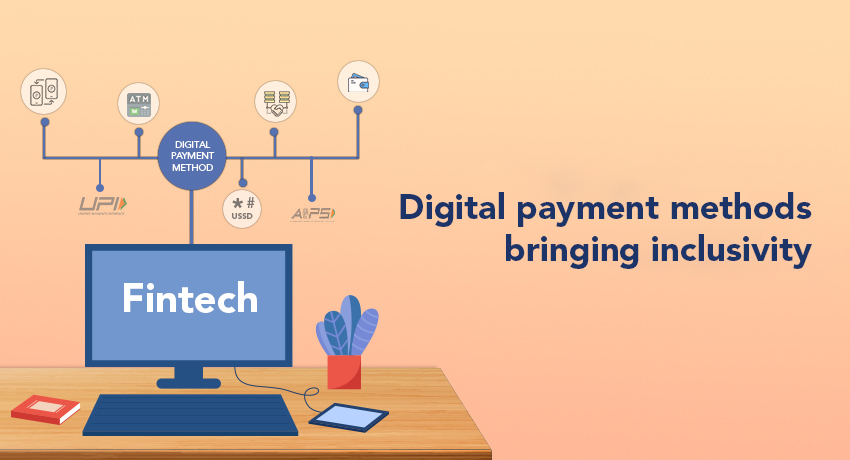
Constant innovation, agility and customer centricity have been a strong forte of Fintech. Leveraging its ability to enforce flexibility owing to its downright digital functionality, Fintech has eased common financial-related tasks. Furthermore, the transparency it has brought by eliminating unnecessary intermediaries has helped it gain the trust of end users. These attributes also happen to be the focal point for a one of its kind Fintech, Niyogin. To be able to enable last mile users is a way of empowering the society for Niyogin! This empowerment comes when individuals can make decisions and undertake their financial tasks. Although the underserved also happen to be the ones with limited digital literacy, Niyogin offers customer-centric services that fill major gaps. Through its diverse digital payment products, Niyogin ensures it designs and launches services that are beneficial to each individual irrespective of demography thereby bringing the population under one net. Digital Payment Methods 1. Unstructured Supplementary Service Data (USSD) The majority of the underserved population own a feature phone that is incapable of accessing an internet connection. USSD targets this underserved public by offering them financial service that does not require an internet connection. Individuals can undertake mobile banking transactions, make balance inquiries and access mini statements through USSD channel. This service offers the public a basic financial service essential to their everyday financial task. 2. BHIM-UPI The Unified Payments Interface (UPI) is a system that combines several banking services, frictionless fund routing, and merchant payments into a single mobile application (of any participating bank). It also handles ‘Peer to Peer’ collection requests, which can be scheduled and paid for as per the user’s need and convenience. Each bank has its own UPI app available for Android, Windows, and iOS (s). UPI has enabled several Indians to make payments from anymore to anywhere with a single click. It has reduced our dependency on physical money and therefore created a smoother transaction journey. 3. AePS Aadhar Enabled Payment System (AePS) This service goes beyond the need for an internet connection or even a basic feature phone. Individuals residing in the interiors of India are often deprived of basic amenities and owning a phone may come across as a luxury for such individuals. This challenge restricts the masses to access basic financial services and to combat this challenge, AePS was launched. AePS is a bank-led model that enables online interoperable financial transactions at PoS (Point of Sale/Micro-ATM) using Aadhaar authentication through any bank’s Business Correspondent (BC)/ Bank Mitra. 4. Mobile wallets A mobile wallet is a device that allows a user to carry cash in a digital form. One can use their mobile device to attach their credit card or debit card information to the mobile wallet application and transfer money to another mobile wallet online. Although the rural population in its entirety may not be the target audience for mobile wallets, however, this comes as a respite for the tech-savvy urban population, especially the millennials and GenZ. 5. Micro-ATMs or m-ATM MicroATM is a device used by Business Correspondents (BCs) to provide basic financial services in rural areas. BCs are typically local shop owners or Kirana owners impaneled by Niyogin with MicroATMs installed in their stores to enable customers to deposit, withdraw, transfer and make balance inquiries. For the 900 million rural population, financial services were a luxury given the risk and infrastructural challenges attached to servicing them but with innovative devices and strategies, this crowd is being included within the financial realm. 6. Bharat Bill Payment System (BBPS) The government of India, a critical stakeholder in the development and inclusion of the underserved, are actively taking initiatives towards increasing water and electricity supply in rural areas. This move is expected to propel the growth in utility bill payments. For the last-mile users who have limited to no literacy, assistance in financial-related decisions will prove to be a path to acceptance too. 7. Account Aggregator (AA) There are several consent managers under the Data Empowerment and Protection Architecture (DEPA), whose main aim is to empower every Indian with control over their data. AA is one of the consent managers exclusively meant for financial data that manage consent for financial data sharing. These consent managers are ‘data blind’ and ensure encrypted data flow. They democratize data access and allow secure portability of confidential data between service providers. With over 65 million migrants hustling outside their origin-village, Domestic Money Transfer is an essential financial service they seek and with the help of AAs, a transparent and secure transaction is a reality for them. 8. Domestic Money Transfer (DMT) Over 65 million migrants scatter throughout India in search of better opportunities to feed their families. However, because they do not have local bank accounts, money transfers and banking access are difficult for this consumer group. Customers who use DMT- enabled outlets can convert their cash savings and remit them to their own or family’s bank accounts at any time. This service also eliminates unwanted intermediaries, therefore, making the entire process safe. For the Urban population, digital payments are a necessity whereas, for the rural population, it is a luxury. A lot can be accredited to unequal opportunities, risk and literacy. However, with numerous government initiatives in collaboration with a strong vision Fintech like Niyogin, luxury is slowly changing into an everyday reality for the rural population.
Fintech Leveraging Partnerships
Not too long ago, traditional businesses would attempt to build internal proprietary solutions and would dignify the production of such internal developments. It allowed them to distinguish themselves from the clutter and emerge as a leader by virtue of their catalogue of internal technological developments. While partnering with Fintech helped traditional businesses to fill their digital restraints, make use of legacy data effectively and scale their business, it reciprocated by allowing Fintech to display their technological agility, allow market penetration and ensure acceptance owing to their brand recognition hooked to it. Where a majority of us highlight how businesses have leveraged this opportunity, Fintech has equally grabbed growth and progress opportunities through these partnerships. As various business ecosystems continue to evolve to become more complex and crowded, it is rudimentary to pick the right partner to ensure equitable growth for both counterparts. A profitable arrangement between the incentives and alignment of the strategic objective of both counterparts is the key to designing a successful partnership. Niyogin, a one of its kind public listed Fintech, devises effective ways to leverage partnerships that provide an enriching journey to both. By ensuring stickiness in 3 critical ways, Niyogin strives for a long-lasting partnership – Platform integration Being a technology-first firm that deeply believes in the potential and growth of digitization, Niyogin ensures that its infrastructure is smoothly and deeply integrated with its partner’s platform. This enables both parties to undertake tasks efficiently and transparently. For instance, Niyogin provides vigorous training to its Village Level Entrepreneurs along with providing its solution to ensure the end users avail the platform’s benefits to the last mile. Furthermore, given that rural individuals lack basic digital literacy, this training educates them to use technology efficiently and to their benefit. Although this process is time-consuming, it ensures seamless service delivery. Platform capability Niyogin is continually enhancing its platform’s capability to ensure the best-in-class customer experience. By ensuring frictionless and high success rates at the time of transactions, the platform not just helps in building trust among rural individuals, but also helps build the trust of partners and quality of service. Underpinning Niyogin’s commitment, it launched its proprietary switching platform “iswitch” on NPCI’s NFS network, in partnership with IndusInd Bank to provide a frictionless end-user experience at scale, whilst remaining fully compliant with regulations. Broadening of the product stack Niyogin is focused on building a larger product stack to provide customized solutions and augment network monetization for partners by increasing the prospects to cross-sell. For instance, Niyogin’s insurance leg markets insurance policies for some of the industry leaders. While it acts as a promising partner to these alliances, it ensures the end customers can avail of all financial products on a single platform NiyoBlu. This is a classic case of expanding its product stack by leveraging partnerships. Interest-aligned partnerships ensure both counterparts remain focused and ahead of their competitors through collaboration, technology leverage and a cut-throat strategy accelerating engagement with end clients. The collaboration is not just between two businesses but it’s the coupling of skills and opportunities furthering each stakeholder’s growth!
Why small businesses should have a financial review?
Introduction A financial review is a review of a company’s financial records that provides confidence in the credibility of its financial statements. A review, unlike an audit, is more limited in scope, assessing a company’s financial statements while restricting the study to analytical techniques and management evaluation. A review can establish the plausibility of a company’s financial statements, identifying if financial statements are free of serious misstatements and satisfy generally recognized accounting rules. A review is usually assumed to be an initial step toward moving into an audit the following year. However, this is not always the case. A review, however, has its own set of advantages. Having financial statements evaluated provides an additional, unbiased pair of eyes on a company’s financial accounts, whether Internal or external. This can assist give additional security and trust to a company, its board of directors, lenders, and investors. A financial review can be highly beneficial for SMEs. Why? SMEs should regularly examine their comprehensive financial records to acquire a better understanding of their performance and adjust accordingly. Aside from enhancing financial reporting efficiency, the financial review allows small businesses to properly reflect on company performance, which can help them identify opportunities, as well as management of risks. In addition, this strategy can assist in lessening the likelihood of negative business shocks at the end of a financial year. How to conduct a financial review? Accumulation of books of accounts and records, assessment of its completion, and quality of work. A systematic review of the books of accounts ensures that accounting standards and regulations are complied with. Review of all the income and expenses, double-checking the money coming and out of business Review the payments made to ensure all the vendor payments are done as agreed. There are a few fillings that each business needs to do. Like GST, TDS, and other statutory liabilities, a prompt follow-up on the same A check on the efficiency of financial control policies Each business follows a reporting structure, a check on whether it followed. Proper procedure. Filling of the findings of the review What to expect from a financial review: Analysis Checking compliance with business regulations should be part of the financial review process. The review must, at the very least, include a description of the company’s revenue and expenses, such as the payment of supplier invoices and personnel costs. In addition, reviewing the company’s current assets, plans for future capital investments, and how they can use government support is a good idea. Tax Matters SMEs should check to see if any upcoming tax changes could have an effect on the company in the forthcoming year. After the fiscal year, adjustments to corporate operations, personnel counts, or spending may also impact taxes. A financial review can aid in such an assessment to maximize tax efficiency. Review of objectives The end of the year serves as a helpful reminder for SMEs to update their business and marketing strategies and plans to keep them in line with the larger economic climate. A financial review can be regarded as a checkpoint where any required additions or alterations to defined goals can be done. Technological adaptability The secret to corporate elasticity is achieving the highest operational and cost-efficiency levels. It’s crucial to think about how corporate operations are being carried out and where there may be room for adaptation of modern technologies to carry out tasks more quickly, intelligently, and effectively. The use of digital solutions by many SMEs has streamlined manual procedures and allowed staff to concentrate more on revenue-generating activities. Final thoughts A financial review enables small businesses to keep a systematic check on the efficiency of the financial books of the business. Proper maintenance of books with all protocols implemented can help a business save a lot of hassles, time and money. A financial review can be performed with the help of a financial consultant. Visit Niyogin and learn how a small company’s financial review may help you define your business goals. A business owner has the knowledge required to make crucial business decisions that will enhance operations and enable you to expand effectively in the coming year by extrapolating books of accounts and conducting financial modeling.
The Untold Story of Cash Flow Management of SMEs
Introduction: The process of measuring, monitoring, and optimizing the number of net cash receipts minus the costs incurred by your firm is known as cash flow management. An important factor that establishes a company’s financial health is its cash flow. It is quite crucial for a small company. This is because the company will quickly experience cash flow issues if it spends more than it makes. The most important cash flow component for small firms is to prevent any substantial cash flow constraints brought on by excessive expenditure. CGTMSE Loan: Credit Guarantee Fund Trust for Micro and Small Enterprises is the full name of the organization. Financial institutions offer this fund to ensure credit to MSEs and SMEs. This program helps aspiring entrepreneurs to start an SME or MSME. These companies are regarded as the Indian economy’s bulwark. The advance is paid back thanks to the guarantee, which takes care of the borrower’s default. Thus, Niyogin helps with credit aggregation as part of their Urban Tech Portfolio. Eligibility Criteria: The credit guarantee is considered to back the borrower with collateral and a third-party guarantee by the CGTMSE rules. A financial institution, which may be an NBFC, loans money to the MSME and SME sectors under this program and these companies are qualified for a fund with a maximum credit cap of Rs. 2 crores. Problems of cash flow management in the Indian scenario: Unfortunately, India’s habitual late payment cycles make it difficult for SMEs to manage their cash flow. According to a recent IFC survey, 35% of Indian SMEs don’t get paid till 90 days after the products or services are provided. This implies that a significant portion of the SME’s revenue, which should ideally be accessible, is locked up as receivables at any given time. When the SME’s cash flow is out of whack, it must either delay making crucial business decisions or risk defaulting on its obligations. Having said that, India’s micro, small, and medium companies (MSMEs) are undeniably a force to be reckoned with. They are hailed as the economic growth engine. Right now, 111 Million jobs in the nation are solely attributable to this 63-million-unit sector. Also, in 2020–21, MSMEs contributed close to 29 percent of India’s GDP. The way forward and role of Niyogin in such effective management: Businesses requesting loans must list their assets and produce a cash-flow statement. Even without any assets to back them up, cash-flow-based money lending enables businesses to borrow money based on the projected cash flow of the money. For firms, such as SMEs, that cannot use tangible assets as security, cash-flow lending (CFL) is the ideal option (small and medium-sized enterprises). SMEs typically keep their assets and sales below a specific level; therefore, cash-flow loans benefit these businesses. Thus, Niyogin plays an anchoring role in providing an umbrella solution to such micro cash management problems. Therefore, a timely infusion of funds can help SMEs manage their cash flow and overcome problems caused by late payments, unplanned expenses or costs associated with expansion plans. SMEs can effectively simplify their finances and foster growth even during periods when they may not have as much cash inflow as anticipated by utilizing cost-effective working capital.
How to save on taxes as a small business

Running a business is certainly no easy task. There are a lot of legalities involved in it, and the most important one is filing business ITRs in time. It’s a standard practice for small business owners to find ways to save on taxes. Every little amount saved is precious for small business owners. Here we discuss 10 simple ways of saving on tax. Being financially organized One of the most important ways of saving on tax as a small business is by being organized. Always file your income tax returns on time. Ensure you have made sufficient investments under Section 80 C and 80 D to claim exemptions. Always keep a separate business account, use bookkeeping software to track the banking transactions, and last but not least, as a small business owner, keep all the receipts of your transactions. Always make tax deductions at the source Many small business transactions need to consider service providers or buyers to make tax deductions. For instance, if you pay Rs 200,000 as a commission to your business agent but forget to deduct TDS @10%, the whole 200,000 will be disallowed while doing profit calculations. Apply for a business loan Another way small business owners can save on tax is by applying for a business loan. Tax exemptions could be availed based on the business loan interest rates. Avail of home office deductions Many small businesses operate from home. You may be surprised to know that you can claim tax exemption under ‘home office deduction’. You can give the details of your utility bills, property, and mortgage tax. Save by showing preliminary expenses To help small business owners, the income tax department allows the new entrepreneur to divide the initial business set-up cost into five instalments. It includes market study, project report, and other expenses under Section 35D of the Income Tax Act, 1961. Save tax on the spending of high-value items When we start a business, we often purchase high-value items like printers, furniture, computers, etc. Over the years, the value of each high-value item gets depreciated, and the capital spent on each item will help save tax on the small business owner. Medical insurance is essential A small business owner can claim tax exemption up to Rs 15,000 on the premium paid for medical insurance as per the Income Tax Act 1961. This is one of the easiest ways to save money on taxes. Save more on client expenses Whether you are running a small or big business, you have to meet and interact with new and existing clients to build strong relationships with them. For this purpose, parties are organized, and lunch and dinners are hosted. But to claim tax exemptions, a small business owner should keep the bill copies and later add the same to accounts under the head ‘Client Expenses’ according to Income Tax Deduction requirements. Avoid making cash payments Even if your business is small, avoid making cash payments above Rs 20,000. The reason is that the Income Tax Department of India disallows cash payments and considers mainly cheques, draft, NEFT, or RTGS. For instance, if repairs are being conducted in your factory and you pay above Rs 20,000 in a single day in cash mode, the Income Tax Department will not consider those expenses. File ITR on time The Income Tax Department suggests filing ITRs on time to avail of benefits. You can carry forward the business income losses for a consecutive eight years. You can move forward only when you file ITR punctually. Bottom line With wise financial planning, you can save a lot on taxes. You can consult tax professionals for help with obtaining the most tax exemptions.
Is India ready for Peer-To-Peer lending
The rise of Peer to Peer lending in India On the back of technology, fintech has grasped the depths and breadths of the Indian financial ecosystem, from remittances to virtual banking to insurance authentication and financial profiling. Peer to Peer lending, a rising sector in India’s fintech scene, made its debut eight years ago, but thanks to the country’s rising credit demand, the industry is currently creating the groundwork for rapid expansion. Peer to Peer lending, which is driven by technology, has designed a reliable loan and borrowing process while opening up banking functions to the general public. By connecting potential investors and people looking for loans, the portal opens up the market for lending partners as well. Broadening the horizons of Peer to Peer lending Even though the market is still in its early stages, Peer to Peer has begun to acquire traction in India. However, the 2017 RBI recommendations addressed some of the industry’s major issues and cleared several unregulated practices. The notification issued by RBI compelled all Peer-to-Peer lending platforms to register as non-banking financial entities (NBFCs). The RBI has also reduced the upper limit criteria for lenders on the Peer-to-Peer platform from 50 lacs to 10 lacs, a regulatory step that the industry has widely praised. Furthermore, the RBI has encouraged all Peer-to-Peer operators to establish a trustee to supervise the movement of payments between escrow accounts of borrowers and lenders. According to the apex body’s requirements, the trustee must be bank-promoted to maintain proper platform supervision. Such regulatory measures have been pivotal in increasing the confidence of both the borrowers and the lenders while ensuring that the process remains transparent. Why is Peer to Peer lending crucial in today’s market? Peer to Peer lending platforms caters to the financial requirements of a huge segment of the population that would usually be excluded from the traditional credit industry. The pandemic, which compelled banks and financial institutions to be prudent and restrain liquidity, expanded the country’s credit deficit even further. Peer to Peer lending has been working hard to overcome this disparity while also creating favorable credit and borrowing environment. The loan industry has grown significantly in recent years, with the size and quantity of lending platforms steadily increasing. Riding the economic upswing, impending holidays, and a boost in consumer attitudes, the sector is offering personalized solutions and products to meet the country’s rising credit demand. What makes Peer to Peer lending so appealing? The earnings on a Peer to Peer lending platform, which vary between 11-13%, are considerably higher when compared to savings deposits or mutual funds. The platform is rapidly growing as a new-age, alternative asset class that is progressively reshaping the investing environment in the country, with the simple premise of identifying borrowers asking for quick capital infusion and connecting them to lenders looking to make large returns. Lenders are executing the proper loans in a timely and safe manner, while also gaining exposure to new markets, and borrowers are now able to receive credit readily even in the country’s most isolated town or village. Businesses can expand their borrowers’ base by gaining access to customers who have been denied loans by traditional banking systems, thanks to their quick clearance procedure and effective complaints channel. So, is India Peer to Peer lending ready? India is the world’s second-fastest-growing economic powerhouse. Millennials, as young as 21 years old, nowadays are focused on living their life to the fullest, even if their resources are restricted or limited. People are wanting money to be available practically instantaneously to meet these needs, which is why they are turning to newer routes of finance such as peer-to-peer lending in India. The Fintech sector in India has a considerable number of firms with feasible opportunities that are regulated by the RBI and flourish in their area on the foundation of predictive stats, a solid back-end network, and effective collection and recovery methods. Peer-to-peer lending is fundamentally transforming the Indian fintech environment by giving every Indian the opportunity to avail of instant credit. Because of this, India is becoming more credit-inclusive, which is helping investors access quality asset classes.
Best Way To Secure Your Next Loan
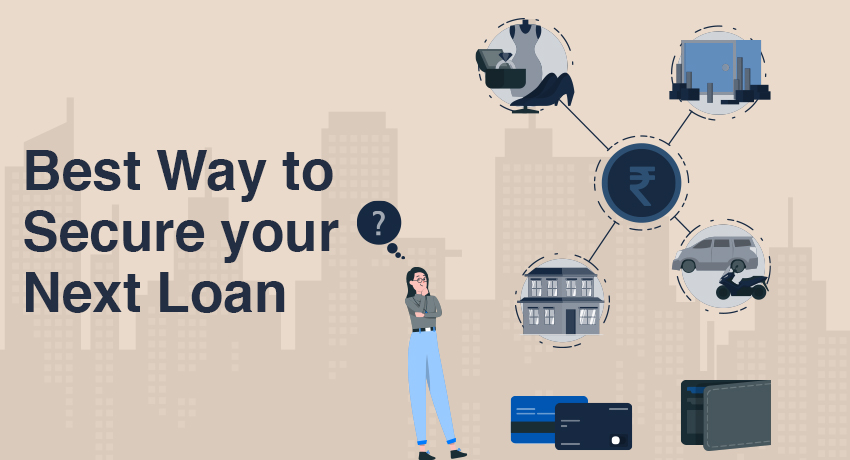
What is the Niyogin Platform? Niyogin, a national neo-banking platform, aims to provide financial assistance to small and micro-scale enterprises. It gives SMEs and the unbanked access to funds and envisions enabling them with technologically-advanced solutions. Niyogin is a technology-first platform that embraces the entire MSME landscape from rural to developing metropolitan areas. The platform aims to aid the government’s efforts of financial inclusion and financial literacy along with smooth credit, investment, and cloud-based software services. The Niyogin Platform: Objective The neo-banking concept aims at developing technology-based banking channels. Neobanks are online-only financial institutions without physical locations. As a result, lending institutions powered through Fintech companies and a network of channel partners provide accessibility to the unbanked to aid their different banking requirements. Niyogin offers various services, including lending, money transfers, and mobile-first financial solutions. The Niyogin digital platform provides impeccable solutions to customers by making the experience accessible, seamless, and smooth. Making banking transactions smooth swiftly includes the unbanked in formal finance. How does the Niyogin Platform work? Rural Tech – Rural Tech of Niyogin, powered by the iServeU platform, enables registered partners and their retail locations to assist rural residents by offering local financial services. Urban Tech – Its Urban Tech functions through a distribution network of financial experts supported by product partners. The aggregator platform offers MSMEs simple, total digital credit access (traditional banks & non-banking financial companies). For a smooth flow of credit and ease to its customers, the Niyogin platform forms a strategic alliance with financial institutions, enabling it to deliver services efficiently. How can you secure a loan through the Niyogin Platform? Niyogin Platform’s Urban-Tech segment deals with credit Solutions. There are two types of loans that members can avail themselves of: Secured loan Against Property. Against Security. Unsecured Loans Whether there is a need for a business loan, a need to avail of a buy now pay later credit or a working capital loan to buy machinery; with the Niyogin platform, one can avail of all types of unsecured loans. Niyogin works towards the enablement and advancement of small and micro industries through easy credit availability in a more straightforward form. With one click on the link, enquire about the loans, and a financial partner will get in touch the same day to demonstrate Niyogin’s seamless credit process. Features Completely digital process. Quick approvals against security. Higher level of credit against a property. A highly competitive interest rate. Easy EMIs. Eligibility check is just a 3-step process Apply for the loan with the Niyogin Platform. Provide the necessary application details. And voila, you are pre-qualified. A prequalification technically means that if all the provided data, KYC, and other conditions of the partner institutions are clear, one can get a loan quickly. Why Niyogin? It is all about infrastructure; the Niyogin platform aids in utilizing the technologically advanced way of securing credit. With platform-based applications and various formats of credit availability, a customer enjoys the features of cutting-edge Neo banking. Final Thoughts The Niyogin Platform is designed to encompass the solution to the problems that small and micro businesses of India face, especially regarding access to credit. Niyogin Platform is an accurate picture of fintech in neo-banking. To secure a loan with the Niyogin platform, reach out by filling out the inquiry form online.
Future of Finance
Introduction India is unquestionably leading the fintech revolution, and the pace of innovation and technical development worldwide is unmatched. The fintech landscape in India has experienced high-speed expansion with the aid of enablers like widespread internet usage, broad area network coverage, quick technological adoption, and epidemic-enhanced digital penetration. Customer expectations, the need for reliable, safe services and a demand for a more accessible financial environment have all dramatically increased due to growing globalization and consumerism. Credit and finance for MSMEs Many micro, small, and medium-sized firms (MSMEs) in India find it difficult to access traditional banking channels. Therefore, the adoption of digital-lending platforms by small businesses has increased in the aftermath of COVID-19. The digital platform’s MSME loan book has witnessed growth over the previous year, thanks to the ability to apply for instant financing digitally. Traditional and new-age borrowers from India’s rural and metropolises have been drawn to the digital channel by the rapid use of smartphone devices at affordable prices and the penetration of the internet. This point is where the neobanks enter the picture. These fintech service providers offer customers financial and banking services that are more convenient and cheaper than traditional banking. Banking service providers like Niyogin offer impact-centric solutions and have created the “Neobank” platform infrastructure to drive MSMEs in rural and urban areas. Governmental support for MSME financing in general Digital-lending platforms have also participated in the Emergency Credit Line Guarantee Scheme (ECLGS). The government introduced this scheme as a component of the Rs 20 lakh crore Atmanirbhar package in 2021 after COVID-19. Under the fourth version of the plan, ECLGS 4.0, the Ministry of Finance has issued an extension of the Rs. 3 lakh crore Scheme from June 30, 2021, to September 30, 2021. Last month, finance minister Smt. Nirmala Sitharaman increased the cap by 50% to Rs. 4.5 lakh crore. On June 28, 2021, the minister said that 12 public sector banks, 31 NBFCs, and 25 private sector banks had distributed Rs 2.69 lakh crore to 1.1 crore units on behalf of the government. Digital literacy Work in Progress for Rural India: The core of financial inclusion in India is Digital Financial Services (DFS). Digital illiteracy hinders the adoption of DFS in rural regions. Despite the government’s efforts to build a linked digital infrastructure, it directly impacts how well-liked digital products are. Limited digital proficiency deters people from using e-banking services due to a lack of trust in technology, the inability to operate smartphones, and inadequate network access. Thus, cash is still the primary method of payment in rural India. Tryst of COVID with the acceleration of digital finance adoption Contactless digital payments can promote the social distancing policies put in place in several nations that aided in halting the spread of COVID-19. Digital payments make it possible to complete transactions and provide financial aid to needy individuals. It is helpful when other disbursement methods become difficult due to health regulations. Digital payment of public wages and other transfers (both G2P and G2B) is also more economical. The ability to provide monetary assistance to households, in particular the unbanked, women, and the informal sector, is improved by digital payment systems. Aadhaar-enabled Payment Services (AePS), offered by businesses like Niyogin, are urgently needed by vast informal sectors in many emerging nations. As a result, these technologies can also speed up transfers, particularly useful in the COVID-19 situation. Conclusion To advance their vision of Digital India, the RBI recently established a new fintech department that focuses on innovation. This RBI department is taking proactive measures to solve the difficulties and roadblocks mentioned above. For the growth of the businesses and the sector as a whole, leveraging collaborations with other fintech ecosystem participants to adopt new technology has become crucial. The future development of this sector will ultimately depend on regulation, cooperation and coordination.
Can Domestic Money Transfers Boost Financial Inclusion?
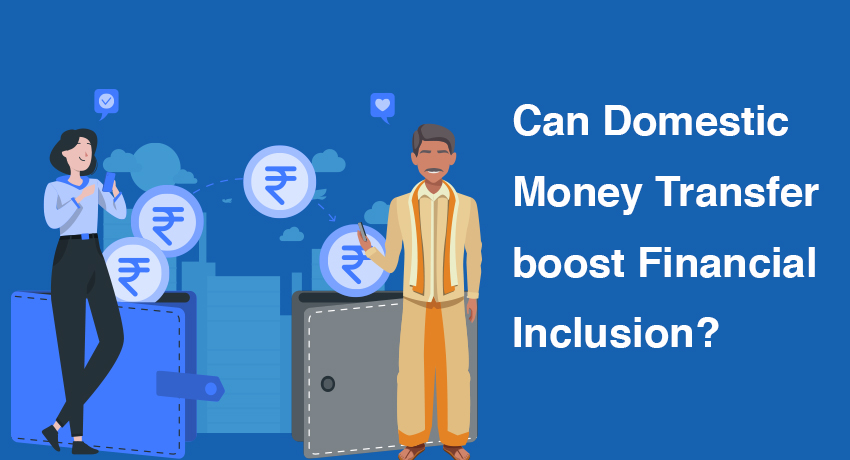
The words digital and automation have glided into our everyday life quite effortlessly. These buzzwords are also the reason behind the revolutionary financial ecosystem powered by the technology we experience today. With over 26,000 Fintech globally of which, India alone boosts 7,460, the word and functionality of Fintech have deeply penetrated commonplace. The ‘on the spot’ functionality that Fintech has accustomed us to has massively changed the way we take finance-related decisions. Whether it is UPI payments, BNPL, robo-advisory investments or digital credit lines, Fintech, with the help of Artificial Intelligence has undoubtedly revolutionized the way we function. However, to a large extent, these benefits are limited to the urban population given that the rural population lacks basic digital and financial literacy along with avenues. Of the 64.61% rural population, only 28% of rural Indians are equipped with internet-enabled smartphones. However, a poor level of digital literacy restricts them from availing of services that 35.39% urban population has access to. Certain financial institutions with a vision to uplift and empower the 900 million rural population have designed and launched unique business models leveraging existing infrastructure. For instance, iServeU leverages over 3 lakh + Kirana stores located in rural India to further their vision of financial inclusion. The question arises – what is the core service such uniquely positioned Fintech offer to boost financial inclusion? For 120 million internal migrant workers within India, accounting for 80% of domestic remittances, who may or may not be digitally literate and equipped, availing Fintech services is a far cry. Bank branches and ATMs are restricted from catering to the said population because they don’t grasp the concept of technology. However, tapping their pain point, i.e., domestic remittance is one way to begin servicing them. Most low-income migrants belong to India’s rural hinterlands where job opportunities are limited and follow a daily wage system. The majority of these migrants are therefore unbanked because of their profile, location, lack of literacy and opportunities. However, these migrants send money back to their villages through informal modes. A CRISIL report predicts that Rs 80,000 crore to Rs 90,000 crore domestic remittances industry will increase from 11% to 13% CAGR over the next few years. Trying to bring these migrants into the financial realm means offering them basic domestic transfer services. By spreading across 25,000+ villages and impaneling 3 lakh + Kirana stores, Fintech like iServeU offers families of these migrants the service of collecting money from the nearest store based on their fingerprints or Aadhaar card. Domestic money transfer allows migrants to send cash by simply presenting their Aadhaar Card. This entire process is driven by Aadhaar identification for seamless and transparent money transfers. A receiver can simply walk into the nearest Kirana store and access the money. This service is not only hassle-free but also highly secure. Furthermore, the elimination of middlemen helps save costs for the migrants. Where migrants were often duped or charged exorbitantly by middlemen and agents in informal setups, uplifting and educating them enough to resort to the digital method is the first step toward financial inclusion. Financial inclusion is the step towards equitable opportunities and growth. The urban and rural populations can never be weighed on the same scale owing to various restrictions and limitations but devising population and location-centric services may be a way towards inclusivity.
How Artificial Intelligence is Refining Buy Now Pay Later
Buy Now Pay Later (BNPL) is a form of credit line embedded at the point of sale when customers choose to purchase with the decision to avail of immediate credit. This form of credit line being embedded means customer is not directed to a separate platform for financial services or lenders. The decision is often quick and on the go with limited hard credit checks and no interest fees. BNPL has gained considerable popularity, especially amongst millennials and Gen Z. It is bringing an all-encompassing change in how we look at and avail of a loan. This drift can be easily attributed to dynamic customer expectations coupled with heavy involvement and acceptance of technology. However, the risks attached to it are real and increasing considering the absence of hard credit checks. According to a survey, India’s BNPL market stands at $ 3-3.5 billion as of FY 2022 and is projected to touch $ 45-50 billion by FY 2026. Furthermore, the statistics in the number of users is also projected to be on an upward trajectory from 10-15 million in FY 2022 to 80-100 million in FY 2026. Artificial Intelligence refining BNPL Ascertaining and analyzing customer preferences requires substantial data which traditional banks own in abundance. These banks benefit from the insight they receive from legacy data with the help of Artificial Intelligence (AI). AI can lead to better customer-centric services; BNPL is a classic example of this statement. While the notion of availing of a loan and paying installments is not new, BNPL has remodeled the way it is undertaken with the help of open APIs, cloud and artificial intelligence. Its integration has helped create new levels of speed, scalability, agility and security for offered customer platforms. The rapid gain in acceptance of BNPL also raises legitimate concerns from a regulatory point of view especially since the Indian regulatory framework has not sculpted a concrete policy for Fintech. Areas like credit and background checks, repayable ability and eligibility are and should be of growing concern. Knowing customers gives financial providers the initial blueprint of services they can offer and design for enhanced CX. However, understanding a customer’s financial personality, i.e., monthly income, spending obligations, past transaction history, job and salary status, etc., in depth is impossible to touch without the help of technology – Artificial intelligence. It allows the bank to retrospect individuals/businesses struggling with cash flow thereby letting the bank manage default risk by marking pre-underwritten credit risk. AI goes on to harness this data and provides a positive impact in the long run. A typical AI-powered scenario A classic BNPL purchase is presented with the provider bank’s payment option at the time of checkout. Customers are given options amongst amount, tenure, interest rate, etc as per their needs and convenience. A threshold is created by banks with the help of AI weighing various customer criteria. The customer is only presented with options viable to the bank in terms of risk-taking. To ensure a win-win situation, AI not only estimates and offers insights to banks but also offers budgeting recommendations, EMI adjustment options, affordability options, etc to the customers. For financial institutions, especially banks, BNPL is a stream of additional revenue that builds customer loyalty, trust and retention for existing clients while luring new ones with lucrative offers and rewards. Adding AI into the picture has only furthered the growth within a safety net of trustable data-oriented insights. On the other hand, for customers, BNPL is a means of affordable, formal and quick credit line that allows them to enhance their spending threshold and choices. Bringing AI into the picture for the customer means an enhanced customer journey and CX. Just as technology has penetrated deep into our lives offering service and usage opportunities for each domain, deep-diving into AI-related growth in the financial arena may also offer sustainable growth opportunities within the financial ecosystem.
Anticipated Fintech Developments
Since its inception, Fintech has shown novelty in every segment it has spread its branches to. Through practical collaboration with banks, Fintech has allowed traditional banks to lower their acquisition and service costs while making use of their unconsumed legacy data. They have enabled financial services to low-income groups in underserved areas owing to their digital asset-light model. Fintech can integrate loans, insurance, investment options, etc., and present it on a single platform through its technology-led approach. Partnering with Fintech allows banks to expand their customer service channels, resulting in higher user management, increased market reach for their products and network-wide cross-selling. Fintech has also introduced the concept of ‘Banking as a service’ that allows third-party organizations or partners to integrate financial services on their platform through open APIs. It allows businesses to offer digital financial solutions to their customers while nurturing a lasting relationship and evolving the component of a multi-product proposition. In the long run, Fintechs are expected to evolve as NeoBanks wherein banks can use Fintech’s frontend to open bank accounts in semi-urban and rural areas. Also, by acting as a transaction service provider, Fintechs will have access to large amounts of transaction data, that will act as a good data point for credit underwriting. Furthermore, the idea of NeoBanks aligns with financial inclusion and typically serves MSMEs and rural individuals. The reciprocal partnership between Fintech and other businesses is proof that Fintech has penetrated major segments and holds huge potential for the future. Here are a few anticipated Fintech developments – Expansion of Tokenisation RBI has expanded the scope of tokenization to cover additional use cases like laptops, desktops, wearables (wristwatches, bands, etc.), internet of things (IoT) devices along with card-on-file tokenization (CoFT). It will also ensure that the whole consumer check-out experience is preserved, in addition to improving card-related security. Tokenisation will boost small-value transactions for in-store and transit payments as the quantity and use of wearable devices across the segments rises. Introduction of Retail Digital Payment Solutions in Offline Mode A framework for retail digital payments in offline mode is being developed across the country by RBI. E-RUPI is a classic example of what the government envisions in collaboration with Fintech to bring the rural and other underserved populations under its net. This will extend the reach of digital payments even farther, providing new options for both individuals and enterprises. Building a marketplace crucial to enable the participation of rural users Building a financial services marketplace in underserved areas will be critical in enabling rural customers to participate in financial activities, which will come at the back of financial literacy and counseling on how to get started and use digital payments. As apprised by the Indian Finance Minister in her 2022 Budget speech, 100% of the 1.5 lakh post offices will be connected to the core banking system. Furthermore, a plan of establishing Digital Banking Units (DBUs) by scheduled commercial banks in 75 districts was announced to enable banking services to the last mile. Innovative Payment Services Driving innovative instant payment services like UPI 123Pay to digitize payments among customers with feature phones is expected to be critical to unlocking the widespread adoption of digital payments. The feature phone user can utilize UPI 123Pay to make payments using a pre-defined IVR (interactive voice response) number, payments by missed call, payments via an app created for feature phones or payments based on proximity sound. Digitization in various sectors Other sectors, such as e-commerce in rural areas with last-mile delivery and pick-up and drop services, could benefit from similar digitization. This might be expanded to include on-demand video and audio doctor consultations in local languages, as well as the delivery of necessary medicines. Furthermore, aggregating agri-services such as on-demand harvesting labor, farm equipment rentals, and warehouse space for storage would encourage rural and agri-focused clients to go digital. All of the above are expected to significantly scale the last-mile access of banking in underserved areas too and enable true adoption of financial inclusion across rural India. In today’s time, detaching fintech from individuals or businesses is an unworkable say. With consumers, urban or rural, becoming reliant on the convenience and security it offers, Fintech poses mass potential in the coming years.
Key trends in the Indian Fintech sector
The Fintech ecosystem is constantly reshaping and redefining traditional ways. The transformation in the financial arena is at an important stage, especially since the digital modernization of how we control and manoeuvre our finances. The noteworthy point amidst this whole transformation is how the government is not only accepting this revolution but also building sandboxes to further the growth. The reforms and assistance from the government have set the disruption in motion The financial ecosystem has spread its branches to various financial solutions and no longer are known only for financial assistance. They’ve evolved with technology-backed solutions that heavily rely on data, analytics and metrics to ensure a smooth customer journey while providing an array of financial services. The Internet has played a significant role in bringing this transformation to ease our lives; an element Fintech has leveraged the best to its benefit. Fintech has brought financial solutions to our fingertips. The evolution is set to break bigger financial barriers and here are a few key trends in the Fintech domain we can watch out for – WealthTech The estimated value of total equity in the Indian stock market was US$ 990 billion in FY2021, and it is expected to expand 2.3 times to US$ 2.2 billion in FY2026. WealthTech appears to be a lucrative business potential in India, thanks to expanding literacy, awareness and demand for financial assets, the addressable market has increased significantly over the years. InsurTech Insurance technology is the fastest-growing Fintech subsector in terms of market size. The addressable market is expected to grow around 6x from US$ 56 billion in 2021 to US$ 339 billion in 2025. For the next three years, the fast adoption of non-life insurance, which covers health, education, vehicles, and other areas, will drive the growth of this segment. Fintech SaaS The Covid-19 pandemic boosted the adoption of digital financial products and services among Indian SMEs, resulting in increased demand for Fintech SaaS solutions for app-based accounting and bookkeeping and no-code payment aggregation. In the following three years, India’s fintech SaaS industry is predicted to grow by 2.7 times, from US$ 4.6 billion in 2022 to US$ 12.6 billion in 2025. Buy Now Pay Later (BNPL) BNPL enables payment for goods and services. It is a method of short-term financing allowing consumers to make instant online or offline purchases and pay for them at a future date. The model has witnessed an increase in adoption among varied sectors including Fintechs and banks. BNPL is expected to grow at a CAGR of 45% touching US$ 15 billion and account for 9% of all e-commerce payments by 2024. The underlying vectors are supposed to be India’s large addressable market, low retail credit penetration and consumption-oriented mindset. Market Consolidation The higher a company’s market share, it stands to reason, the better its chances of a successful IPO, as it boosts investor confidence. In fact, significant market share is one of the key factors used by experts to measure a company’s competitive position. The current Fintech space is highly fragmented; hence, a flurry of M&A deals is expected to come about. Furthermore, the need for full-stack solutions to quickly acquire potential clients and new markets is expected to spur the top players on an acquisition spree. Blockchain Blockchain; a salient fragment of Fintech, has proven its potential for mass adoption in workflow dynamics. Its ‘highly secure’ characteristic has allowed its quick deep penetration into the financial ecosystem and is considered one of the most trusted technologies that enable safe, convenient and regulation-compliant transactions and investments. Quoted by our Indian Finance Minister, Nirmala Sitharaman, “use of blockchain technology will rise by about 46% in the next few years.” Major businesses are set to embrace blockchain technology to ensure a technology-led safe expansion of their businesses. These major trends can be a defining point for the financial ecosystem in the coming years given the awareness and adoption rate of the said trends.
The Global Economic Scenario and Fintech
Macro and Micro economic growth are paramount for all the business activities we undertake. However, as per the International Monetary Fund’s (IMF) World Economic Outlook Report of April 2022, the overall global growth is estimated to decline from 6.1% in 2021 to 3.6% in 2022. The ongoing Ukraine-Russia war and sanctions in Russia play a major role in the economic setback and are expected to contract global growth further in the coming months as it has a direct impact on several economic elements. Another contributor to the near-term global outlook is inflation, which has been on the rise even before the war began. In response to this, many central banks have tightened their monetary policy which has led to a rapid increase in nominal rates across advanced economy sovereign borrowers. A similar trend has been witnessed in emerging and developing economies as well. Moreover, low tax revenues in 2020-21 and higher COVID-related spending has eroded the policy space in several countries. As the Governments of major economies are working towards rebuilding the buffer, they are increasingly challenged by rising borrowing costs. Hence, given the low bandwidth, fiscal support is expected to decline in 2022 and 2023, particularly in advanced economies. In 2023, global GDP growth is projected to moderate to about 3.3%. This estimation is based on the assumption that the conflict would remain limited to Ukraine, further sanctions on Russia would exclude the energy sector and the pandemic’s health and economic impacts would subside over the course of 2022. Global Fintech Industry Total investment of US$ 210 billion in 2021 was driven by a record number of Fintech deals. This was mainly driven by funding from venture capitalists, wherein they made the highest-ever investments of US$ 115 billion surpassing their previous high of US$ 53 billion in 2018. Traction was witnessed in varied kinds of Fintechs, some of them are mentioned below- 1. Blockchain and Crypto Investments in this space soared from US$ 5.4 billion in 2020 to more than US$ 30 billion in 2021, given the increased recognition of the role of crypto and its core technologies in modern financial systems. While the growing traction has received high support from certain countries, some countries are either considering the development of digital currencies, while some countries like India and China have completely banned the mining and trading of cryptocurrencies. 2. ‘Buy Now Pay Later’ (BNPL) Another area that witnessed robust investments in 2021 was the BNPL space. Block (formerly Square) recently announced the acquisition of Australia-based AfterPay by 2022. The deal is apparently the largest M&A in the history of acquisitions in Australia, hence, the growth in this space is expected to continue. 3. Growing attention on core banking replacements Financial institutions have been under immense pressure to enhance their core banking systems to facilitate better customer experiences by leveraging the cloud and reducing their dependence on legacy infrastructure. This trend can be seen worldwide. In 2021, a growing interest was witnessed in Fintechs who can help with such services, especially for Tier 1 banks. Progress of the Global Fintech space Global investments in the payments space witnessed significant traction in 2021. Digital transformation, growing acceptance and use of contactless and digital payments and rising demand for alternative modes of payment like BNPL were the key drivers. The payment sector not just attracted annual record-high venture capital investments but also accounted for the largest M&A deals during the year. The Indian Economy India’s real GDP grew by 8.9% in FY2022, up from a contraction of 6.6% in FY2021, as per National Statistical Office (NSO). The real GDP was impacted in the first half of the financial year as the country dealt with possibly the worst health crisis it has ever faced. However, the GDP bounced back in the second half supported by consistent fiscal measures by the government coupled with monetary and liquidity measures taken by the RBI. Just when things were starting to normalize, the recent geopolitical conflict led to the loss of pace in the recovery and dampened the outlook again. Hence, India’s growth is projected to moderate to 7.2% in FY2023. Domestic Fintech Space Indian Fintech space witnessed a 2x growth in several deals and 3.7x growth in funding amount in CY2021 compared to CY2020. Further, the average deal size rose from US$ 19.6 million in CY2020 to US$ 33 million in CY2021.4 This was due to funding rounds by PineLabs, BharatPe, and Cred, among others. Of the same, digital payment start-ups received the maximum funding amounting to 48% of the total. The number of Fintech M&A activities also increased nearly 3x to 26 in CY2021 compared to 9 in the previous year. Out of the 19 Fintech unicorns in India, 47.4% of them belonged to the payments sector followed by WealthTech at 21.1% and InsurTech at 15.8%. This surge in investment activity is attributed to the increased scale and rapid adoption of digital payments in the pandemic, as well as the increased interest of regulators and policymakers in the industry. Other drivers have been technological advancements, the strong technology talent pool helping to rapidly build and scale Fintech business models. However, much has changed in 2022, as worldwide venture capital funding has slowed down. The situation in Ukraine, high inflation, and stock market volatility have prompted a flight to safety putting start-up values at risk. The total funding amount to Indian fintech companies was US$ 1.9 billion for 101 deals between January to May 2022. India’s digital payments business is at a tipping point, with revenues estimated to more than treble by 2026, from US$ 3 trillion now to US$ 10 trillion. In volume terms, the Indian digital payment market is estimated to exceed 21,700 crore transactions by 2026, owing to rising acceptance of established digital modes and novel payment options such as Buy-Now-Pay-Later plans and offline payments.
How are upstarts using a hyper-growth strategy?
The current era is one with rapid growth, expansion and visibility for businesses. This can be attributed to the digital wave that has taken over the world. Businesses are now able to touch base with a larger audience and investors, both of which allow them to grow at a faster pace. However, some businesses cross the standard mark and grow at a much faster pace than others. This phenomenon was first coined as ‘hypergrowth’ by Alexander V. Izosimov in 2008 for an article in Harvard Business Review. What is Hypergrowth? Also known as ‘blitzscaling’, hypergrowth can be explained as a phase of rapid expansion for a business. A normal business grows at a CAGR of below 20%, however, a business that falls under hypergrowth climbs the growth ladder at a CAGR of 40% or higher. Normal Growth Companies CAGR is less than 20% Rapid Growth Companies CAGR is between 20% and 40% Hyper Growth Companies CAGR is more than 40% Market demand plays a very significant role for businesses aiming for hypergrowth, however, product innovation, execution and strategic focus also play a very important role in this dynamic and volatile digital era. Businesses need to constantly adapt and change according to the environment, demand and preferences. Following are a few hypergrowth strategies by fast-growing businesses- 1. Product Innovation Relying heavily on product-led innovation, businesses remodel or modernize existing products and their user journey to attract new customers and retain the old ones. For instance, Moneyfront has enhanced its product delivery to its customers by designing an entire digital journey. From insights and recommendations to advisory, customers can avail of an extensive digital journey instead of incurring costs on human advisory services. 2. Customer Centricity Customer lifetime value and acquisition cost play an important role in defining customer centricity. It comes when businesses pay close attention to customer feedback and grievances and design alternates for a better CX. Customer data and metrics are the best ways to avail of these insights. 3. Scalable Business Systems Businesses that fall under the hypergrowth category often face the challenge of scaling their business after a while due to technology or regulatory challenges, however, scaling a business is vital and should be undertaken periodically. For instance, Niyogin’s journey began as a Fintech that offered financial assistance to MSMEs. Scaling the business for Niyogin meant bringing Wealth Distribution Tech and Rural Tech under its wings too to complete the entire financial services ecosystem. As of today, Niyogin continues to grow by adding well-thought products and services to its stack. 4. Agility The environment we live in is highly dynamic and for businesses, this means adaptability and agility. Businesses must have agile processes to absorb and adapt to the changes thereby meeting customer demands. Agility comes to simple and scalable terms of operations that impact all the functions of a business, be it customers, partnerships or finance. For instance, Niyogin partnerships ensure it gives them an edge over market competitors. To improve stickiness and operational efficiency, Niyogin has partnered with renowned enterprises to digitize its lending process. From application and score checks to acceptance, the operational journey is effectively digitized. 5. Technology The majority of hypergrowth businesses today are all about technology and its effective implementation. Businesses may not have innovation at all times but how they use their existing innovation in a diversified audience also plays a critical role. This means, expanding their business and penetrating underserved areas. For instance, iServeU is a classic example of leveraging existing innovation and infrastructure to cater to an underserved audience, i.e., the rural population. MicroATMs, Aadhaar Enabled Payment Systems, Bharat Bill Payment Systems and much more are offered to individuals residing in rural areas through existing innovation and by impaneling Kirana stores. ‘Unicorns’ are businesses that have achieved hypergrowth through one or many different strategies that they have implemented into their business strategy. Round financing, buy-outs, innovations, angel investors, venture capitalists, etc play a vital role in the growth strategy and therefore, businesses must aim at distinctive strategies, may it be innovation, operational or marketing to bring the best onboard!
How Niyogin is reaching users far and wide
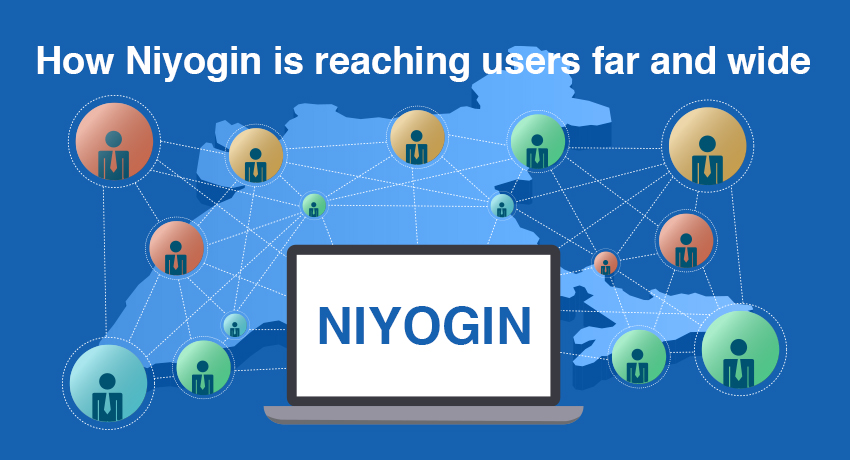
India, a hub of technology and innovation, counts as the second-largest country in terms of population. With 138 crore Indians scattered in urban and rural areas, India is known to be rich not only in its resources but also opportunities. Taking a look at Urban and Rural population As per statistics, along with India’s overall population, the rural population of India has also been on a steady growth showing an average of 0.32% YoY. The rural population in 2020 was close to 900 million compared to 905 million in 2022; an increase impossible to go unnoticed. Recognizing this growth and the fact that the rural population is underserved, the government of India and financial institutions are making an observable effort to bring them under one wing of financial inclusivity. Niyogin’s Urban Presence As one of its kind public listed Fintech, Niyogin’s mission is to provide cost-effective financial access to 64.61% rural population along with 35.39% urban population. The intention is to leave no segment underpenetrated or underserved giving equitable financial opportunities to every segment of society. Furthermore, a measurable consideration is also given to enhance MSME growth within India through financial assistance. Niyogin’s product range in this case is more nuanced and tailor-made to be able to create a competitive proposition in a more crowded, better-served urban backdrop. Niyogin’s Urban Growth Owing to Niyogin’s extremely customer and impact-centric service stack, partners and products, it has been able to ascend step by step effectively. The given chart gives a glimpse of Niyogin’s overall growth in terms of partners, market access, wealth tech and AUM. Niyogin’s business model has been built to deliver platform infrastructure play at scale and cannot be measured using traditional yardsticks. Simply put, our stakeholders should assess the scale and reach of our platforms, as well as the resulting revenues, which are a mix of fee and transaction-based variables. The government of India has set the rail to let the train run for financial institutions looking to cater to the rural and MSME segment of India. The introduction of UPI and Aaadhar stack has acted as a foundation for impact-centric Fintech like Niyogin to cater to a larger audience. Moreover, setting up a sandbox for Fintechs to launch their experiments has enabled many innovators to design, test and launch services that promote financial inclusivity. Through a partnership-led model that includes financial advisors, business correspondents, channel partners, banking institutions and other organizations, Niyogin reaches a wider audience by offering its partners their technology stack and distribution access via channel partners ensuring financial services to a larger audience. Niyogin’s Rural Presence Niyogin’s subsidiary, iServeU, plays a major role in building the rural market. Comprehending the limitation of committed physical or digital channels due to high operational costs and lack of smartphones, respectively, iServeU has built a technology platform that leverages existing physical distribution channels to tap its target audience. It offers a broad product stack with a modular orientation where individuals pick and choose products they are keen to build off. Constant R&D and innovation help us understand customer pain points, needs and preferences to build products and services most suitable to the said segment. The aim is to add value to the process through relationships; financial advisors, platform and product and automation. The mentioned combination can help break barriers and add value across a range of products to help serve individuals better and comprehensively while ensuring steady growth for the organization. Niyogin’s Rural Growth Given that Niyogin’s business model through iServeU is unique in its way to create and sustain in a primitive segment, i.e. rural area, its essential to continuously generate alliances to widen its reach. The given chart shows positive growth across partnerships, transaction volumes and GTV. Financial Inclusion is Niyogin’s core priority and delivering on it in an open, smart, customized, modular platform is what we aspire to achieve!
Niyogin; Powering ambitions, powering growth
Traditionally, culturally and professionally, India has consistently been the spearhead of skill, innovation and resilience. India’s rich culture, resources and vast diversity have added to its constant recognition. Yet, outside the perceptive, urban bubbles of development, a striking lack of financial literacy, infrastructure and services has been a hindrance to the aspirations of millions. To highlight a minimum number, atleast 900 Mn Indians situated in rural India coupled with small and medium enterprises in urban India have yearned for equal opportunities to break out of the vicious cycle of mediocrity. Limited access to resources, innovation and technology in this fast-paced digital world is playing a major role in further holding these segments from making a bound. A lack in the said areas also means inadequate access to financial literacy, services and solutions. Niyogin; an enterprise visually involved in powering ambitions and powering growth, is actively working towards bridging critical financial gaps which riddle India’s rural and MSME ecosystem. By leveraging existing infrastructure and building state of art services and technology, Niyogin is ardently striving to build a financially inclusive India by bringing rural and urban areas under one sunshade. Niyogin has created a financial universe that delivers solutions for credit, asset management, financial inclusion and software as a service on a single holistic platform. Through a partnership-led business model that has the potential to embrace about 3 lakhs financial professionals, 34 banks and 2.5 lakh+ Kirana stores, Niyogin is building a leading neobank infrastructure with open API, SDK integration and a ready-to-use platform aimed at innovation and customer-centricity; facilitating a new, empowered and inclusive future. Its one-stop financial platform seeks to uplift the rural and 7.9 million MSMEs by reimagining not only its design but also its fundamental approach, whereby the incomes of these small businesses can be amplified while enabling 138 crore Indians to have access to outstanding financial products and services built by technology and on first in class innovation springing from a deep understanding of the needs of the traditionally excluded. It understands that only by adding fuel to the aspirations of the historically underserved can it power the engine of inclusion and sustained growth. Niyogin; Powered by subsidiaries iServeU Technology Private Limited While its credit line and asset management solution extend to every segment of society, urban or rural, in need of financial requirement or assistance, respectively, its MicroATM, Domestic Money Transfer, Bharat Bill Payment System and Aadhaar-enabled Payment System, are a few amongst many services, are specifically aimed to penetrate and uplift the rural masses. Its open API allows the integration with business partners seamless and quick making it a phygital end-to-end solution. Moneyfront Asset Management and Distribution is a scoring method of income augmentation over the years. With a paperless, hassle-free and digital approach, Niyogin is ensuring financial literacy and investment become an intrinsic part of individuals who reside in both, urban and rural India. The urban side of India, to a large extent, is already equipped with financial literacy, however, bringing rural India into its shade is a challenge Moneyfront has accepted and has already proven with an AUM of Rs 3000 crore. Conclusion Primitively, the rural and MSME segment were often left untouched due to their high-risk attribute; however, Niyogin understands that the most fruitful means of ensuring that development percolates to every level of society is to ensure equitable access to resources. It aims to bring a sea change in the way that resources can be effectively tapped into. Thus, it designs services that enable easy access to financial resources and empower meaningful outreach to India’s billion-strong potential customers.
How can the banking industry respond to the threat of disruption?
The concept of credit cards emerged in the 1950s and thus began the phenomenon of competitive financial services and innovative banking. Thereafter, with the initiation of internet banking in the 1990s and digitized payment technology recently, the financial ecosystem has undergone a massive change. Until recently, traditional banks ruled the financial ecosystem but with the introduction and fast adaptation of Fintechs, the financial arena is undergoing a disruption; a disruption for superior services and better CX. How is the disruption taking place? Regulatory and policy shifts in the financial ecosystem have paved the way for transparency and scope for collaboration between age-old banks and upstarts. It has offered an opportunity for players with innovative technology to join forces and introduce customer-centric services and solidify their legitimacy. The said collaboration and therefore change in policies have forced traditional banks to share customer data who authorize it with third parties. This has given rise to open banking systems and the use of open APIs thereby allowing third-party developers to build applications and services that are institution-centric. These changes have given rise to the concept of Banking as a Service; a concept widely being adopted by organizations. Banking as a Service A plug-and-play, on-demand financial service; Banking as a Service allows traditional businesses to offer payment gateways on their platform without building entire applications in-house. Just like the concept of Dropbox that enables individuals to purchase space and store data on the cloud instead of investing in hardware, Banking as a service, a seemingly simple model has revolutionized how banking is performed today. Banking as a service has proven to be a cost-saving and an increased source of revenue for banks who prefer to work through a model that allows them to charge a fee per API transaction, i.e., 43% of the banks. However, banking as a service comes with its own set of challenges which include modernizing traditional banks and reconstructing a well-defined API strategy where operational processes and business capabilities need to be exposed optimally. Banking as a service case study RBL recognized that cash flow is an important consideration for customers interested in purchasing a vehicle and hence, in collaboration with Bajaj Finance, RBL is leveraging Bajaj Finance’s pan-India reach and offering vehicle loans to its customers. RBL’s secure and compliant digital infrastructure provides existing customers with a sense of reliability while increasing its reach in the market for newer customers. As the above example demonstrates, the financial capabilities of banking-as-a-service go far beyond those associated with traditional financial services products. They can create new revenue streams, lower cart abandonment rates and improve customer retention levels. Conclusion Banking as a service has given rise to an entire ecosystem of regulated applications that provide tailored customer services and experiences. Traditional banks should take note and keep up with the rising demand for intuitive and personalized financial services as they risk being left behind by their innovative brethren if they fail to comply with increasing customer demands.
Agri Tech to Agri Fintech
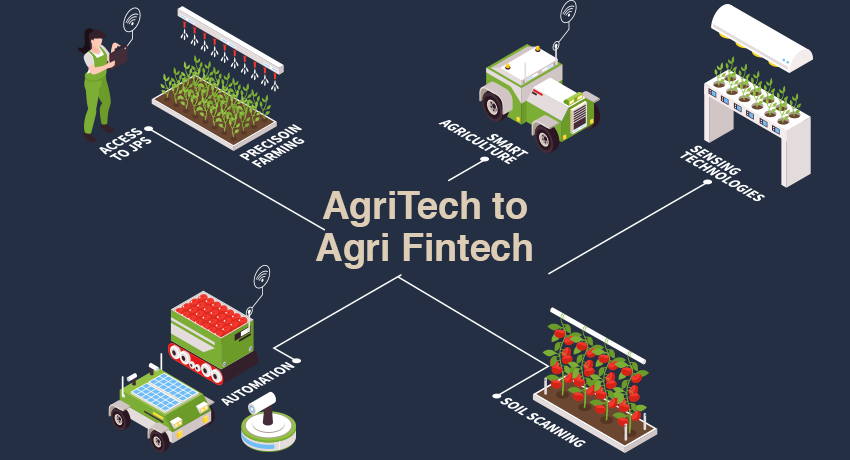
The agricultural sector; the primary sector has been the backbone before the industrial revolution. As witnessed by economies, the upholding of the agricultural sector has led to the development of the secondary and tertiary sectors. As for India, agriculture sector growth has been steady with constant support and uplifting by the government. India ranks 2nd in agricultural output and for approx 54.6% of India’s population, agriculture is the primary source of bread and butter. Over the years, the agriculture sector has effectively transitioned from a subsistence unit to a commercial marketplace. This has paved the way for a basic structured market that has transitioned from barter to currency acceptance. Over time and citing the potential, Fintech has penetrated this sector too with a tailored and customized service stack. The term Agri Fintech was coined to refer to agricultural technology financing. It enfolds the use of technology to improve the said sector, farming process, value chain financing, farmer reachability, market accessibility and much more with the help of technology. Earlier banks, and now Fintech have intervened to offer farmers contractual agreements wherein they can avail of value chain farmer financing that consists of operators such as producers, processors, aggregators and traders. The Importance of Agri Fintech in India As per data, almost 70% of rural households rely on agriculture for their livelihood. Furthermore, it contributes to 17% of the total GDP and employs over 60% of the population. Despite this, the majority of the farmers have no or limited access to the global market and are forced to sell their produce in the local market at minimal rates. These gaps have given rise to Agri Fintech which is offering a platform to build the agriculture market with the help of data intervention, market linkages, partnerships, digital blueprints and designs, etc to enable the farmers to scale their business with the help of technology. With several startups eyeing the segment, many Agri Fintech firms are on the path to building regulated market interconnection, post-harvest schemes, data-centric models and credit-enabling schemes. Furthermore, realizing the potential yet underserved nature of the segment, several startups have already built a platform that offers warehousing services that include credit facilities in partnership with banks. Several case studies suggest that Fintech is launching NBFC which is trying to digitize the entire agriculture process starting from stock arrival to market supply. By digitizing processes like quality and weight checks, receipt and pledge generation, etc, Fintech is allowing the agriculture sector into financial inclusion by offering them credit against warehouse receipts; a classic example of a blockchain application. Access to institutional credit is a challenge despite increasing YoY budget allocation under Priority Sector Lending (PSL) for the agriculture sector. As per data, approximately only 30% of farmers have access to institutional credit while 70% are dependent on informal credit means. The digital layer will allow a transparent end-to-end process thereby eliminating fraudulent activities, unnecessary middlemen and the challenge of securing credit for business growth. Currently, banks are often skeptical to lend to farmers owing to a lack of data, risk analysis, collateral and high transactional cost coupled with loan waivers by state governments to curtail the burden on farmers. This puts lenders in a spot at the time of retrieving the loan amount hence, jeopardizing their balance sheets. Therefore, digitizing means giving farmers access to larger markets and farm economics functioning within the regulatory framework.
Fintech Risk and Regulation Compliance
Undoubtedly, technology has evolved manifolds over the years, and since coupled with Finance, it is cultivating experiences and opportunities fairly new to audiences. Regulators and policymakers are attempting to keep pace with the innovations and developments to implement firm yet inclusive policies. To ensure increased cybersecurity against threats, frauds and breaches, it is essential regulators design policies that align with security and market integrity. Traditional banks have active policies that must be complied with solemnly. Contrastingly, Fintech, which functions in the same domain has had comparatively forbearing laws until recently. Following are the regulatory bodies that govern different products and services within Fintech- ● The Reserve Bank of India (RBI) ● The Securities Exchange Board of India (SEBI) ● The Ministry of Electronics and Information Technology (MEITY) ● The Ministry of Corporate Affairs ● The Insurance Regulatory and Development Authority of India (IRDAI). Microfinance institutions, money lenders, NBFCs, etc who offer consumer loans, peer-to-peer (P2P) loans and other types of credit are governed by the RBI. They ensure that standards relating to capital adequacy, prudential norms, cash reserve ratio, statutory liquidity ratio, credit ceiling, KYC guidelines, etc are rigidly maintained. However, these compliance norms may vary depending upon the agency and service it is relayed to. Investments are alternative financial instruments that are regulated by the SEBI. It involves mutual funds, collective investment schemes, alternative investment funds, etc. SEBI has implemented various ratings and schemes to apprise customers of potential risks and regulations. Furthermore, it has directed schemes to be close-ended with no guarantee of returns, restricted advertisements, etc as a prerequisite to dealing in mutual funds. To allow customers to take advantage of the convenience of online payments, the Payment and Settlement Systems Act has compliance guidelines in place that lists the various type of payment instruments, aggregators and the guidelines they need to adhere to. Most commonly used; Open payment instruments can be issued only by banks. Prepaid payment instruments, clearing houses, retail payment organizations, card payment networks, ATM networks and many other stakeholders participating in a transaction are regularized and have different guidelines to follow to participate in the market irrespective of the type of payment instrument they are undertaking; open, semi-closed or closed payment instrument. Fintech Regulators and Regulations in India Payment and Settlement Systems Act (2007) To reduce risk to customers, these regulations ensure that any payment system initiated and operated within Indian premises must be regulated and authorized by the RBI. This includes credit cards, debit cards, online payment instruments, etc. P2P Lending Platform Regulations This illustrates the borrowing limits and norms associated with P2P lending. In the borrower’s interest, this guideline is focused on limiting a borrower’s debt factor. UPI Payment Regulations UPI Procedural Guidelines issued by the NCPI have designed a framework that demands banks to remain involved in money transfer services offered by Fintech. Banks can leverage the technology offered by Fintech and engage them in the operations undertaken in UPI payments but as per guidelines, the banks must always remain at the forefront depriving Fintech of sole ownership. Fintech has disrupted the financial ecosystem by displaying new products and service scope; therefore, the regulators see great potential. However, the risks associated with Fintech are also high at its stake and to limit the risk, it is imperative regulations and governance bodies are set in place.
Why is India spearheading the Fintech Revolution
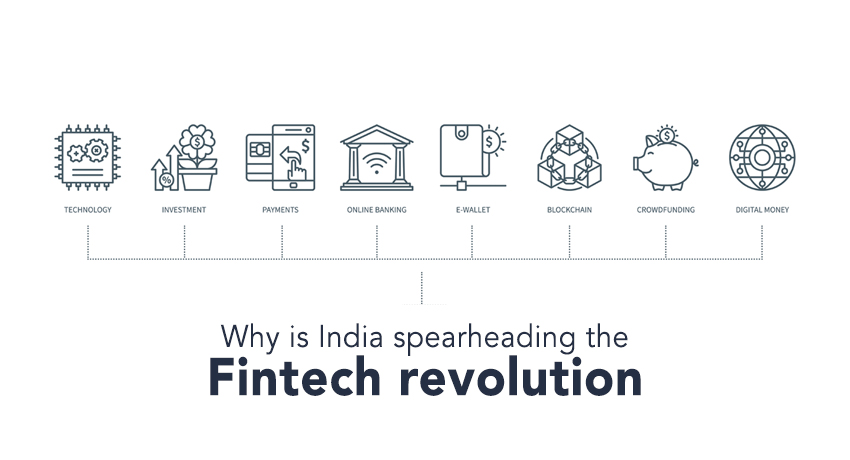
The acceptance and adoption of a paperless and digitized approach have led to a transformation in the banking industry. Fintech has acted as a facilitator in promoting an unconventional approach to money matters. With 6,639 Fintech in India of which, 21 of them stand tall as unicorns, India is the third-largest Fintech-related ecosystem in the world. Between 2016 to 2021, the Indian Fintech companies have been able to raise USD 16.5 billion which is approximately 60% of the capital entering India over the past 3 years. Furthermore, investors have invested approximately USD 24 billion into more than 1,000 companies functioning in the field of financial technology. Investors see the great potential Fintech holds in advancing the banking industry and digitizing the remaining aspects of banking. Fintech On The Rise in India Indian Fintech adoption rate stands at 87% as compared to 64% globally. Going by this statistic alone, India can be viewed as a potential market for investors. Furthermore, the prediction of the Fintech market to grow at approximately 20% in the coming years goes on to show the leading streak India is showcasing in the Fintech arena. India has more than 80 million internet users and various government initiatives to target the underserved population by leveraging the internet and technology give Fintech a cutting edge to showcase its capability. Digital payments have acted as a bandwagon in this transformation. India’s population and diversity allow Fintech to experiment and innovate personalized and customer-centric solutions for the targeted audience. Irrespective of whether the service is accepted by the masses or not, it allows Fintech to innovate and improvise. 3.7% of the Indian population can avail of insurance and the latest reports suggest that tech-based insurance providers are at an all-time high owing to their robust online services, especially after the pandemic. Growing computing power, internet connectivity and penetration coupled with customer awareness and demand for financial services play a significant role in boosting Fintech services in the market. The rise of Super Apps which provide a bundle of services on a single platform has augmented Fintech acceptability as Super Apps have successfully created a complete customer journey on their platform. Different branches within the Fintech ecosystem like PayTech, LendTech, RuralTech, WealthTech, InsurTech, etc., have allowed India to showcase its ability in innovative technology-driven services in comparison to other countries. India’s drive towards becoming a global leader is addressed by other countries too who look to collaborate for allied growth in this field. For instance, the UPI-PayNow linkage between India and Singapore is a milestone in the development of infrastructure for cross-border payments, financial inclusion and transparency in the overseas payment system. Conclusion Various microeconomic factors, government initiatives, supply-side factors, blockchain advances, funding, etc., have played a major role in revolutionizing and building India as the Fintech leader in the global market. As per experts, India is set to grow exponentially in the coming years with an estimated figure of USD 150 billion in valuation by 2025 spearheading the Fintech revolution in the true sense
Career opportunities in the Fintech space
Fintech ushered in as an unconventional way of banking but with time and acceptance, presently it is positioned strongly in the market. As per statistics, the Indian Fintech adoption rate is at a whopping 87% against a global average of 64%. This goes on to demonstrate how Fintech and its services are not just creating a stir in the market but also generating various opportunities to broaden the financial ecosystem. The disruption is a result of an uncustomary way of lending, investing, client servicing and much more. The use of technology to improvise and optimize financial resources has evolved into a new way of banking. A report on the Future of FinTech and Banking by Accenture estimates that Global FinTech Investment will rise to USD 500 billion before the decade ends. FinTech is not only going to be an enabler but also the engine that will drive the Financial World. Apart from revolutionizing the financial space, Fintech companies are also participating in generating employment opportunities that broaden an individual’s experience slate in the long run. Fintech as a domain has evolved manifold over the years and has presented compelling job opportunities for individuals ready to go the extra mile and want to showcase a diverse career board. Here are some opportunities that will allow you to polish and grow your skills and career, respectively- Cybersecurity With innovation in services, fraudsters have simultaneously innovated their ways of fraudulent activities. Experts in this domain claim that an increase in cybercrime will result in a tripling of job opportunities in this domain in the coming years. The entirety of Fintech is based on technology and therefore, they require experts and specialists who identify and mitigate threats to innovation. Developers Developers have and will play an extremely critical role in the progress of Fintech over the years. They have developed robust programs that have eliminated the need for business intermediaries, reduced transaction costs, mitigated the need for middlemen and so on. With the participation of fresher minds in this domain along with the use of blockchain technology, AI, Machine Learning, etc., Fintech can expand tremendously in the coming years. Quantitative Analysts Also known as ‘Quants’, specialists in this area guide security firms, investment banks and hedge funds in making informed decisions about markets, pricing and financial risk; much like robo-advisors but with real-time decision-making capabilities. Fintech startups invest in machine learning, deep learning and artificial intelligence to intensify their analysis. This has allowed them to develop algorithms that have helped companies reach their financial goals. Sales Force The Sales Force is often the face of a company and the team that drives the entire financials. But, to drive effectively, it is imperative you know your product, services and market well. Individuals in sales are often the ones with the most knowledge about the domain and its offerings to efficiently build a clientele base. Having the said knowledge in the Fintech space is an add-on for future endeavors. Innovation and the zest to transform the financial ecosystem continue to expand the Fintech space and will continue to do so in the foreseeable future. Individuals eager to become a part of this growing domain are those to strive to redefine conventional methods. Check out job opportunities with a unique Fintech- Niyogin to expand your knowledge pool in the banking industry.
Machine learning techniques for the detection of financial fraud
The financial ecosystem has seen a tremendous extension since its formal inception in the year 1770 with the establishment of the Bank of Hindustan. Mere services grew to a full stack of financial services and with the digital revolution, services have been shifting online. Digital banking forms are rapidly increasing across the globe. Payments companies are experiencing a swell in their transaction volume. In the financial year 2022, around 71 billion digital payments were recorded across India. The evolution of financial services has also resulted in evolved financial fraud. These frauds are prevented by cybersecurity and cyber-crime teams who analyze and undertake several measures for a healthy financial ecosystem. Most financial institutions have dedicated teams of analysts who build and maintain automated systems to track transactions and red-flag potential fraudulent activities. Despite such efforts, fraudulent activities have been on an upward trend over the years. Number of bank fraud cases across India – FY 2009 to 2022 Source: Statista As per data, reported frauds in FY 21-22 amounted to Rs 60,414 crore; a decrease of 56.28% from Rs 1.38 trillion in FY 20-21. Referring to the number of frauds, the data reported 23.69% higher frauds in FY 21-22 as compared to FY 20-21. Despite a lower value, the number of fraudulent cases has been the highest in FY 2022 at 9,103. Value of bank frauds in India – FY 2018 to 2022, by category of fraud (in billion Indian rupees) Source: Statista As per the graph drawn from Statista, loan portfolios, both in terms of number and value, face the most fraud. Advances constituted 42.2% in number and a whopping 97% standing at Rs 58,328 crore in value. Cards/internet constituted 39.5% of the total frauds in number and 0.2% in value. An analysis of the root cause of fraud shows a significant time lag between the date and time of occurrence and its detection. This comes as a challenge to financial institutions that are trying to mitigate fraud from their balance sheets. Therefore, financial institutions are automating the prevention and detection process with the help of Machine Learning. The Machine Learning process to identify and thereby classify a case as fraud can be categorized into 2 major methods- Logistic regression Random Forest To measure the performance of both models, Recall is a useful metric. High-class imbalance datasets typically result in poor Recall, although accuracy may be high. Precision will also be a consideration because reduced precision implies that the financial institution that is trying to detect fraud will incur more costs in screening the transactions. In fraud detection problems, though, accurately identifying fraudulent transactions is more critical than incorrectly classifying legitimate transactions as fraudulent. Where financial institutions are investing heavily in fraud prevention, Machine Learning has allowed them to analyze and detect fraud effectively to a certain extent. However, they must ensure that the model and method they pick must give them an analysis that includes data cleaning, exploratory analysis and predictive modeling.
7 advantages of taking a business loan

The year FY 2020 saw a set up of 1,22,721 new businesses which grew to 1,55,377 in FY 2021 and 1,67,076 in FY 2022 at an increased rate of 7.5%. With several new businesses participating in the growth of the economy and thereby, India, it is needless to say that these enterprises must be supported and boosted. With over 14 Lakhs registered businesses and several untracked businesses, business services take the significant space followed by manufacturing and trading. Irrespective of the type of business, what stands homogenous is the need for funds. For any business to commence, expand and thrive, capital is fundamental! Financial institutions understand this requirement for personal and economic growth and therefore, offer several types of financial services and assistance. The most common among them is Business loans specifically targeted at business needs. Capable individuals and businesses often contemplate if they require business loans to boost their business and we’ll give you all the reasons why one must opt for it. Tend to your Working Capital Need Working capital is the prerequisite for the establishment, administration and sustenance of a business. Business Loans tend to these requirements and allow a business to function and flourish. However, business loans must be availed from financial institutions that are customer-centric in their approach. Inventory Provision A business may require funds to meet seasonal inventory needs or continuous, in both scenarios, business loans help in providing these funds at the stated time and need. Effective Cash Management Continuous operational activities like marketing, inventory upholding, customer acquisition and service require a continuous flow of funds that is duly inspected. Business loans enable a continuous flow of funds without having to pause or stop a business from achieving its goals. However, it is equally important to indulge in cash management to ensure funds are used efficiently. Satisfying the Surging Demand Businesses must always keep an eye and have the intention to scale up and meet market demands efficiently. To have a full inventory and upkeep customer demands, businesses need to have a continuous fund flow and that’s where business loans come into use. With options like OD, it’s even easy to have top-ups on loans. Financial institutions like Niyogin Fintech Limited offer top-ups at lucrative rates and tenure. A Fixed Sum Investor Suppose you go to ‘The Sharks’ and pitch your business idea for an investment of Rs 10 Lakhs. You will have to do away with a certain share of equity to avail of that amount whereas in business loans, your business remains entirely yours irrespective of the loan amount availed. Business loans are rather interested in extending financial support. Avail Tax Benefits Apart from strong funding through business loans, it also allows you to apply for tax deductions. The interest payable on a business loan is often tax-deductible depending upon the interest limit prescribed by the government. Therefore, it is in the interest of a borrower to check the eligibility criteria before applying for a business loan. Enhanced Business Credit Availing of business loans also means improving your business creditworthiness to apply for OD and loans in the future. However, it is important to note that to improve one’s creditworthiness, it is essential to make timely payments and repayment of the loan in its term. Now that you know the benefits of Business Loans, do you think you want to avail one to boost your business needs? Niyogin Fintech Limited offers Business Loans that offer you the financial support you need! Contact 1800-266-0266 for more information on this matter.
5 Reasons Why You Should Take a Top-Up Loan

Walking with a population of 136 crore Indians with contrasting needs and demands means innovation must be at its finest! To date, traditional banks have taken care of the needs but with Fintech joining hands, services that place customer centricity in the high-importance grid have grown manifolds. The financial world has crossed the road from the basics to everything digital and consumer-oriented. Long ago banks understood the need for top-up loans to cater to the unforeseen extra needs individuals get caught up in and with Fintech joining forces, the service was propelled in the market with twice the ease and speed. As a reader, if you’re wondering about the positives of a top-up loan instead of availing of a new one from a different bank, here are your reasons to consider the former- Relaxed Eligibility Criteria As the name suggests, top-up loans are applicable when an individual or a business has already availed of a loan from the same financial institute. Therefore, the formalities, procedures and eligibility criteria become less tedious and more smooth for a top-up loan as the financial institution already has the KYC. However, it is essential that you have a strong repayment history on your existing loan and you have maintained a strong credit score. Favorable Interest Rates with Low Processing Fees In most cases, the interest rate on top-up loans is almost the same as your existing loan and therefore, availing of a top-up is a wiser decision than availing of a new loan. Given that the request acceptance TAT is much lower in top-ups alongside low processing fees, favorable interest rates coupled with quick disbursals are a respite for you! Unrestricted Fund Utilization Top-up loans are more flexible in terms of their utilization and do not restrict the purpose of fund consumption. One can use the funds for business objectives or personal grounds. Flexible Repayment Option Just like your needs, your tenure can vary too in top-up loans. It is unnecessary one must match the tenure to the existing loan. If required, one can increase or decrease the tenure according to their paying capability. Additionally, loans like home loans offer tax benefits to individuals which can be used to their benefit if the tenure is extended. However, it is advisable to thoroughly go through the terms and conditions to understand one’s liberties toward tax deductions. Source of Instant Funds The trump card of top-up loans is its attribute of instant funds. One may require instant funds for professional or personal reasons and top-ups offer that relief. With quick disbursals, top-ups are increasingly getting popular in the market. Making informed decisions is wise but first being financially literate is cardinal to making any financial decision. Whether one decides to take a first-time loan or a top-up, it is important to know and acknowledge the usage, amount, repayment capability and most importantly, choose a borrower-friendly financial institute before marking oneself in the borrower group.
Why Gold Loans Come as a Shining Armor

The Assets under Management (AUM) of gold loan NBFC is expected to grow at 12-14% in FY2022-23. According to an estimate, the organized gold loan is currently valued at Rs 4,149 billion and is expected to grow at a 3-year CAGR of 19.5% to reach Rs 7,557 billion by FY2024. Crisil ratings in the chart above show the growth gold loans have had over the years. To speak of potential growth in the coming years – HDFC Bank recently announced that it has added 51 Gold Loan desks to its branch network in Uttar Pradesh. With the addition of 51 new Gold Loan desks, 170 HDFC bank branches in the state will now be able to offer Gold Loan. It shows the inherent capability gold loan has in mitigating short-term capital challenges. For banks, the gold loan remains a tool to meet their Priority Sector Lending (PSL) requirements. However, with a growing presence, quicker loan processing capabilities, gold loan schemes of varied tenures, doorstep availability of gold loans, digitally-enabled solutions, etc. gold loan NBFCs have developed a strong market presence. NBFCs are targeting and specifically catering to mitigate short-term financial needs. Targeting Small and Micro enterprises that run on heavy capital requirements to fund working capital, personal requirements, supplier payments, etc., NBFCs are ensuring MSMEs are included and thrust towards growth. The pandemic has played a major role in driving acceptance amongst the audience towards the gold loan. The pre-pandemic era saw different sentiments towards gold but with a cash crunch and increasing capital requirements, businesses examined and reconsidered the use of personal assets to the advantage of their short-term business requirements. From a credit perspective, gold loans are highly secured and generate higher returns with minimal credit risk as a consequence of keeping a close check on Loan-to-Value. Therefore, NBFCs are driven toward introducing and extending a credit against gold. For NBFCs who place themselves as promoters of inclusivity, gold loans are a means of promoting financial inclusiveness within society. For borrowers who have little to no assets attached to their name, gold comes as shining armor to their rescue in times of dire short-term business needs. Niyogin Fintech Limited in collaboration with Indiagold is striving to make allowances for MSMEs who visualize growth but are decelerated due to capital requirements that arise because of no assets that could be pledged against the loan. Here’s a snapshot of Niyogin + Indiagold loan Loan Amount – Up to 75% of the market value of the gold pledged Interest Rate – 0.85% per month Processing Fees – Nil Service at doorstep Quick release guarantee Besides the fact that gold loans allow individuals and businesses to get instant funds, it also has no prepayment or late payment penalties. Its easy application process coupled with the security of the asset adds to the list of conveniences gold loans could be for society at large.
Lord of the Rings or Collab with the Fintech?
India owns 12 Public Sector Banks (PSBs), 21 Private Banks (PBs) and 43 Regional Rural Banks (RRBs) as of January 2022. Amongst these, only a handful was constituted in recent years while the majority are age-old banks with legacy data, frameworks and policies with long-in-the-tooth customers. These banks have managed to remain cemented in the market with their traditional ways of working owing to customer trust, confidence and assuredness due to their brick-and-mortar model and strong frameworks. Nonetheless, with dynamic and instinctive surroundings coupled with economic and societal transitions, customer sentiments, needs and preferences, India is beginning to experience a shift in the banking, payments and investment system among several other transitions in financial services. These developments can be attributed to Fintech which has disrupted the financial ecosystem at large. India is amongst the fastest growing Fintech markets in the world and there are 6,636 Fintech startups in India. The Indian Fintech industry’s market size was $31 Bn in 2021 and is estimated at a whopping $150 Bn by 2025. Fintech exhibits a promising future and traditional banks possess a solid foundation. In such a scenario, an arrangement that offers equal opportunities to both parties rather than rivalry is recommended for the benefit of customers and the financial world. Here are a few examples of traditional banks that have collaborated with a Fintech to leverage the digital tag and the growth opportunities a Fintech brings- Bank Partnered with Service Opportunity in Discussion ICICI Bank Niyogin DEMAT Account Through the partnership, Niyogin offers the bank an opportunity to target a specific audience while undertaking digital marketing activities too. By leveraging the bank’s database, Niyogin generates insights like customer preference, behavior, need, etc., allowing the bank to customize its offerings. HDFC Bank Niyogin Secured Loan Fintech is known for its capability to generate comprehensive, specific and automated customer reports that allow banks to securely cater to their target audience. Niyogin, through its algorithms, offers insights that allow the bank to lend to legitimate customers. IDFC Bank Niyogin Secured & Unsecured Loan Niyogin allows banks to leverage both databases of customers trying to avail of secured and unsecured loans. It offers them insights and risk-assessed leads thereby limiting the risk banks face. The objective is to stroll beyond basic lending/investment options and offer customers a wide range of financial services. To achieve this stance, an ecosystem that is customer centric must be the principal rule. Traditional banks are certitude amongst customers while Fintech owns the reputation of innovation- in such a scenario where the opponents possess different virtues, a collaborative approach will lead to sustained growth rather than a fight to be the lord of the ring!
The Growth of MSMEs in India
Micro, small and medium enterprises are playing a vital role in the growth of the Indian economy. They contribute to roughly 30% of India’s GDP while employing a whopping 11.10 crore Indians in various sectors of functionality. Given the fact that the majority, i.e., 65% of the Indian population is below the age of 35, job generation is a very significant part of overall economic growth. Amidst this, the question arises, how are MSMEs treated in India and what is their growth prospect? With the launch and shift towards technology-driven services, MSMEs are regarded as the new worthwhile and remunerative sector by several tech-driven companies. They are not just targeting MSMEs at a broader level but launching customized services targeted specifically at the 63 million MSMEs. These services not only give tech-driven companies a larger audience to serve but also ensure MSMEs expand and contribute toward sustainable growth. Growth chart of Indian MSMEs Source: https://www.livemint.com/opinion/online-views/india-needs-an-ecosystem-that-s-conducive-to-msme-expansion-11629736194548.html As per reports and shown in the chart, the percentage of registered MSMEs across sizes grew by 18.5% YoY. Furthermore, the number of registered MSMEs increased from 2.1 million to 2.5 million between 2018-2020. Micro, small and medium-sized enterprises have all shown positive growth during the mentioned span. Source: RBI Report As per the chart, the percentage share of Urban and Rural MSMEs is almost at par with 49% and 51% respectively. While Urban MSMEs have higher access to financial services, rural MSMEs are more in need of assistance in every aspect of growth. The idea is to nurture and grow the opportunities we present to these and new MSMEs irrespective of their geographical location or the product they sell. This will allow us to launch and handhold initiatives that will ensure these MSMEs are more exposed to opportunities and financial services. A major known stake is owned by trading followed by manufacturing at 230.35 lakh and 196.5 lakh respectively. Keeping this in mind, efforts must be made to focus on aided trading and quality manufacturing to benefit the end users as well. Leveraging automation to enhance operations, use of technology for data analytics, venturing into new markets through e-commerce, providing them subsidies, equipping them with education and so on, MSMEs can be given the assistance they have missed for so long. The regulators can further chalk out formal plans and frameworks to standardize the functions of MSMEs thereby instilling a sense of inclusiveness in MSMEs to strive harder at what they are already doing; building the nation. While building the said framework, regulators can ensure that these policies are inclined towards boosting small production units, compliance is easy on MSMEs and their growth plan is well defined to enable MSMEs to introduce themselves to global markets thereby ensuring financial inclusion for themselves.
Strategic initiatives and the winning game of Wealth Tech

Wealth Management has been an invariable part of society. From saving money in piggy banks to saving it in bank accounts, society has always had the ‘Save The Money’ ideology. With evolution, the brick-and-mortar model of savings converted into tech-driven options that we know today as WealthTech where individuals can save and invest through a paperless and digitized process. Since its inception, Wealth Tech has experienced steady adoption and growth. But with the pandemic, the bet on Wealth Tech grew immensely. The diagram shows the immense potential Wealth Tech holds. As per the diagram, by FY25, Wealth Tech is estimated to grow 3 times its current value reaching a whopping USD 63 billion! Changes in investor demographics, a new generation of clients who demand customer experience, convenience and functionality have created a whole new area for investment activities. Decades of traditional working have been disrupted by a paperless and digitization approach. Moreover, this has also ensured financial inclusion by bringing the ‘underinvestors’ into the ‘investor club’. Wealth Tech has propelled a change in the market which ensued as a result of creating a digital ecosystem. Furthermore, by adjoining robust cybersecurity and keeping pace with market threats, Wealth Tech is steadily commenting on its hold in the market. Starting with personal investments, Wealth Tech is leveling up by targeting institutional clients as well. If they achieve a breakthrough, Wealth Tech can experience winning opportunities in the market. Wealth Tech providers understand the changing era and the demand for DIY investment options. Therefore, by allowing the market to have exactly what they demand, Wealth Techies are offering self-serve solutions and enabling the investors to grow their investments, take risks and avail profits at their own decisions and pace. Continued enhancement to meet customer preferences and needs has also acted as a winning point for Wealth Tech. End-to-end process optimization, richer experience, relevance, state of art offerings, etc., has propelled Wealth Tech’s penetration and adoption into the market. Furthermore, by investing in an agile and lightweight architecture, several Wealth Tech companies are investing in an architecture that can be accessed through APIs or microservices. This allows them to update, change specific functionality or deploy new services into the market as and when required. Its minimal yet skilled human intervention at locations ensures a data-driven approach yet a personalized effect. Robo-services help in advising, reporting and wealth planning while human intervention helps in customer acquisition, customer support, client retention, etc. Although Wealth Tech has witnessed steady growth overall, the growth has been well-planned and strong. By creating a digital ecosystem, Wealth Tech companies are leaving very little space for non-fulfillment and collapse.
Paytech: The Future of Payment
Ancient civilizations paid in beads or coins that eventually changed to gold or silver coins and today, we have adapted to paper money as a form of payment. This goes on to show that ‘Payment’ has been an integral part of our society since the beginning of time irrespective of the type we considered currency. With the invention of technology affixed with payments, we are switching from a long-followed method; payment in physical form to technology-based payment methods – PayTech. Individuals indulge in digital payments and to a large extent, Gen Z prefers digital payment over physical payment, especially after the onset of the pandemic. Pay Tech has now become the norm with its high adoption rate and as per experts, India is a great market for Pay Tech. Big players like PayTM, BHIM, Google Pay, Apple Pay, etc., are investing heavily to penetrate the Indian market owing to the potential it holds. Contactless cards, mobile wallets, QR payments, the BNPL model, neo-banking, open banking, etc have gained great traction in India. Positive government policies and regulations have added to the widespread reach and adoption of PayTech even in rural India. Interestingly, other countries are also looking up to India and are shaking hands for a successful collaboration. For instance, India and Singapore are set to link UPI and PayNow this year to benefit the population who indulge in international transactions. Blockchain technology and cryptocurrencies have also gained immense popularity due to technology-based payment options. Card networks, acquiring banks, electronic money institutions, issuing banks, payment gateways and payment service providers have all come under one roof to offer an end product to the customers. The government of India is leveraging this interest, adoption and usage to cater to the underserved market, i.e., the rural population. 800 million individuals fall under the category of ‘underserved’ who can be tapped and given financial services through the promotion of PayTech. However, to penetrate the said rural market, the government must adopt alternatives other than the traditional brick-and-mortar model. Financial inclusion comes when every individual is financially abled and empowered; hence, the government needs to leverage technology to achieve the said stance. By ensuring internet connection in rural areas, the government can reach out to the people with a robust and secured digital pathway. Other challenges like awareness, education, human intervention, trust, etc also play a vital role in delaying the penetration plan. However, Fintech is slowly and steadily reaching out to people and enlightening them on basic financial terms. Today, Fintech like iServeU is successfully functioning in rural areas, promoting PayTech through its secured and robust business model where they leverage the existence of Kirana stores to enable people to make digital payments. PayTech has opened big avenues for service providers as well as users. It has enabled service providers to aim, serve and expand to larger populations while offering them ease, convenience, security and experience for users.
Financial Inclusion and Its Impact on Financial Efficiency and Sustainability
The Indian regulators are cognizant of the significance of financial inclusion to achieve economic growth and the fact that to achieve the said objective, equitable growth opportunity through inclusive financial services is primary. India being a diverse country with a noticeable disparity in income and education across levels acts as an opportunity and challenge both, for financial institutions. Where institutions have the liberty to innovate, customize and offer customer-centric solutions, they also face the challenge of reaching the interiors of India. Hence, exposure to financial services has also been uneven in various parts of India where financial exclusion is due to income disparity, financial illiteracy, high transaction cost, infrastructure cost, lack of documents, remoteness, etc. Financial inclusion implies that all adult members of society are given basic personalized financial services that begin with bank accounts, deposits, transactions, etc. For instance, accounts opened through Jan Dhan Yojana for farmers have increased the circulation of money in the market owing to an increase in savings accounts, larger agricultural output due to subsidies and therefore, household expenditure. It is important to note that financial stability plays a major role in attaining financial inclusion, efficiency and sustainability. Despite this fact, it is often neglected in financial development comparisons; partly due to the lack of data required for the analysis. While moderate synergy between inclusion, efficiency and sustainability is expected to give positive output, growing financial inclusion negatively adversely affects financial efficiency while showcasing a favorable influence on financial sustainability. Therefore, through the process, considerable attention must be paid to financial efficiency. At the G20 Summit held in Seoul, South Korea in 2010, financial inclusion was recognized as one of the 9th key pillars of global development and this comes through financial development; an inextricable part of the growth process. Financial inclusion enables improvement in quantity, quality and efficiency of financial intermediary services which can be attained through lower banking costs, greater proximity to financial intermediaries, better institutions for stronger legal rights and politically stable environments. Apart from the stated challenges, a few fundamental challenges are as follows- Lack of skill to use digital technology and services. Implementation without an actual success rate – For instance, Jan Dhan Yojana managed to open a considerable number of accounts that never witnessed any transactions. This proves to be a cost rather than a success story. Being a cash-dominated economy, bringing a paradigm shift to digital adoption may face unusual challenges. Moreover, over 80% of the Indian population work in the informal sector which is heavily cash oriented and therefore, bringing them to digital adoption may take longer than anticipated. Financial efficiency and sustainability is a sequel of financial inclusion which is considered a success when micro-inclusion shows a positive trend in analysis and this trend can be achieved by targeting the bottom of the pyramid which will also help in achieving financial stability in the long run.
The MSME and Rural India Landscape

Financial inclusion is a key determinant for the development of an economy. However, increasing financial services penetration by setting up Tier II & III cities branches leads to high customer acquisition costs for banks and NBFCs. Additionally, the high cost of delivery, small transaction sizes, lack of credit history, and documentation among rural individuals & MSMEs lead to financial institutions favoring crème customers. This leaves a large untapped opportunity for Fintechs that operate on asset-light tech-centric models to solve the problems faced by traditional banks and make it easier for them to serve lower-income groups. The MSME Landscape At the heart of India’s dynamic business landscape, ~63 million MSMEs contribute 27% to GDP, generating one-fifth of India’s employment. The Indian economy continues to modernize at a healthy clip, thus pushing the formalization of businesses. Events such as the introduction of GST in India have further accelerated this process. Thus far, MSMEs have been operating in an informal setup; however, there is a multi-decadal trend where these MSMEs need to formalize and digitize to remain relevant and continue to grow. The introduction of GST has seen rapid growth in the number of GST taxpayers from 5.7 million in 2018 to 7.0 million in 2020. Further, India’s 70 million retailers want to increase their product offerings and augment their income on the rural front. These numbers are expected to increase manifold in the forthcoming years as they come into the financial inclusion fold. The formalization of this customer group creates multiple opportunities across various technology SaaS products, income augmentation products, and financial services. One of the challenges for traditional delivery models has been how to reach these MSMEs across India given geographical dispersion, slow technology adoption, and low ticket/ transaction size. This will be solved through the technology-led ecosystem and efficient distribution. This is creating an attractive product market gap for Fintechs and is a structural opportunity. How is Fintech helping MSMEs? Fintech, in its endeavor to provide hassle-free financial services, is working towards becoming a one-stop solution for small enterprises to meet their financial needs. The need for businesses to formalize is creating multiple product opportunities. The product stack of Fintech is more wide-ranging than traditional banks. The fintech product stack could be dispersed and range from procurement, SaaS-ERP systems, commerce and payments, income augmentation, wealth, and lending. This allows Fintech to drive greater business visibility, exercise better control, and generate transaction data. We have seen the single-product (lending only) and multi-product Fintech models beginning to scale in India. Our view is that a multi-product allows firms to generate transaction data to solve the lending in a rather difficult segment. The payments have been at the forefront of adoption as B2C-centric MSMEs digitized their customer-facing payment systems. The adoption of UPI is a prime example of the payment revolution in India. In the UPI ecosystem, the growing disintermediation of payments has created intense competition for banks. While the bank retains control of the payment source and destination (along with any related costs), Fintechs (with a 98 percent value market share in UPI payments) dominates client and merchant acquisition and the user experience. On the B2B side, the payment systems adoption rates have significantly increased, driven by internet adoption and the need to move businesses online. Fintech again continues to dominate this segment with payment gateways and aggregator platforms. Fintechs powered with alternative credit evaluation models and transaction data can offer low-cost loans with a technology-enabled asset-light model on the lending side. Rural India landscape India is home to over 1.3 billion people, out of which 900 million reside in rural areas. A major chunk of this population is underserved in terms of basic banking services. Therefore, to promote financial inclusion, the Government introduced various initiatives, most important among them was developing a digital pipeline that involved linking Jan Dhan accounts (currently standing at ~420 million) with Aadhaar cards and mobile numbers (i.e., the JAM trinity). This digital infrastructure acted as an essential backbone for facilitating DBT (Direct Benefit Transfer) flows, adopting social security schemes, and promoting a cashless society by enabling digital payments through RuPay cards. Thus, accelerating the pace of developing an insured, digitalized, secured, and financially empowered society. The current average balance in these accounts stood at around D 3,000/- as of March 2021. However, for the rural population to shift from cash to digital modes of transaction, the need for robust interoperable cash in cash out (CICO) network emerged. Hence, in conjunction with the Government, the RBI launched the banking correspondent (BC) model and set up new brick-and-mortar branches and ATMs in every location to increase penetration in Rural India and expand the banking network. But, given India’s vast geographical base and large population, it becomes excessively difficult for FIs to reach out to every individual. Setting up branches to increase touchpoints involves huge infrastructure costs. On the other hand, the BC model attracted various regulatory requirements like settling withdrawals and completing accounting with bank branches within 24 hours of completing the transaction, which is difficult due to the distance, lack of human resources, and technology. Therefore, access to banking services among the rural population is a problem that persists. Financial Institutions like iServeU specifically target these challenges and the audience associated with them. Their objective is to promote financial inclusion by catering to the said underserved audience. Fintechs leveraging on the BC model Fintechs today, with their innovative business models, provide last-mile links to banks to connect the rural population to modern technology and offer services through local retail stores. They empower BCs through their technology-enabled platforms and are riding on the various initiatives taken by the Government over the past decade like JAM trinity, RuPay cards, and the continuously advancing digital infrastructure – the IndiaStack. On the other hand, banks benefit through this model as the entire setup cost is taken care of by Fintech. Since Fintechs operate on a fully digital asset-light model, it becomes easier for them to serve lower-income groups in deeply… Continue reading The MSME and Rural India Landscape
How can the banking industry respond to the threat of disruption?
The concept of credit cards emerged in the 1950s and thus began the phenomenon of competitive financial services and innovative banking. Thereafter, with the initiation of internet banking in the 1990s and digitized payment technology recently, the financial ecosystem has undergone an absolute change. Until recently, traditional banks ruled the financial ecosystem but with the introduction and fast adaptation of Fintechs, the financial arena is undergoing a disruption; a disruption for superior services and better CX. How is the disruption taking place? Regulatory and policy shifts in the financial ecosystem have paved the way for transparency and scope for collaboration between age-old banks and upstarts. It has offered an opportunity for players with innovative technology to join forces and introduce customer-centric services and solidify their legitimacy. The said collaboration and therefore change in policies have forced traditional banks to share customer data that authorize it with third parties. This has given rise to open banking systems and the use of open APIs thereby allowing third-party developers to build applications and services that are institution-centric. These changes have given rise to the concept of Banking as a Service; a concept widely being adopted by organizations. Banking as a Service A plug-and-play, on-demand financial service; Banking as a Service allows traditional businesses to offer payment gateways on their platform without building entire applications in-house. Just like the concept of Dropbox that enables individuals to purchase space and store data on the cloud instead of investing in hardware, banking as a Service, a seemingly simple model has revolutionized how banking is performed today. Banking as a service has proven to be a cost-saving and an increased source of revenue for banks who prefer to work through a model that allows them to charge a fee per API transaction, i.e., 43% of the banks. However, banking as a service comes with its own set of challenges which include modernizing traditional banks and reconstructing a well-defined API strategy where operational processes and business capabilities need to be exposed optimally. Banking as a service case study RBL recognized that cash flow is an important consideration for customers interested in purchasing a vehicle and hence, in collaboration with Bajaj Finance, RBL is leveraging Bajaj Finance’s pan-India reach and offering vehicle loans to its customers. RBL’s secure and compliant digital infrastructure provides existing customers a sense of reliability while increasing its reach in the market for newer customers. As the above example demonstrates, the financial capabilities of banking-as-a-service go far beyond those associated with traditional financial services products. They can create new revenue streams, lower cart abandonment rates and improve customer retention levels. Conclusion Banking as a service has given rise to an entire ecosystem of regulated applications that provide tailored customer services and experiences. Traditional banks should take note and keep up with the rising demand for intuitive and personalized financial services as they risk being left behind their innovative brethren if they fail to comply with increasing customer demands.
How Technology Is Transforming Lending and Shaping A New Era of Small Business Opportunity
India is a land of extensive opportunities and a home to 6.3 crore MSMEs; a significant chunk of the population and needless to say, an essential part of the economy. These MSMEs indulge in several kinds of businesses and yet they all face a similar challenge- access to capital. Formerly, banks were a traditional source of availing credit which was not only time-consuming but also involved long processes that did not necessarily provide the outcome businesses desired. However, a new dawn of innovation in the financial sector has transformed how MSMEs are served; promising a more inclusive tomorrow. Customer-centric credit modules have lessened the friction that has plagued MSMEs for a long time now. Using technology, upstarts have made it easier for small businesses to choose their creditor, avail credit, improve cash flow, make informed investment decisions, etc. As per the data revealed by the economic survey, a majority of these MSMEs are sole proprietorships, hence, they are limited in their managerial, marketing and operational skills. Apart from the rules and regulations of the banking industry, which require certain hygiene parameters to be met in determining creditworthiness and the costs incurred in servicing MSMEs, it does not make a viable business case. With technology, these challenges are being addressed with complete analysis and business-centric products. Interestingly, as per data, it is estimated that more than 3.3 million members have registered on Alibaba.com- an e-commerce marketplace, which indicates that with the help of technology and sufficient access to credit, small businesses are going ‘glocal’ from local. Moreover, this shift to ‘glocal’ has also given rise to online transactions. These transactions are recorded and are used for analysis to serve these small businesses better with products and services most suited to them. This has opened new avenues for small businesses and lenders, respectively. While it helps small businesses in availing of formal finances, it helps lenders widen their reach in the market. Being said that, the primary customer base for lenders should not be MSMEs selling goods online. Principals or processes of lending digitally or using technology prowess can be extended to typical small business owners operating in the conventional format as well. Although the intervention of technology is to ensure quick and paperless lending, considering India’s rural population, conventional borrowers cannot be neglected. The key processes to be addressed for the same will be assessing the funding gap & credit requirement, capacity to repay (business fundamentals) and willingness to repay (identify and credit history). The critical success factors for digital lending in India will be transparency, turnaround time (TAT), process control and operational efficiency. The Pandemic Challenge for Small Business Owners Digital lending to MSMEs was poised to grow between INR 6 and 7 lakh crores in annual disbursement by 2023, i.e., pre-pandemic, as revealed by the Omidyar Network India. The pandemic brought to the fore the limitations of traditional lending to small business owners who suffered from a severe lack of access as reaching out to physical outlets became impossible. This was more so in non-metro locations that faced longer, unplanned business closures. To fill the gap, digital platforms are playing an instrumental role in improving financial assistance to small business owners. The online service of document verification, creditworthiness assessment and loan approvals have cut short the overall processing time from ‘many days’ to a ‘few hours’. This has brought about cheaper and quicker access to lending and better prospects for small businesses.
Who are the Fintech Borrowers?
India as a market is fairly complex and dynamic in terms of geography, consumer behavior and preferences. The consumer market is vast and diverse for any given product or service. Needless to say, the unifying force in all these segments is the acceptability and usage of mobile connectivity, application and platform. Fintech has anchored a spot for itself in this vast market by leveraging the ubiquity of mobile connectivity and internet connection. While Fintech has penetrated the market with need-specific products and services, it is interesting to understand who are the borrowers largely- the underserved or the credit-worthy borrowers. Fintech lenders target areas where traditional banks do not operate or have very little intervention. Due to their low fixed costs, Fintech has laxer lending standards. Therefore, the entry of Fintechs has aggregated credit frictions and imperfect competition between traditional financial institutions and Fintech. The increase in competition has led to access to credit for financially constrained and underserved households and MSMEs, respectively. Furthermore, the use of data analytics also enables Fintech lenders to capture credit-worthy borrowers. The different business models that Fintech has devised and observed allow them to cater to larger demographics- As per data, personal credit is one of the fastest-growing products in the lending business. Fintechs seem more interested in unsecured lending owing to its standard policy, loan size, quick maturity period and interest rate. While traditional banks focus on more credit-worthy borrowers, borrowers from Fintechs, although more diverse, are predominantly the underserved ones. Fintech lenders start with less credit-worthy individuals and slowly branch out and increase their market share. As per reports, most Fintech borrowers have credit scores in the mid-range, i.e., between 640-720. Traditionally, unsecured lending in India is majorly controlled by community finance- a segment of focus for Fintech today. Fintech is filling the credit gap and offering receivables financing, working capital financing, equipment financing, unsecured financing, etc. and is eyeing the borrowers who require these.
The journey from KYC to e-KYC and now Video KYC
The Know Your Customer (KYC) policy is a mandatory framework for the financial ecosystem used for the customer identification process. To comply with international regulations, Know Your Customer procedures need to be implemented in the first stage of any business relationship when enrolling a new customer. Primitively, KYC was an in-person inspection process but with time and increasing demand, regulatory bodies and financial institutions together had to conceive ways of innovating the said facet to ensure an enhanced customer experience. e-KYC was introduced to serve this very reason in conjunction with easing and shortening time-consuming processes. Video KYC, recently approved by RBI, is a new technique to verify your customers through video. The entire process is video-driven and contactless giving customers the option of completing the process remotely. Video-based Customer Identification Process (V-CIP) was launched to go entirely paperless. The verifier authenticates the documents and does a liveliness check along with establishing the location of the person virtually, unlike the traditional KYC method. Indian Bank is the first in India to welcome this transformation. They allow customers to open a bank account with them from anywhere by incorporating V-CIP into their web-based platforms. To begin with, they have implemented this strategy for customers opening a savings account only. By providing standard documents and ensuring they have video and audio facilities on their gadgets, customers will have the ease of opening an account, receiving cheques book, plastic cards, etc. without having to step out. Similarly, IDBI Bank also announced the launch of periodic KYC updates through V-CIP. With the increasing demand for ease of service, more banks are resorting to such innovations and technologies. 5 Indian companies that successfully deployed Video KYC solutions 1. Kotak 2. SBI Card 3. ICICI 4. Yes Bank 5. Capital Float Does the future seem beneficial? With India’s top banks welcoming this innovation, the question arises- Is this a beneficial proposition in the long run? 1. From a customer’s point of view, V-CIP will ensure ease while onboarding. Customers who reside in rural areas can easily associate with banks through their mobile phones, also propagating financial inclusion. 2. Interactions and customer proof can be stored in the cloud for future references without the hassle of maintaining paper files. 3. Video KYC will allow real-time customer verification using facial matching, automated data extraction and machine learning techniques which will enhance customer recognition. 4. Artificial Intelligence propagated analysis and products will allow wider and deeper penetration options. Certain touchpoints like onboarding of HNI clients will always require human intervention but to a large extent adoption of video KYC will allow financial institutions to reduce their branches thereby providing them the option to invest in a better customer experience.
Budget 2022, Finance and Inclusion
India’s Finance Minister Nirmala Sitharaman presented the Union Budget 2022-23 in Parliament on the 1st of February, 2022 where she disclosed key highlights of India’s plans toward being a financially inclusive country. The focal concern has always been financial inclusion since it is directly related to the growth of an economy. The Budget 2022 speaks largely of how the Government of India plans to empower the underserved by introducing 75 digital banks in 75 districts by scheduling commercial banks to encourage digital payments in areas otherwise not equipped enough to facilitate it. Moreover, the fabrication of the Digital Rupee through blockchain technology will further the cause of financial inclusion owing to elements like widespread acceptability, a robust backup, risk containment for financial institutions, etc. With India’s anticipated growth highest among all major economies, it is time to further the growth by keeping digitization at the forefront since the goal is to complement macro-growth with micro-all-inclusive welfare. Interestingly, to implement and ensure that these commercial banks can set up and run seamlessly, 100% of 1.5 lakh post offices will come into the core banking system, a noteworthy decision by the government of India. The system of post offices is widespread in rural India and leveraging their services will benefit the cause in many ways. The intervention of the government will streamline the process, safeguard all stakeholders involved and impanel more points of service than private entities can. With an 800+ Mn rural population and a growth rate of 17.64% in the last decade, 68.84% of India’s total population reside in rural areas and empowering them through rural inclusion is the need of the hour. Farmers, laborers, women and senior citizens are the most underserved segment of the society with little or no financial assistance and literacy. Source: https://www.macrotrends.net/countries/IND/india/rural-population The Flip-side While the government has been lauded for certain aspects of the Budget 2022, a surcharge on long-term capital gains at 15% and income tax on digital assets at 30% quivers the acceptability of certain investment options like cryptocurrency. Moreover, although the government has vowed a stable and predictable tax regime, citizens are divided over the outcome. Conclusion The Budget 2022 has potential if implemented with a proper amalgamation of traditional and new age banks as the long-term goal is and must be a financial landscape that is beneficial across sections of the economy.
The importance of Insurance

The year 2019 and forward witnessed an impact never anticipated or felt before globally. It sent out waves of disruption for individuals, society, businesses and the economies across the globe. Where a majority of individuals, businesses and economies grappled, a few thrived therein. A specific domain that witnessed a transformation has been the insurance industry. As economies recover from the pandemic, insurance companies will face challenges but also experience newer opportunities in the medium to long term. Source: https://www.journal.riverpublishers.com/index.php/JGEU/article/view/2890/2099 The above graphs show that Motor Insurance that falls under General Insurance dominated the market in the pre-Covid era which deflated to 29.02% post-Covid-19. The sector has seen a dip due to a halt in the purchase of new vehicles since and after Covid-19 struck. On the other hand, the health insurance sector has seen a boost in purchases since Covid-19 has changed perceptions drastically and helped people realize the importance of health insurance. Source: https://www.journal.riverpublishers.com/index.php/JGEU/article/view/2890/2099 The pandemic has also turned the tables for several leading insurance companies like Reliance General, Bajaj Allianz, Shriram General, etc. While late acceptance and adoption of changes may have been a reason for their falter, other insurance companies like ICICI Lombard, Bharti AXA and Tata AIG saw positive growth in the market. Domain-specific insurance study- General Insurance The impact on general insurance providers has varied depending upon the products it offered. While travel, event, trade credit, motor, etc. have experienced more loss than profit owing to restrictions and revised regulations, it has allowed GI insurers to analyze and understand the change in perception and devise customer-centric offerings that have completely digitized their platform and journey. From a business continuity perspective, there have been large volumes of claims initiated but insurers must consider potential exclusions in government policies to assess legitimate claims. Moreover, the volatility in the overall financial market has not converted the same impact in the general insurance sector as yet. Life & Pensions With the pandemic’s impact on the overall economy around the globe, the spending power has reduced significantly since the outset of Covid-19. Life insurance has not seen the kind of increase it had anticipated owing to Covid-19 due to its coverage policies which held an age limit. Pensions on the other hand have witnessed a significant drop in interest rates thereby reduction in their market value. Health Insurance Health insurance policies have seen a mixed impact due to different coverage policies. A lot of policies do not cover basic Covid-19 treatment while many have a hard cap on the amount that can be insured along with an age limit. Moreover, the increasing trend in mutations and infections has discouraged insurers to devise plans that cover Covid-19 owing to the possibility that it may be a loss-making proposition for them in the long run. Government and private businesses are offering better rebates and credits to citizens and employees, respectively, than insurance companies. Reinsurance Reinsurers The reinsurers will be impacted the same way as insurers in terms of potential growth and risk associated with it. It may more or less differ on demographic but the larger picture will remain the same. On the Life and Pensions front, the mortality rate will determine the growth of the business whereas, on the General Insurance front, the coverage policy, government regulations and changing dynamics of ongoing events will determine the growth. Conclusion Since the outset of the pandemic, insurance companies have actively adopted a complete digital journey which has led to crucial changes in operations like data storage and management. This has compelled insurers to be more proactive and transparent while the competition and government regulations have paved the way for more customer-centric policies.
Financial Inclusion through Financial Technology
The general concept of financial technology is the adoption of products and services by companies that are fully digitized and online in the financial sector. Financial technology has evolved into a more specific, focussed and strategic role owing to its wider objective, i.e., catering to the financial needs of the underserved; the core target segment left unserved by traditional institutions. Thus, the intention to contribute to the said segment will eventually achieve the larger goal of ‘financial inclusion’. The Global Findex Database sheds light on how the adoption of financial services has increased over a period of time, across target segments in India. As of 2021, the Reserve Bank of India has announced an FI-Index for the period ending March 2021 has increased to 53.9 as against 43.4 for the period ending March 2017. Along with the introduction of innovative and digital-first products and services by upstarts, government intervention through the creation and operationalization of Fintech policies, the launch of initiatives and assistance to MSMEs has also played a critical role in financial inclusion. A brief study; Niyogin Fintech Limited By creating a sustainable ecosystem, Niyogin is ensuring a significant impact in empowering the underserved segment. Serving the Underserved Niyogin is reaching out to the 800 Mn+ underserved segments by devising products, services and strategies to penetrate the deepest rural India. Network Effects Reaching the last mile of financially underserved segments has significant cost implications. To strategically combat this challenge, Niyogin acquired iServeU in the year 2020. To enhance its reach to the rural population, Niyogin envisaged bringing banks to rural India with the help of Kirana stores and by acquiring iServeU, the low-income segments can make transactions, enquire bank balances and avail micro-loans, etc. through their Aadhaar Card. Financial Literacy India is the second-largest country in the world with a literacy rate of 80% yet, only 24% of the said population is financially literate. The first step towards empowering the population is by providing financial literacy. By impaneling Kirana stores in rural India, Niyogin boosts financial literacy by informing and providing individuals financial assistance. With a significant boost in onboarding rural individuals, Niyogin is achieving the vision to empower through financial technology. Strategic Alliances One of the ways of lowering Customer Acquisition Cost (CAC) is by developing strategic alliances with other financial institutions to offer a digital-first and seamless product and service stack. Niyogin has allied with Chqbook, iServeU, etc to leverage the reach these partners have and offer financial assistance to a larger populace. Comprehensive Financial Services Niyogin offers small-ticket size need-based personal loans, working capital loans to MSMEs, loans against property, loans against security and wealth management to meet the financial requirements of the population. For instance, individuals can avail personal loans ranging anywhere from 20,000-2,00,000 with a flexible repayment tenure. Its comprehensive product stack ushers a significant stride in financial inclusion. Niyogin Fintech Limited; with a vision to empower India is catering to various segments with an asset-light architectural platform that leverages open source technology thereby shifting maximum benefits to its alliances, partners and customers.
Creating Value through Technology

The amalgamation of Finance and Technology has given birth to Fintech. Needless to say, technology is the backbone of the Fintech business. Whether product delivery, customer experience or service as a whole, technology is an intrinsic part of Fintechs. Niyogin, built differently and making a difference, offers credit modules, a wealth tech platform, rural tech, full-stack, API and SDK capable financial services infrastructure platform that powers all distribution/customer-facing businesses. Through this approach, Niyogin powers local MSMEs and other enterprise platforms to do more with their current distribution infrastructure. How is Niyogin creating value through technology? End-to-end automation Being an early-stage unique platform, Niyogin has heavily leveraged technology to create a fully automated, customer-centric platform. Its onboarding, service offering, customer experience, etc are fully digital with minimal human intervention. It allows Niyogin to serve a larger customer base giving a significant boost to its market reach without incurring additional customer acquisition costs. The Loan Origination System The loan origination system journey is a seamless and digitized process. The partnership-led model allows Niyogin to pick the right set of customers to offer financial assistance. The system automatically checks the credit scores and documents of a customer thereby limiting risk and human intervention. Operational Activities Niyogin as a platform follows a customer-centric approach where the utmost importance is given to customer journey and experience. Hence, the operational activities are followed in a manner that ensures customers are offered their services within a given TAT. For instance, loans are disbursed within 72 hours since it is logged into the system. The entire process of customer onboarding to checks to disbursal is completed within the said time frame and technology has enabled this agility in function. Scoring Mechanisms Niyogin transitioned from offering generalized credit to transaction-led credit. All the partners onboarded are on either one of the two platforms. This gives Niyogin access to their transaction data and cash flow control as partners generate income on Niyogin’s platform. This enables a better assessment of an individual’s creditworthiness as well as the ability to digitally collect information in the transaction flow. Marketing Tactics Niyogin has built an entire online communication journey wherein partners and customers are informed of its products and services digitally. By creating a planned journey that begins with contacting the unserved, Niyogin ensures a strong product/service marketing module that gives utmost priority to customer engagement. Risk Analysis and Prevention With the help of credit scores, the Niyogin platform’s algorithms analyze the risk quotient of a customer by producing a risk probability report. This report gives a complete understanding of how a customer may default and the risk capacity Niyogin can undertake for a particular client. This not only helps in decision-making but also in fraud prevention. Niyogin is driving innovation through technology and building economic infrastructure for MSMEs. Technology is the driver for its core product offering i.e., the open tech platform vision to drive financial services adoption and inclusion. There are two specific areas of investments in technology- the product capability investments and the technology platform and infrastructure. Niyogin has made significant investments in both these areas. The platform is being built with the objective and capability to offer the entire banking services stack consumable as full-stack, API and SDK depending on the partner’s technology evolution and choice. This would make Niyogin a unique tech financial services infrastructure platform that powers all distribution/customer-facing businesses. For this, Niyogin works closely with various leading technology companies across multiple domains financial institutions, payment networks, and banks. We expect technology investments to remain elevated!
Financial Empowerment

A financially empowered India; a vision several Fintechs hold albeit only a handful is vigorously working towards it. Niyogin, a unique early-stage public listed company is striving to empower millions of aspiring individuals and small businesses to transform their dreams into realities through an ecosystem of products, partnerships and exceptional customer experience – all powered by technology. An amalgamation of technology with a focussed mission; Niyogin has strategically built a product and service stack that has the potential to serve a wide range of customers. Its existence is a natural extension of being a facilitator for a new and empowered tomorrow by building a leading ‘Neobank’ platform infrastructure company with the right mix of products. Niyogin has a customer-centric approach, one that is dedicated to servicing MSMEs and 800 Mn+ rural Indians through technology. It is a holistic platform that delivers solutions for credit, financial inclusion, investments and SaaS services, working in conjunction with a partner-led model that gives affordable access to millions of potential customers. The system to date has been wherein the ‘haves’ of the society dominate while the ‘have-nots’ are often exclusionary and try to make ends meet. Niyogin is devising products and services that are more inclusive and can benefit the maximum number of people. The constant and thoughtful innovation is paving the way to include the excluded. Having a socially inclusive business that is designed to deliver products and services for all, Niyogin has developed a financial platform that empowers and allows its partners to generate income and provide service/product access to customers across India. It follows a unique, one-of-its-kind partnership model that allows them to touch base with a huge market while enabling income generation and customer acquisition for the partners. Niyogin acquired Moneyfront and iServeU in the year 2019 and 2020, respectively to widen their canvas of offerings. Initially, Niyogin’s line of business included several credit modules but with the thirst to empower the society surrounding them, they acquired companies with similar goals. IServeU focuses on Rural Tech and offers a platform that aims to financially empower the 800 Mn+ rural population of India. With noteworthy services like Aadhaar Enabled Payment System, Direct Money Transfer, MicroATM, etc, Niyogin’s subsidiary, iServeU, envisages building an inclusive India. On the other hand, Moneyfront, a robo-advisory asset management platform offers financial advice to individuals and companies. With limited human intervention and affordable advisory services, Moneyfront aims at another story of building financial literacy in India. Niyogin Powering Partners Niyogin’s service layer also includes API integration and SDK integration that helps business correspondents, Kirana stores and financial intermediaries to touch base with rural and urban consumers. While the urban populace has a variety of service providers to choose from, the rural segment is often left underserved and hence, needs the most empowerment. Niyogin’s platform build is not unique in its design but also in its approach- through its partnership model, it drives income augmentation for partners while serving end customers a chance to realize their dreams with best-in-class products and services – A way to empower India!
5 Uses of Financial Analysis

Financial analysis is the assessment of viability, stability and long-term profitability of a business or a project. The reports are prepared using ratios and other techniques obtained from financial statements and other significant reports. Financial analysis indicates the financial health, performance and prospects of a business. With the help of historical data and projections, financial analysts prepare indicators that highlight essential financial apex. Stated are 5 main uses of financial analysis- Analysis of current position- Financial analysis helps determine the current financial position of a company. A strong financial stance means better savings, investments and prospects for a business. It does not only reflect the potential of a business at present but also builds a strong ground for the future. Analysis of financial statements- Financial statement is mainly assessed to make good investment decisions. Businesses who want to invest in other businesses analyze financial statements to ascertain SWOT and make decisions accordingly. Analysis of prospects- By evaluating a company’s income statement, balance sheet, cash flow statement, etc., financial analysts assist businesses in planning their future. Market and economic trends often help in estimating the future potential. Ratio analysis- Ratio analysis is an indicator of performance for a business in comparison to other businesses. It is an industry-hold indicator. Companies arrive at a ratio by calculating liquidity ratio, debt ratio, turnover ratio, etc. It helps business owners to align their investment, expenditure and savings strategies. Making investment decisions- Financial consultants evaluate the investment plans and strategies of a business periodically and recommend options that may prove to be more viable in the long run. By appraising the strengths and weaknesses of a given prospect, analysts arrive at ratios that must be considered. Most common ratio metrics for analysis- Balance sheet: This includes asset turnover, quick ratio, receivables turnover, days to sales, debt to assets, and equity debt. Income statement: This includes gross profit margin, operating profit margin, net profit margin, tax ratio efficiency, and interest coverage. Cash flow: This includes cash and earnings before interest, taxes, depreciation, and amortization (EBITDA). These metrics may be shown on a per-share basis. Comprehensive: This includes return on assets (ROA) and returns on equity (ROE), along with DuPont analysis. Financial analysis should establish a proper basis for comparison to determine if a business’s performance is aligned with appropriate industry benchmarks. For instance, a 10% growth for a business may sound good but if market competitors are growing at a 25% rate, the owner must re-evaluate and make liquidity changes, to begin with. With changing times and the introduction of technology, financial analysis is more technology-driven with minimal human intervention. Companies like Moneyfront offer robo-financial advisors who calculate and offer a complete company analysis at a reasonable fee structure which otherwise, was a costly affair.
What is credit risk underwriting and what are the models widely used?
The principal objective of financial institutions is to provide individuals and corporations with financial assistance. However, while doing so, the said financial institutions must safeguard themselves from underlying risks. Credit risk underwriting is the process through which financial risk is gauged with the help of data extracted from clients. It typically involves loans, insurance, real estate, investments, etc. This process helps financial institutions to assess the risk they are willing to undertake and the extent of risk involved with a particular client. Financial institutions use credit risk analysis models to ascertain the ‘Probability of Default’ (POD) of a potential borrower. The models provide vital information on a client’s credit risk at any particular time. Failing to assess the risk associated with a borrower can result in huge losses for the lender. Main Types of Credit Risk Credit Default Risk- Credit default risk is when a borrower defaults on the repayment obligation or has crossed 90 days past the due date. Although this risk can be a result of broader economic changes, it affects all credit-sensitive financial transactions. Concentration Risk- For instance, when a borrower majorly relies on a single supplier/buyer for his line of business, he indulges in a high level of concentration risk. The lack of diversification can threaten the overall operations of the borrower and the lender. Country Risk- This risk is on a broader level; when a country defaults on foreign currency repayment obligations. This may happen due to a country’s political or economic instability which impacts the value of assets or operating profits. Underwriting Models widely used to ascertain Credit Risk Traditional Approach- Certain certified credit risk analysis agencies offer ready data to institutions to ascertain risks involved in different sectors of operation. For instance, they provide a complete analysis of risks associated with mortgage loans, industrial loans, real estate loans, education loans, etc. Financial institutions pick this ready data and implement it through their functionalities to avoid credit risk. Rating Based Approach- Financial institutions arrive at ‘Expected Loss’ through a formula-driven method where Probability of Default (POD), Exposure at Default (EAD) and Loss Given Default (LGD) is calculated. Credit risk analysts derive a percentage and determine whether or not the risk association by offering credit is acceptable to the financial institution. Advanced Rating Approach- Based on algorithms and the aforementioned attributes, financial institutions can calculate the risk quotient and implement advanced technology, framework and modeling to obtain detailed information. Conclusion Risk is inevitable and cannot be mitigated completely by financial institutions. Rather, they can work smartly in a technology-driven manner to minimize it and forecast credit risk with greater accuracy. Financial institutions should consider the probability of default, loss given default and exposure at default to function in a more cultured manner. Underwriting models have evolved over time and at present financial institutions can indulge in better and more accurate models to reduce the risk associated with the credit system.
Key Functions of Retail Banking VS Corporate Banking
Retail Banking and Corporate Banking; two established dominant verticals in the financial ecosystem cater to business-to-consumer (B2C) and business-to-business (B2B) segments of society. The retail business is a model built for the general public while the corporate banking model aims at MSMEs and large-sized businesses. Key Differences Key Basis Retail Banking Corporate Banking Nature of Products and Services Standardized Tailor-made Customer/Client Base Large Small Processing Cost Low High Value of Transactions Low value of transactions High value of transactions Profitable Low High Customer Relationship On low priority On high priority Retail Banking The main goal of financial institutions is to provide the population with financial assistance, whether credit or wealth management. The combined net profit of all the retail banks in India amounts to Rs. 224,054 crores as of May 2021. With Citi Bank looking to exit the retail market in India owing to its strategic review, large conglomerates like Axis Bank are bidding for the said fragment owing to its high clientele base and prospects. Key Functions Retail banks offer a variety of products and services to the general public. Fundamental services include prototypical savings accounts, types of mortgages, loans, etc at high-interest rates. It also includes services like plastic cards and remittance services which prove to be profitable offerings for retail banks. The financial personality of an individual helps in deciding the service and the extent to which an offering can be availed. For instance, High Networth Individuals (HNI) receive tailor-made services along with a personal relationship manager owing to the business they give to a bank. Corporate Banking Corporate banking is a subset of business banking that involves a range of banking services that are offered only to corporates. The clientele base associated with business banking is limited yet regarded as a high priority owing to the magnitude of transactional business with the banks. Key Functions Corporate banks earn profits by sanctioning credit. Their area of operation also includes managing the cash flow of the corporate, treasury handling, currency conversion, etc. Depending upon expansion plans and needs, corporate banks devise tailor-made credit options for corporations they cater to. For instance, equipment loans, manufacturing loans, etc. They also indulge in trade finance, bill collection, credit letters, payroll management and much more for the corporations they represent. With intense competition taking over the market, corporate banks also offer real estate analysis, portfolio evaluation, debt and equity structuring, asset management and so on. Source: https://seekingalpha.com/article/3604876-indian-banks-set-to-boom-consider-buying-state-bank-of-india Conclusion Most large banks have a separate division for the retail and corporate functions as both guarantee great profit. The existence of both wings of banking is essential for the healthy functioning of local and global economies. While one brings in deposits from personal customers (Retail Banking), which in turn enables corporate banking to offer expansion assistance to companies, further leading to the creation of jobs that aid in the expansion of economies.
The BIG move by RBI; Fintech in a spot or being put at the right spot?
The Working Group formed by RBI in 2021 acknowledges the potential that digital lending holds in the realm of finance. Digital lending has provided unique solutions and services in recent years. Moreover, it has also showcased the ability to hold the crowd together and promote the prowess of financial inclusiveness. However, recent announcements by RBI to bar Non Bank Prepaid Payment Instrument issuers (PPI) from loading the prepaid card using credit lines is a move that has intimidated the heavily funded Upstarts. Although it has momentarily caused some confusion in the financial ecosystem especially amongst Fintech startups, one needs to understand the vision and drive behind this move, which I think is in the right direction. There was another news in recent times – ‘Finance Ministry recommends banks to collaborate with Upstarts to leverage their robust technology.’ While ostensibly, both reports seem to contradict the action taken, the intention behind it appears quite clear. With numerous Fintech startups joining the field for a play where regulations are still not entirely defined, the salient object of RBI in my opinion is to give the financial world a ground to play collaboratively for sustainable and inclusive growth. Moreover, I think the Working Group understands the dire need for a robust revenue model for Fintech startups who are non necessarily regulated in equal terms as the banks. At the moment, some Fintech are operating in the grey area. However, given the nature of inevitable growth propelled by innovation, it cannot be left self regulated or unregulated and therefore defining a place for it in its nascent stage is absolute farsightedness by the RBI. The Working Group set up by the RBI with the support of central legislations are more interested in calling out the bad hats rather than eliminating right spirited competition to the banks as suggested by a couple of news portals. In my opinion, this is an attempt by the RBI to create healthy competition in the financial world where players work as a team to cater to the end customer rather than create business models that are based on regulatory arbitrage.
India’s future: Cryptocurrency or Central Bank Digital Currency?
The provision of Central Bank Digital Currency (CBDC) has been circulating for quite some time now globally. For instance, China has already issued digital currency, eCNY, as a part of its third trial; a concept they have been working on since 2014. At present, China is leading amongst G20 countries who are still exploring the whole concept of digital currencies. Similarly, India is also testing digital currency given the traction cryptocurrency has received in the market post the pandemic. The Reserve Bank of India (RBI) has said that the country needs to initially adopt a basic model of central bank digital currency (CBDC) and use the payment system architecture as a backbone to make a state-of-the-art system. As per RBI report on ‘Trend and Progress of Banking in India 2020-21’, “Given its dynamic impact on macroeconomic policy making, it is necessary to adopt basic models initially, and test comprehensively so that they have minimal impact on monetary policy and the banking system. India’s progress in payment systems will provide a useful backbone to make a state-of-the-art CBDC available to its citizens and financial institutions.” Cryptocurrency on the other hand is traded amongst individuals and has very little regulations attached to it which makes it a risky proposition. In India, although cryptocurrency has gained momentum and has appealed to the public, the government has been continuously implementing restrictions on its trading. Trading, mining and holding cryptocurrency could soon be illegal in India as the Indian government is proposing a new Bill that could ban all transactions related to cryptocurrencies. Amidst this, the question arises, what is the future of India; Crypto currency or CBDC? 1. The timing of CBDC coincides with a growing interest in cryptocurrencies in India. They both are in their infancy stage in India. While CBDC is yet to be developed by the RBI, cryptocurrency needs to be regulated and accepted by the government. 2. Cryptocurrency are independent and dealt with in autonomy, meaning no single individual or entity is controlling or regulating it. On the other hand, CBDC will be regulated and function under the purview of the central bank of India. 3. Cryptocurrency can be capped, for instance, Bitcoin is hard- capped at 21 million coins which makes it finite in nature while CBDC can be infinitely increased, as per usage. 4. The technology behind cryptocurrency differs from CBDC. While cryptocurrency is operated through blockchain, a distributed ledger recording transactions that ensures the system is decentralized and secure from privacy intrusions, CBDC does not have a clear anatomy yet. 5. Cryptocurrency is and can function globally whereas CBDC will be specific to the country as the regulatory framework may differ from country to country. Considering these basic points, cryptocurrency and its underlying technology will likely disrupt the existing financial structures and is here to stay despite resistance from the regulators. Moreover, corporations are participating in the growth of cryptocurrency by dipping their feet into it. However, what remains to be seen is the long-term effects of digital currencies.
5 ways how technology has enabled financial modelling and forecasting
There is a common notion that ‘technology’ is a separate physical entity. They don’t view technology as an element that can possess variable characteristics, for instance- forecasts, probability statements etc. Technology is considered to either exist in a given situation or not. It is seldom seen as a paramount and prerequisite to other components it is attached to. Technology is ‘knowledge’ which can vary and mutate over time. It can be collaborated with almost every element and can transform its functioning. It can be collaborated with a basic functioning to a practical problem, device, production machine etc. Technology has the ability to transform the entire working. The financial ecosystem is leveraging technology to the best of their capacity to devise strategies that can best suit the service they intend to construct. To attain this, technology needs to be mutated with other elements to customize and introduce variations. Financial institutions are heavily investing in financial modelling and forecasting to catapult customer centric services. Here are 5 ways how technology has enabled financial modelling and forecasting- 1. Market Value Analysis Market forecasts are undertaken to predict the size, characteristics, preferences, needs etc. of a targeted market/audience with near accuracy. Forecasting and modelling has allowed market analysts to estimate the size of the market and to evaluate the probabilities and implications of the market success. It has also allowed them to predict future market structure, opportunities, threats etc. thereby taking their analyses to decimal accuracy. 2. Individual Analysis Technology driven firms are heavily investing and constructing insights driven from competent and imaginative people. By analysing and observing measurements of underlying data, trends, behaviour, interactions etc., they build a personality which is then tracked and catered to. Although this includes its own inherent error, this approach has helped financial institutions in bringing expectation closer to reality. 3. Demand Analysis It is believed that technology is only said to be utilized when it responds to a need otherwise, it is never a functioning reality. Financial institutions strive to cater to this need by projecting future needs and requirements while upgrading existing technology. 4. Demographic and Sociological Analysis Technology has enabled forecasting and modelling to the magnitude where it can also determine future needs and performance of services specific to demographic areas. Each demographic area has a different sociological approach and forecasting helps in modelling the services or products appropriately. 5. Conditional Demand Analysis This assessment helps in determining and predicting the conditions under which new technology will be needed, its performance and when the event shall occur. While considering vast demographics, the requirement for the type of technology, its level of intervention and the area of need may vary. Financial forecasting and modelling has become an integral part of ‘technological analysis’. Apart from the stated pointers, it has completely revamped how the markets, customers, demand and supply etc. is viewed and responded to. These are merely preludes to more intrinsic areas where forecasting and thereby modelling is and can be used in the financial ecosystem.
The New Age Finance: InsurTech
The world is well versed with the word ‘Fintech’; an industry that has disrupted the financial ecosystem. It has been an aggregator and given rise to various branches we refer to as InsurTech, WealthTech, RegTech, etc. The convergence of existing service with technology has introduced us to ‘Tech-led’ products and services. InsurTech; a short form for technology-led insurance services, focuses on manufacturing, distributing and aggregating digital insurance policies. Earlier where insurance was a push product, owing to digitization, it is now a ‘pull’ product. Moreover, post-pandemic, global and hyperlocal occurrences have changed risk perception in the mind of people aggregating the demand of insurance. By paying a nominal fee and ensuring a larger payout at the time of need, individuals are seeing the worth of pricing their own risk. In addition, the convenience of buying insurance through an app is augmenting the acceptability and usage of InsurTechs, making it the most promising sector in India. According to India InsurTech Association, InsurTech fundings in the country have increased from $11 million in 2016 to $287 million in 2020 with more than 110 InsurTech startups operating in India. As per reports, the regulatory sandbox IRDAI received 170 applications from insurers of which 14 applications were specifically from InsurTech companies. Although InsurTechs focus majorly on individuals and personal lives, they are also actively moving into the commercial segment. Similar to personal insurances, they are bringing innovation to products in the commercial segment too. For instance, blockchain-led insurance services, micro-insurances, usage-based insurance, peer-to-peer insurance, digital brokerage system- often target small and medium-sized businesses. InsurTechs serving the commercial segment are also focusing on loss prevention and efficacy. For instance, they’ve built algorithms that assist in drone inspection for claims, underwriting, etc. They are specializing in actuarial/risk discovery models and make their offerings easily available, facilitating product comparison and simplifying the purchase process. With a nimble operating model and digital innovations, they are targeting profit pools and targeting digital-savvy customer segments. Like Fintechs, InsurTechs are targeting only specific value pools. The key to their success is that they are addressing unmet customer needs. Indian InsurTechs still face regulatory barriers but amidst the roadblocks, they are evolving by collaborating with incumbents. With their fresh strategic plans and advantages, InsurTechs are increasingly allying with traditional financial institutions to reach the masses while allowing incumbents to improve their digital foothold. In the new age of finance, technology has become a driving factor in any industry, especially the financial world. With full automation, targeted product concepts, data-driven insights, etc., the ‘tech-led’ firms are creating a buzz like never before.
Lending as a feature in the future
Lending has been a fundamental mean of money circulation in the economy. Over the years, we have seen a remarkable shift in how lending is undertaken. The shift from physical to phygital to digital has been massive and we are still evolving! In the past, lending was an independent process that had rigid prerequisites. Owing to technology, the approach has transformed and at present, financial institutions are devising ways to disburse loans within minutes. What created value in the past? The past two decades of value creation in the lending business has been through a focussed execution of time tested formula of raising Current Account Savings Account (CASA). Traditional banks focused on individuals with the capacity to deposit money with them thereby creating value. This deposited money is then circulated in the market as ‘loans’. In the individual lending area, customers plan their purchase and then hunt for the right lender to borrow yet, retail lending, through the cycles, has been the biggest value driver for banks in the lending business. However, this approach is set to change in the next decade or even earlier. For instance, Buy Now Pay Later (BNPL) is changing how customers function. Financial institutions are offering immediate credit to individuals transforming the entire ‘plan your purchase’ notion. Why is it going to change? What will be the impact of emergence of new business models? The likely outcome – Lending to become a product ‘feature’ Conclusion Infrastructure plays a very critical role in the given scenarios and their achievement. Embedding ‘lending as a feature’ on all platforms will require a robust and secure infrastructure and platform wherein customers have a seamless CX.
What is the future of Cryptocurrency?
The cryptocurrency was first introduced in the year 2008 after the financial crisis that shook the entire world. It gained momentum in India post-2015 after it showcased the potential it holds. At present, over 15 million people own cryptocurrency in India with total holdings of around Rs 400 billion. Moreover, cryptocurrency has massive institutional buy-ins who are still trying to figure out how to put it on their balance sheets. Amongst all cryptocurrencies, Bitcoin is the first and the most common cryptocurrency in India. The Government of India (GOI) has controlled the trading of cryptocurrencies in India full-fledged owing to its lack of regulatory options. Cryptocurrency operates outside the control of governments and central banks making it difficult for regulatory bodies to implement laws on it. The GOI only wants certain cryptocurrencies circulating within the economy to promote the underlying technology. Although Finance Minister, Nirmala Sitaram has notified that the GOI has no plans to recognize Bitcoin as an official form of Indian currency, nonetheless, they are devising a plan to introduce selective cryptocurrencies to the economy through a new Crypto Bill. The GOI is likely to treat cryptocurrency as an asset rather than a currency. This will allow them to get tax returns on crypto assets. Furthermore, the RBI is in talks to amend the RBI Act 1934 to include digital currency under the definition of a banknote. They have been examining use cases and working out a phased implementation strategy for the introduction of Central Bank Digital Currency (CBDC) to the economy. CBDC will augment financial inclusion, a global objective, and can be pushed through the central bank. Cryptocurrencies and CBDC both are technology-driven but have their own set of differences. Cryptocurrencies can transform the banking system globally by increased economic growth, reduced poverty and financial inclusion. It has a strong technology backing it. The blockchain, a distributed ledger record transaction, ensures that the system is decentralized and secure from privacy intrusions. The way forward for cryptocurrencies is still under wraps but considering its global appeal, India may soon adopt selective cryptocurrencies. Individuals and companies both are heavily investing in cryptocurrencies citing the notion that the future will be led through digitalization and interestingly, the population from tier 2 and 3 cities are the early adopters of this transformation.
Fraud Detection and Prevention in Fintech
Artificial Intelligence and Machine Learning are paving the way to a melange of financial services, products and transactions online. It is allowing a course into the digital realm that was otherwise unexplored. The implementation of advanced technology has led to an astounding increase in businesses that specialize and embed financial transactions online. This shift has concurrently ushered an increase in online fraud that is now proving to be a challenge to every business and customer who engages in online transactions. The loss caused by fraud is not only borne by the victim but also puts the reputation of the financial institution associated with it at stake. Moreover, financial regulators charge a hefty penalty from financial institutions for allowing their platforms to be used for fraud. Fintech face several risks but the top areas are- Forging credit reports and legal documents Skimming debit and credit cards Counterfeiting of personal information Fraudulent payment transactions Money laundering Forging account statements for tax and loan benefits Synthetic identity fraud Loan Frauds Fraud Detection Fintech uses APIs to peruse credit history and ascertain customer relationships with banks to determine the scope of financial assistance. They use scoring models that involve special algorithms to calculate the creditworthiness and authenticity of the applicant. Several indicators determine the scope of fraud like country code, geolocations, BINs, transaction amount and patterns, expenditure pattern, etc. Following are the key AI techniques used by fraud detection software- Data mining to signify patterns Expert systems to create rules for detecting fraud Pattern recognition to detect approximate cluster or pattern of suspicious behaviour Machine learning techniques to automatically identify unusual patterns in datasets Neural networks to learn suspicious patterns from samples Fraud Detection through Machine Learning There are two methods of detecting fraud through Machine Learning- Supervised algorithm- Organized data is fed in the system tagged with labels of fraudulent and non-fraudulent activities. The program learns the patterns between the two for interpretation on future transactions. Unsupervised algorithm- Unorganized data with minimal sorting is fed to the system. The program understands the data, sorts it and finds anomalous behaviours on transactions in detecting the patterns for fraudulent activities. Fraud Prevention Fraud detection is the first step to the prevention of fraudulent activities. Here are methods to prevent fraud- Face detection technology- Procure a 360-degree facial image of customers to ascertain their identity. Customer behaviour- It is advisable to use predictive analytics to understand customer behaviour and patterns to observe changes or suspicious activities. Biometric security- Biometric acts as an additional barrier to already existing security. Forging biometric is tougher and incurs a cost to fraudsters thereby preventing fraudulent activities. Keep your customers informed- Educate your clients on basic do’s and don’ts while transacting or availing online financial assistance. For instance, customers must never share their OTP or CVV number with any third party. KYC- Fraudsters are often well equipped and can forge legal documents. Hence, it is imperative to cross-check before onboarding your customers. Reporting process- Machine learning and neural network assist in generating reports of suspicious activities. File Suspicious Transaction Report (STR) as and when the system highlights. An example of how fraudsters are leveraging technology Banks allot their customers a unique number at the time of issuing a card. The first 4-6 digits of the said card number is a Bank Identification Number (BIN). This code is specific to each bank and the digits that follow are unique to each customer. Fraudsters identify BIN and leverage technology to try combinations to ascertain a legitimate unique customer number. With the help of artificial intelligence and trial and error method, they obtain CVV and the date of birth associated with the said card number. Fraudsters then proceed to make transactions on the card. In the case of an already issued card, the transactions are complete. If not, the banks are highlighted this fraudulent activity. Interestingly, both the parties, banks and fraud have evolved and are leveraging technology. While technology is a boon, it is also a bane that requires a constant upgrade.
Financial Planning: Economy, Businesses and Households

The volatile global financial scenario has challenged many of our convictions about the financial sector. The fundamental; financial literacy has enabled this change in belief. It is imperative developing and developed economies partake in this transformation through financial literacy thereby successfully indulging in financial planning. The Economy There is practically no country that has developed and grown with a lagging financial sector. This growth is only possible when individuals and households are financially literate and make informed financial related decisions. Much like an economy, the growth of a household also depends upon quality financial planning to sail through present and future inflation. India’s growth in the financial sector was on an impressive upward trajectory before the 2004-2008 global financial crisis. One of the key factors to contribute to this growth was an increase in savings rate of individuals. Individuals and households today realize the importance of ‘financial planning’ thereby changing the financial demographic. This trend has welcomed several positive financial transformations in the economy. As per experts, if we aspire to achieve more growth in the financial sector, is it vital that the savings rate through individuals and households increase. To ensure successful financial planning through financial literacy, it is also important financial markets design and offer products that households with low income generation can avail. On the other hand, it is equally important to make people financially literate so they know what they need and are equipped to choose between an array of financial products in the market. The Business A company’s financial plan is the business plan it foresees. The financial data and projection give a fair estimation of how a business will fare in the long run. By using existing financial data, accountants plan the coming year’s business goals and investments in numbers. It includes an assessment of the business environment, goals, resources needed and their budgets, contingencies etc. Here are 5 major benefits of financial planning- Cash Flow Management- For a startup, it is necessary to establish the need of the business, i.e., product/market fit. Then on, it is necessary to estimate company cash flow to justify the existence of the business and its future growth and security. Budget Allocation- Budget allocation is closely related to a business’s cash flow. Once a company estimates its sales income, investments etc., it is essential to determine how it will be spent. Ideally, the approach should be to allocate funds into team budgets and a separate provision for investments must be maintained. Cost Reduction- Expenditure is an inevitable part of a business but a proper financial plan ensures controlled expenditure. As a cash flow is prepared, unwarranted expenditure can be identified thereby providing a scope to mitigate or reduce such costs. Risk assessment- The financial team make provisions to avoid or navigate risk at the time of financial or economic crisis. While risks are hard to predict, it can be accounted for on the safer side. Crisis Management- The year 2020 exhibited how a natural calamity can disrupt the economy and how businesses must always brace themselves for the worst. While many businesses sailed through the crisis owing to their strong financial plans and balance sheets, it reinforced the importance of investments, savings and contingencies. The Household Encouraging people towards financial planning through customized product stacks will also ensure ‘financial inclusion’ in the final analysis. Devising innovative products and services that cater to middle and low income households, who’ve recently started financial planning will further the long-term plan of achieving a financial boost. The masses we speak of seek ‘safe, return and liquidity’ products and to stimulate the growth in investments, financial sectors should offer audience centric products and services. Financial planning has also seen a boost due to the growth in literacy rate amongst the youth. An educated and informed generation will further boost the attempt to build a financially literate economy. Literacy has equipped them to plan and budget their income simultaneously saving for a financially secure future. Financial planning as the definition goes is the evaluation of an individual’s current pay and future financial state using current variables to predict future income, asset values and withdrawal plans. While it is an approach to meet one’s life goals through savings, investments and planning. Conclusion As quoted by Charlie Munger, “People make bad choices all the time, usually because of fundamental inability to operate over long time frames.”- You may have several different financial plans and goals they wish to achieve but it is rather important to plan how it will be achieved over time while considering all the elements associated with it.
Banking for Teens

Banking for teens; a new wave by Fintechs is all about tapping the untapped! With over 2000 Fintechs competing in the digital space, innovation in every segment seems inevitable. Earlier traditional banks had acknowledged this unpenetrated market of kids, teens and tweens as well. They introduced services such as junior accounts to serve the said market but were unable to bring technology and innovation to the equation. Parents had to manage all the banking operations for their kids giving a sense of dependency. Here’s a fact case that showcases vital statistics- Leveraging the fact that India has 15-20 million kids in the age group of 11-18 who own a smartphone and receive pocket money for personal expenses, upstart Fyp rolled out a pocket money app and India’s first holographic card for teenagers. Junio, another initiative to serve the teenagers, provides users a bank issued card as well that works much as an adult plastic card. FamPay, a Bangalore based Fintech, provides teenagers lessons about money matters through gamification along with enabling them to make online and offline transactions independently. Upstart like YPay also provide cashback and rewards on transactions similar to adult reward system. Pencilton introduced the PencilCard, a RuPay debit card for teens across India that can be activated and managed via the Pencilton app. Several fintechs are innovating this space by introducing ‘Banking for teens’ which offers ‘children centric’ products and services. They aim at allowing children to manage their funds while learning financial accountability and budgeting at a budding age. This will provide teenagers with financial literacy who otherwise have limited options to grasp financial-related concepts. Moreover, it will allow fintech to develop a market for themselves at an early stage. Gen Z is the most tech-savvy and technology-driven generation, which is a stimulus for Fintechs. They specifically target individuals aged between 15-24. The AI-driven apps allow them to withdraw, deposit, transfer cash, net banking, UPI payments. These companies also provide teens with secured plastic cards that enable them to make online and offline payments without the need for an OTP. Moreover, they also incentivize by offering rewards and cashback, similar to classic credit and debit cards. From a security perspective, parents can customize the usage and account threshold while receiving insights on expenditure. This provides parents the chance to teach their children money management while monitoring their expenditure. Fintechs are introducing services that are enabling financial inclusion at multiple levels. Although young, children are the future of an economy and teaching them money matters at a young age seems to be a good bet than excluding them.
Financial Inclusion: Concept and Measurement

The concept of financial inclusion was first introduced in India in 2005 by the Reserve Bank of India. It strives at offering banking and financial services to economically underprivileged individuals. It aims to elevate the socio-economic status of individuals regardless of their income or savings, ensuring the marginalized make the best use of their money and receive financial assistance. With the help of technology, more upstarts are making financial inclusion a widespread reality. The Concept Financial inclusion refers to the financial access by enterprises and households to reasonably priced and uplifting formal financial assistance. Access to financial services can be basis several dimensions, for instance, geographic, socio-economic, etc. Enterprises and individuals residing at different geographic locations will require distinct services from location-specific providers. Financial inclusion appropriately designs products and services that are sustainable and meet the needs of clients with a reasonable pricing structure. Financial institutions that work towards financial inclusion indulge in different techniques for effective delivery and provisions. The development and efficiency of financial systems can have an impact not only on aggregate growth but also on contracting disproportionate income distribution and helping people out of poverty. The Measurement The sub-indices of Financial Inclusion majorly depend upon the following variables- Access sub-index- This value is largely driven by the growth over the years, and recently, in the number of bank outlets manned by own staff, FBCs, total number of savings accounts, post offices, number of subscribers in Mutual Funds (MFs), JAM ecosystem, number of offices for insurance, Prepaid Payment Instrument (PPI) issuers, and Point of Sale (PoS) terminals etc. Usage sub-index- Usage has shown highest growth as compared to other sub-indices, driven largely by ‘Insurance’, ‘Credit’ and ‘Saving & Investment’. Some of the indicators under these dimensions which have shown substantial growth include total number of credit accounts, amount outstanding in the credit accounts, volume and value of Unified Payments Interface (UPI) transactions. Increased use of direct benefit transfer (DBT) for various government programmes also had a positive impact on the index value through higher outstanding amounts in Savings Bank (SB) accounts. Of the three sub-indices, FI-Access with the index value at 73.3, expectedly, is higher as compared to both FI-Usage (43.0) and FI-Quality (50.7) which indicates that building blocks for greater financial inclusion in the form of financial infrastructure put in place over the years needs to be built upon by deepening the FI through focusing on promoting ‘Usage’ and improving ‘Quality’. However, before investigating what influences the measurement in financial inclusion, it is imperative to assess the impact of financial inclusion on society as a whole. Several financial inclusion indicators depend upon multiple variables like outreach, usage, quality, etc. The objective to establish indicators are as follows- Include as many economies while maintaining originality to avoid bias results for a cross country setting Standardizing the measure for all countries to develop a consistent and robust method of financial inclusion To validate other findings To reach a measurement, surveying the people keeping in mind the socio-economic factors like occupation, income, literacy, rural debt value, etc. are vital along with understanding perception and acceptance of the services. Understanding the perception will allow financial institutions to device services accordingly while measuring the impact of these services on households. Another important aspect for measuring the efficacy of financial inclusion is collecting information on credit data, deposits, remittances, insurances, etc. The idea is to measure the impact and not simply open a bank account for the underprivileged. One of the main challenges in the measurement of financial access is the distinction between access to financial services and actual use of services. This is because of the presence of voluntary exclusion in the system. As per a study, 33% of the people voluntarily exclude themselves from financial assistance. This may be due to several reasons like lack of knowledge, cultural barriers, religious beliefs, etc. Therefore, measuring the proportion while regarding the voluntary exclusion is difficult. The measurement of financial inclusion is complex, attached with several layers and most importantly, linked to a perception of different researchers. Although the measurement calculates basis 3 vital aspects- financial participation, financial capability and financial well-being, the exact measurement is still a far-fetched objective. The concept and measurement of financial inclusion will face several hurdles but ultimately bring effective policies and comprehensive services that will benefit and uplift the underserved and underprivileged.
Can Microfinance lead to Women Empowerment
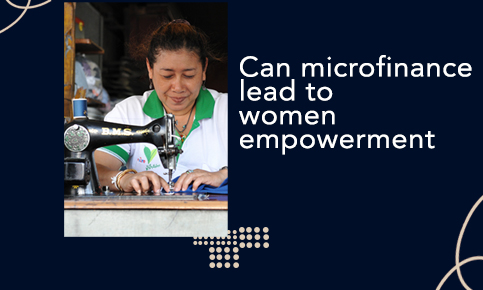
Microfinance is recognized internationally as a tool to combat poverty and augment rural development by creating awareness and empowering women which ultimately results in the sustainable development of the nation. As per the census, women have been the most underserved, underprivileged and discriminated strata of the society around the globe. Empowering women begins with changing the power dynamics and other societal, traditional and cultural factors that repress women. Empowerment requires addressing women’s lack of control over their own lives. This control is directly related to their lack of financial power and inclusiveness. Several studies around the globe suggest that women’s empowerment is linked to financial inclusion and no amount of social programs can motivate women to step out of their houses until and unless they are financially independent. Government and financial institutions now understand the necessity to uplift women by financially including them. It acts as the first step towards empowering them and pulling them out of poverty and reliance on societal and structural conditions. Micro financiers and Self Help Groups (SHGs) assist women, especially in rural India, in availing micro-credit and other financial services boosting their businesses and financial status. They help women deal with socio-economic challenges. It has always been difficult for women to avail business loans at affordable rates and the lack of credit acts as a roadblock for women trying to build their businesses. Microfinance institutions, with their last-mile physical and digital connections, can help women entrepreneurs to overcome these challenges. As per reports, 77% of women have a bank account with a financial institution and as per the Global Findex Survey, only 5% of Indian women with bank accounts receive bank loans. Worldwide, microfinance loans serve almost 20 million people living in poverty and 74% of these individuals are women. In India, 99% of the total microfinance beneficiaries are women. There is a far more social value generated when women access formal credit. It offers women the chance to enter the public sphere as businesswomen, expanding their roles beyond social boundaries. Moreover, as women participate in the economy, they become more involved socially and politically. Here’s a graph that explains how the Microfinance Industry’s Gross Loan Portfolio (GLP) has progressed against the number of clients since 2019 and benefitted the underprivileged- Microfinance is recognized internationally as a tool to combat poverty and augment rural development by creating awareness and empowering women which ultimately results in the sustainable development of the nation. As per the census, women have been the most underserved, underprivileged and discriminated strata of the society around the globe. Empowering women begins with changing the power dynamics and other societal, traditional and cultural factors that repress women. Empowerment requires addressing women’s lack of control over their own lives. This control is directly related to their lack of financial power and inclusiveness. Several studies around the globe suggest that women’s empowerment is linked to financial inclusion and no amount of social programs can motivate women to step out of their houses until and unless they are financially independent. Government and financial institutions now understand the necessity to uplift women by financially including them. It acts as the first step towards empowering them and pulling them out of poverty and reliance on societal and structural conditions. Micro financiers and Self Help Groups (SHGs) assist women, especially in rural India, in availing micro-credit and other financial services boosting their businesses and financial status. They help women deal with socio-economic challenges. It has always been difficult for women to avail business loans at affordable rates and the lack of credit acts as a roadblock for women trying to build their businesses. Microfinance institutions, with their last-mile physical and digital connections, can help women entrepreneurs to overcome these challenges. As per reports, 77% of women have a bank account with a financial institution and as per the Global Findex Survey, only 5% of Indian women with bank accounts receive bank loans. Worldwide, microfinance loans serve almost 20 million people living in poverty and 74% of these individuals are women. In India, 99% of the total microfinance beneficiaries are women. There is a far more social value generated when women access formal credit. It offers women the chance to enter the public sphere as businesswomen, expanding their roles beyond social boundaries. Moreover, as women participate in the economy, they become more involved socially and politically. Here’s a graph that explains how the Microfinance Industry’s Gross Loan Portfolio (GLP) has progressed against the number of clients since 2019 and benefitted the underprivileged- Apart from microcredit, microfinance institutions also offer micro-insurance, micro-savings, micro-pensions to poverty-stricken individuals to uplift their financial conditions. As per studies, women are more likely to spend the money they receive on their families and children as compared to men. Hence, empowering women is directly related to offering better prospects to the family and children as well.
The New Age Finance- Wealth Tech
The term ‘WealthTech’ was coined in the early 21st century with the convergence of Wealth with Technology. The concept of wealth management evolved to be known as ‘WealthTech’. Elements like artificial intelligence, big data, SaaS allowed a transformation in the ecosystem of hedging. WealthTech has allowed individuals to ‘personalize’ their finance. By automating and increasing the efficiency, individuals are offered a seamless customer experience while picking hedge plans best suited to them. As per data, India had approximately 4 million WealthTech investors in FY 2020 and is expected to grow by 3x to reach approximately 12 million by FY 2025. The Ecosystem- WealthTech Earlier, wealth management was offered as a ‘service’ by banks or financial consultants but with evolution and introduction of WealthTech, companies are focusing on B2B investments and scaling businesses with personalized hedge plans. For instance, Moneyfront offers fully automated investment advice and recommendations based on its signature scientific algorithms allowing individuals and businesses to customize their investments to maximize profits. The idea of such firms is to empower individuals by allowing them to be self-reliant. Differentiated Services in WealthTech Portfolio Management Tools- Individuals and businesses alike can have their investment preferences and plans listed and showcased on a single platform enabling them to have a bird’s eye view of their portfolio. Robo-Advisors- These are machine learning based tools that automatically analyse customer preference and invest in instruments best suited to them. The goal of the software is to make smart investments with limited intervention. Automated Retirement Plans- Technology has furthered robo-advisors wherein they can devise plans through algorithms that manage an individual’s retirement plan with limited intervention. These algorithms calculate and devise customized plans. Quantitative Investment Strategies- Quants strategy compose complex mathematical models to detect investment opportunities. These quant models make the buy or sell decisions based on discipline without human intervention thereby eliminating any emotional response at the time of trading. Scientific Algorithm Tools- These algorithms enhance trading software by automating real-time trading wherein users can configure the software services according to their preference and requirements. Robo-Financial Advisors- Based on extensive data analytics, robo-financial advisors provide close-to-accurate financial advices to individuals which otherwise was an expensive concept. Company advice users of the best option available to them basis their preferences and budgets. Systematic Investment Plans- Companies are offering a platform that allows users to make a one-time decision that result in repeated investment occurrences. Individuals can choose their hedge plan, quantity and amount and automate the entire process. Big Data Analytics- B2B clients often indulge in sizeable investments and hence, data analytics plays a crucial role for such clients. Earlier, owing to insufficient and unstructured data, financial companies relied on manual analysis. However, with machine learning and data analysis, companies are able to offer better insights with simpler customer journey. Cloud Technology- With cloud technology, financial companies are allowing users to invest and manage their investments on their fingertips. This will further the adoption of WealthTech and users are offered ease along with financial assistance. Conclusion Since the pandemic, India has seen an increase in wealth management as customer sentiments have shifted to a future-centric approach. With introduction of startups in this segment, WealthTech has an opportunity to grow immensely.
Can Crypto lead to Financial Inclusion?
Crypto was introduced to the world in the year 2009 as Bitcoin that aimed to become a decentralized mainstream peer-to-peer payment network and digital currency. Since, several other crypto currencies were introduced that function similar to capital market. Individuals can buy and sell these digital currencies swiftly and real-time which gave rise to the possibility that crypto can be a catalyst towards a financially inclusive society. Today, 2 billion individuals stand unbanked globally of which, 190 million are from India. Crypto can be an aggregator in serving this population and providing them banking solutions. Since crypto was initially created with the aim to change the way we create, store and transfer value, with ease on regulatory framework in India, crypto can help boosting financial inclusiveness. Most of the financially excluded individuals reside in developing regions but these regions also have high Gen Z and tech-savvy population. According to reports, 8% of India’s Gross Domestic Product (GDP) comes from its IT industry. Being said that, India has commendable technical knowledge to create and invest in blockchain instruments and at present, India stands at 2nd place in crypto. Crypto is enabling individuals to contribute to the economy. It is increasing their chances of investing more thereby resulting in increased savings. Since crypto is seen as the future of currency, it poses as a profitable bet for individuals looking to increase their savings. As per reports, India witnessed an increase in crypto trading during the lockdown taking the number to $10-30 million daily. A hotbed of global and open financial experimentation, crypto is tangible, programmable and a modular technology focused on value store, peer to peer micropayment, lending, price discovery, market making instrument. This allows individuals to use it in several ways than hard cash. How is it leading to financial inclusiveness? Blockchain addresses high fees issues by enabling almost real-time and accurate payments, thus reducing transactional costs and boosting speed. It facilitates a decentralized approach and helps in managing financial entitlements. It reduces the risk quotient thereby reinforcing trust amongst two participating parties. India being the world’s largest recipient of remittances, blockchain can boost easy cross order remittances. It can serve as a hedge against inflation and currency devaluation. Cryptocurrency adoption is essential for a financially inclusive society but new technologies don’t always make the cut immediately. With introduction of more crypto-startups, exchanges, applications etc., people will eventually make the big shift and allow a new system of payments. Moreover, from a regulatory point of view, forming a crypto-friendly space is also imperative to boost its usage.
Fintechs Fighting Fraud and Risk Through Artificial Intelligence
Disruption; an aggregator of a number of changes brought about a change in the banking after the crisis of 2008-2009. The crisis revealed loopholes in the banking system and how technology and innovation was the way forward. Whether newer products and services or operations, innovative technology held the potential to improve the overall scenario in financial institutions and credit unions. Today, artificial intelligence (AI), machine learning (ML), big data analytics, robotic process automation (RPA), natural language processing (NLP) etc., have all evolved over time and today, this innovative technology is transforming the financial world especially in the customer experience, fraud and risk arena. Fintechs today are making use of artificial intelligence to curb fraudulent activities, anomalous transactions, risk management etc. However, anomalous activities may not necessarily always be fraudulent in nature; they can also be linked to money laundering. Artificial intelligence has helped minimize the exposure especially since the type of frauds and risks have also evolved with time and technology. Risk and fraud is an inevitable element of any business or process and Fintechs are devising strategies and services to curb these activities with the help of artificial intelligence. Artificial intelligence collects several critical information like IP address, geo-locations, email domains, device information, operating systems, browser agents, phone prefixes etc. Artificial neural network and machine learning algorithms have helped implement these to extract helpful analysis and reports for better performance and risk management thereby, outperforming traditional statistical methods. AI in Financial Crimes Prevention- As per reports, credit card fraud is the most common type of fraud that results in huge losses each year. While eliminating credit card frauds is difficult, it can be minimized by selecting who you choose to on-board. Depending upon the data it is fed, AI can generate a risk profile of a customer thereby intimating financial institutions of possible risks associated with the customer. Detection- Money laundering, a post customer on-boarding element, is a threat to financial institutions. Artificial neural networks have shown improvement in identifying underlying risks by highlighting suspicious patterns. Big data analytics compares current and historical data of customer behaviour, transaction patterns, cash deposits, international transfers etc., thereby assisting financial institutions in earmarking high risk profiles. AI and Data Fintechs are fighting fraud and risk through AI and standard ‘data’ is a critical aspect in receiving desirable results. The output of AI depends on the type and quality of data it is fed and therefore, it is essential to have a standard and quality set of data. The role of artificial intelligence and its sub sets have become a vital part of Fintechs and how they function today. Artificial intelligence has allowed Fintechs to navigate deep water and areas untouched, for instance MSMEs while simultaneously minimizing risks associated with it. Risk, fraud, money laundering, anomalous transactions are different aspects of financial crime that grips financial institutions and artificial intelligence is helping them navigate this deep water.
Traditional Banking: Rise or Collab?
Acceptance of Fintechs is on an upward trajectory owing to digitization in the financial world and with customers embracing the change, the shift is evident. Artificial intelligence, machine learning, robotics etc. have accelerated the acceptance and currently, Fintechs are better placed than before and are contributing to the financial world in multiple influential ways, for instance, they are attempting to bridge the $ 3 trillion global trade finance gap. By forming a strong technological base, Fintechs can do what large financial institutions cannot, i.e., provide swift access to finance along with alternatives to collaterals especially for MSMEs, an otherwise underserved segment. As per reports, MSME loan value has increased to 24.6% in FY 2021 from 16.2% in FY 2017. While Fintechs are still evolving, legacy banks; who have spent decades building their reputation and trust in customers, offer a wide range of products and services yet stand challenged today. While traditional financial institutions have shown little to no desire to reform, Fintechs have emerged as- Customer centric State of art service provider Sophisticated customer journey enabler Bank charters These aspects have allowed them to navigate and penetrate the market successfully. For instance, digital payments have witnessed a sharp growth in India in the past few years. As per reports, India witnessed 48 billion digital transactions in FY 2020 and is set to account for 71.7% of total payments volume by 2025. With Fintechs evolving so rapidly, traditional financial institutions view Fintechs as strong collaborators rather than competitors. Nonetheless, until the regulatory body does not recognize Fintechs as an independent body, they will invariably be considered lucrative alliances. For instance, Niyogin Fintech Limited, India’s unique early-stage public listed company, offers financial assistance to MSMEs by partnering with several leading banks like HDFC, Tata Capital Financial Services, IDFC etc. They are striving towards becoming a ‘banking as a service’ platform. Why should Traditional Banks collaborate with Fintech? Increase Market Penetration- Fintechs can take advantage of traditional financial institution’s swelling customer data they have maintained over the years while offering their ‘banking as a service’ platform. This way, both, traditional financial institutions and upstarts can map out best opportunities for themselves. State of art stack- Fintechs offer state of art technology and service stack to traditional banks which otherwise may require high intensity brainstorming and most importantly, cost. Advanced Technology- Legacy banks often stick to unreformed systems and solutions due to limitations they face. Fintechs offer simple plug and play up-to-date technology and services. Cloud Based Stack- Fintechs offer technology stack that can be accessed on the cloud and so, cybersecurity, uptime performance, data storage and residency will be managed by them. This allows traditional financial institutions to add new scopes, technologies, requirements etc. at a much lesser cost. Increased ROI- With Fintechs offering platforms that enable out of the box services and technology stack, traditional banks can reckon on them for a better prospect thereby increasing their Return on Investment which otherwise is fairly short. Workable Regulations- While the regulatory framework for traditional financial institutions is quite stringent, Fintechs can prototype new technological approaches that work around current regulations and devise offering within regulatory boundaries. Traditional financial institutions and upstarts both have better prospects if synergized. Both can work collaboratively to bridge gaps rather than competing.
How is predictive analytics transforming banking?
Financial Institutions extract information from existing data to ascertain customer patterns and predict future outcomes and trends, known as predictive analytics. They forecast future with acceptable level of risk, reliability and scenarios. Predictive analytics assist financial institutions fetch admissible customer data, identify risk and fraud, screen varying applications, manage customer experience and relationships basis past and predicted variables. Traditional institutions and upstarts are manovuering through this transformation and relying on the outcomes it offers. Presenting a few key transformative elements through adoption of predictive analytics- Credit Scoring- Credit scores are a prerequisite to availing financial assistance from financial institutions; used to predict the ‘propensity to default’ (PD) by a customer. Predictive analytics has enabled financial institutions to measure customer profiles with the help of modeling tools such as credit risk scoring, collection scoring, etc. These scores have allowed financial institutions to analyze and measure their credit risk while offering financial services. Fraud Detection and Prevention- According to a survey by KPMG, banking fraud has risen by 60% globally in recent years. Scams, phishing, data theft, identity fraud, etc. have become common and predictive analytics has enabled financial institutions to identify risk patterns and curb fraud. With the help of monitoring systems that scan data continuously, suspicious activities are triggered helping financial institutions assess the risk quotient. Risk Assessment- With financial institutions competing for ‘financial inclusion, they are targeting segments with limited to no credit history, putting themselves into high-risk range. Moreover, onboarded customers pose the risk of money laundering. Predictive analytics helps financial institutions by analyzing profiles of customers with limited information and highlighting high-risk profiles by analyzing transactional data. Customer Experience (CX)- With CX gaining prominence in recent times, financial institutions are continuously attempting to improve it at each consumer touchpont. Predictive analytics has helped them understand customer preference, need, behaviour, pattern, etc. thereby offering personalized services that enhance the overall customer journey. Investment Decisions- Investment bankers were heavily invested in for the expertise they possessed in the financial arena. Predictive analytics has allowed financial institutions to reduce their manpower cost by introducing robo-advisory services. For instance, Moneyfront, a Robo-advisory wealth tech platform, offers personalized investment options through advanced scientific algorithms. Product Development- Financial circles are growing highly competitive with the launch of newer and innovative products to match customer expectations. With the help of artificial intelligence, machine learning, big data analytics, etc., financial institutions are able to get critical consumer insights that are then implemented for product development. Customer Support and Retention- In a highly competitive area where customers are gratified, it is imperative financial institutions take note of customer perception and satisfaction degree. Predictive Analytics gives financial institutions insights into customer expectation and decision making criterias thereby, assisting them in retaining customers. Challenges of Predictive Analytics Predictive Analytics look for patterns and behavioural science in every scenario and so, its rulings and analysis are basis of the data it is fed through interactions, perspective gathering, demographics analysis, consumer behaviour etc.Therefore, financial institutions must procure and manage quality data to match customer expectations since feeding substandard or incorrect data can result in detrimental results. Cross-selling, upselling, customer satisfaction trends, operational efficiencies etc., are a few more elements offered by predictive analytics that has successfully assisted financial institutions in making data driven decisions and multiplying their service and product stack while maintaining efficacy.
Gaps left by Financial Institutions that gave rise to Fintechs
‘Finance’ has always been an indispensable part of our society. Earlier, an unorganized lending system reigned the market that was then taken over by an organized brick and mortar model and today, with advancement, Fintechs are competing fiercely for a substantial stance. Gone are the days when the idea of integrating finance with technology was a fantasy for a bunch of visionaries. Today, it is here and now! Since the financial crisis in 2008, the banking landscape has been undergoing a steady change. The Return on Equity (ROE) has fallen considerably challenging the existence of traditional financial institutions. The said transformational change can be attributed to the overall evolution of the banking system. But, certain gaps accelerated the revolution of a contender; Fintechs. Stated are a few key gaps that paved the way to the rise of Fintechs- Adoption of Digital Transformation- As per a report by the Massachusetts Institute of Technology (MIT), going digital can reduce the costs of banking by a massive 60–80%. But, since banks have limited their footprint to fundamental offerings like lending, investment, cards, etc., they are quite late in joining the digital wave. Banks earn by adding layers and keeping their operational activities complex and so, the customers have become weary of it. By bringing in technology, Fintechs have taken advantage of this fatigue. Patrimonial Infrastructure- The core banking solution is composed of old data sets that are being used around the globe to this day. Earlier, the said infrastructure offered banks stability and security but with new alternatives creeping in, these data sets come across as medieval. However, the said infrastructure is so deeply integrated into the banking system that changing any aspect may do more harm to the system than good. Hence, banks choose to remain risk-averse and skip the adoption of alternatives. State of Art Services- Traditional banks enjoyed a monopoly for the longest time until Fintechs challenged them. Whether it was lending or payments, customers were hassled by complex procedures and timelines. Fintechs are enriching customer experience by doing away with vile operational activities. Moreover, with the help of Artificial Intelligence, they are offering customers exactly what they need! While Fintechs have been more customer-centric, traditional banks were more money-centric. Inadequate Customer Engagement- Since financial institutions worked in a reverse order earlier wherein they waited for a customer to approach them, customer engagement did not hold any gravity. Informing customers of all their available options and choosing a state of art service is an evolution brought by Fintechs. Where financial institutions have attributed more importance to business, Fintechs have switched the attention to Customer Engagement and Experience (CX). CAPEX model- Traditional financial institutions have often been thick in the book owing to the CAPEX model they follow. With inherent expenditures, it is almost impossible for traditional financial institutions to pass on any extra benefit to their customer, a loophole Fintechs have heavily banked on. Introduction of CryptoCurrency- Although cryptocurrency has not received a green signal from the regulatory bodies in India, it holds the potential to become a disruptor. Its underlying program can simplify several financial processes. While money has been a vital part of our lives for centuries, converting it into a digital asset will enhance customer journey and experience. Financial Assistance to MSMEs- While financial institutions neglected MSMEs owing to their sporadic business cycles and cash flow, Fintechs specifically targeted the sector. For instance, Niyogin Fintech Limited, a unique early-stage Fintech, offers impact-centric financial assistance to MSMEs intending to empower them. Traditional financial institutions have always been wary of testing deep waters and appraising their product and service stack. At present, 1.7 billion adults remain unbanked globally of which, two-thirds of them own a mobile phone. While the limitations faced by financial institutions retrained them from penetrating markets, Fintechs are moving head on to cater to all the untouched segments thus, filling the void left by financial institutions.
How are Fintechs Redefining Customer Journey
Customer experience is now an integral part of most industries. With Fintechs coming in and challenging the traditional methods of addressing the customers, they are also redefining customer experience. Upstarts, i.e., Fintechs are taking it upon themselves to change a number of old age methods and many of these may not even associate with the financial industry. Most importantly, upstarts have recognized and therefore attributed great significance to Customer Experience (CX) and are working towards enhancing the overall customer journey. Subscription to graphs, pie-charts, dashboards and reports alone are trivial instruments. Today, Fintechs are getting customers involved in their own personal finances by empathizing with them over their challenges, creating simplified and consistent processes and building trust therein. Fintechs are therefore exhibiting that by automating upfront one can scale CX personalization without a significant increase in cost. For instance, firms are setting up auto-chatbots who act as first point of contact when a customer approaches for assistance. Apart from the fact that these chatbots are available 24×7, they also help resolving basic grievances or queries or even sharing base level information giving businesses a personalized effect. Robo-Advisors give personalized service to a large number of customers that otherwise cannot afford traditional advising. Through ‘platformification’ and open Application Programming Interfaces (APIs), Fintechs are enabling operational advancements offered by Robotic Process Automation (RPA), chatbots and Distributed Ledger Technology (DLT) with great accuracy. At present, Fintechs are focusing on key areas of agility, digitalization, personalization, artificial intelligence and operational excellence to achieve effective customer experience within competition and rising customer-centricity. For instance, earlier where customers had to involve third party advisors to manage and grow their wealth, today, with the help of scientific algorithms that compute customer preference against their investment amount, customers are able to invest and manage their own wealth. This technology has offered customers the ease of availing all services on the same platform while eliminating additional costs. Since customer expectations and preferences are ever evolving, especially of the Gen Z, they demand quick, stable, secure, omni-channel, to-order and individualized interactions – and they have little patience for those that fail to deliver. At present, while technology is at the forefront, firms need to align their strategy and objectives with innovation to grow and sustain within a highly competitive market that emphasizes on a seamless and consistent customer journey.
Fintech Growth Hacks

FinTechs are reimagining the entire banking space by revolutionizing several processes and services. They have made ‘finance’ seamless and quick while taking a paperless, presence less and cashless approach. At present, India comprises of 2000+ Fintechs, most of which are based out of Bangalore. With a sudden rise and success of Fintechs in the financial arena, the question arises – How have Fintechs navigated so quickly? Here are some Fintech growth hacks- Technology is the KEY- Though technology was introduced to the banking system in the 1970s, it was dominantly a back office tool. Fintechs revolutionized and placed themselves as “Digital first” banks, a fairly new concept in India. They strategically leveraged technology to their benefit and offered innovative products and services that addressed customer problems and enhanced customer experience. Innovation at the forefront- While Fintechs introduced new products and services for customers, they also continually upgrade themselves with technology advancement for better innovation. For instance, with the help of big data analytics, Fintechs analyse and synthesize customer journey. This innovation has changed the landscape of banking as it has enabled financial institutions to offer customer centric services. Using psychological tools- Fintechs do not wait for the need to arise rather, they leverage technology to understand customer preferences, needs, pattern, behaviour, etc. and create a perception. For instance, Buy Now, Pay Later, a Fintech innovation, allows customers to purchase today and pay on a later date. This innovation has allowed customers to indulge in purchases and extend their budget. Improvising customer experience- Fintechs have introduced a contemporary style of functioning and generating business. By shifting from a Capex model and reducing their Opex significantly, Fintechs are passing the extra benefits to their customers.For instance, Fintechs offer cashbacks, rewards, vouchers, discounts etc to attract customers to transact with them while ensuring the customers benefit as well. Customer-centric approach- Until recently, financial institutions followed a business first approach rather than a customer first approach. Meaning, banking was more money centric than it was impact centric. Fintechs introduced an alternative approach by putting customers on top priority thereby, creating an impact. Today, customers are swamped with options and benefits which means, financial institutions require a unique selling proposition. One-stop solution- Whether it is lending or smart investments, Fintechs have revolutionized the financial ecosystem by aligning technology with finance. They offer seamless solutions that allow customers to transact, invest, insure etc. on one platform, on a single click. Strategically scaling up- Instead of cramming into already exhaustive spaces, Fintechs are introducing fresh innovations to the market. For instance, CRED’s Book Now, Travel Later offering- With travel rules and regulations changing daily, CRED now offers a plan that allows its customers to reserve hotel rooms today and pay as and when they travel. Since this is insured by CRED, customers have the liberty to travel whenever they feel safe while not missing out on their choice of hotels. Fintechs are slowly hacking customer psychology and launching products and services that resonate with customer needs and preferences. At present, although the regulatory framework does not allow Fintechs to operate solely, they have successfully found a mark for themselves through some unique hacks.
How Fintechs are helping MSMEs bridge their gap of Cash Flow Cycles
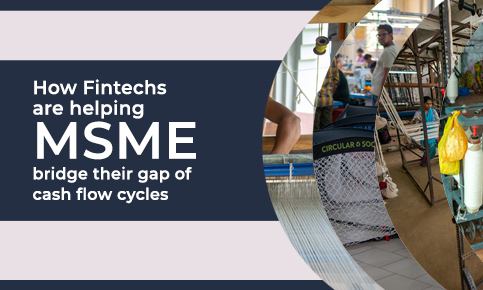
India is home to 6.3 crore Micro, Medium and Small Enterprises (MSMEs). While MSMEs hold a major share in the Indian economy, they often face cash flow limitations. Until now, traditional banks were weary of extending capital assistance or loans to MSMEs citing their sporadic cash flow and volatile and vulnerable business cycle that largely depends on seasonality, labour costs, natural calamities etc. MSMEs contribute around 6.11% of the manufacturing GDP and 24.63% of the GDP from service activities as well as 33.4% of India’s manufacturing output. Today, the MSME sector is regarded as an “opportunity overlooked” by Fintechs, rather than a threat. This attitude is transforming how MSMEs were always viewed. Earlier, where MSMEs struggled availing capital for production, expansion etc., resulting in a build-up of non-performing assets, today they are being focussed on and empowered. Availing credit from traditional banks often required a collateral or credit report that MSMEs did not possess and hence, made them ineligible for loans. Today, Fintechs are reshaping how MSMEs have access to working capital and manage their cash flow. With the help of Artificial Intelligence, Machine Learning and Big data analysis, Fintechs analyse various aspects like credit risk, eligibility, cash flow, business behavioural pattern, etc. and ascertain a business’s credit limit thereby eliminating the need of preceding credit information. This has helped MSMEs since their eligibility does not solely depend on a collateral or credit information anymore rather, on their business pattern. For instance, Niyogin Fintech Limited, an impact centric Neobank, focusses solely on empowering MSMEs. With the help of advanced algorithms, they generate end to end business analysis report that proves credit eligibility. The said algorithm analyses aspects like credit risk profile, credit eligibility, business cash flow, loan tenure, etc. With automated pricing and decision engines, loan disbursals are often quick. Furthermore, Fintechs are bridging cash flow gaps by ascertaining current and projected cash flows of MSMEs and deploying technologies to get an accurate understanding of their cash conversion cycle. This analysis enables MSMEs avail financial assistance easily. The cash conversion cycle expresses the amount of time (in days) it takes for a company to convert its investments in inventory and other resources into cash flows from sales. Apart from lending, Fintechs are also enabling MSMEs manage their cash flow by digitizing their entire receivable and payment methods. This helps MSMEs fasten their cash flow in and out of business quickly. Where earlier 82% of small businesses failed due to poor cash flows and management, today by empowering MSMEs, India has seen an increase in MSMEs by 18.5% CAGR between 2019 to 2020. Since MSMEs often use a single bank account, Fintechs have converted this into an opportunity by building technological solutions that check net cash flows and expenditure of the business. While this helps financial institutions in reducing their risk quotient when transacting with MSMEs, it acts as ‘digitization in the unorganized sector’ for MSMEs. Fintechs have further allowed MSMEs invest their surplus income profitably through ‘smart investments’. For instance, Niyogin Fintech Ltd, through Moneyfront, offer Wealth Tech as a service. Based on mathematical set of rules, they analyse vital parameters like past performances and risk-return ratio, etc. & provide fund schemes that match your investment objective. While traditional banks had rigid procedures, limited access to funds, technological barriers, Fintechs are working towards bridging the gap by innovating and digitizing solutions and processes, respectively, thereby improving and boosting cash flow cycle of MSMEs.
Embedded Finance
The understanding and implementation of technology in various aspects has allowed us to transform how we perform financial tasks. Today, we can initiate a number of financial tasks at a click! And, it only gets innovative as we delve deeper. Finance is no longer associated with ‘banking’ only rather, several businesses are offering it as an extension to their existing service stack, referring to it as Embedded Finance. Embedded finance is the integration of financial services into a traditionally non-financial platform. This integration allows customers to access financial services, for instance- payments, within the service app. Earlier, if a non-financial business would want to offer a financial service, they would’ve had to build a corresponding financial arm with their organization. Today, with the help of embedded finance, all it takes is integration thereby, lowering expenditure significantly. Embedded finance has enabled businesses to increase their customer lifetime value by offering them a complete journey on a single platform while diversifying their product stack. As per Bain Capital, embedded finance has the potential to become a USD 7+ trillion dollar market, while also being referred to as the ‘fourth platform’. The given target does not seem unattainable since Embedded finance has branched out to various types. Here are a few examples of businesses that have adopted Embedded Finance- Examples of businesses that use Embedded Finance Type of Embedded Finance Business Embedded Payments Zomato, Uber, Big Basket Embedded Lending Croma, Amazon, Flipkart Embedded Investments Zerodha Embedded Insurance BMW, Honda, Tata Embedded Payments- This is used while buying a product or availing a service through a non-financial business. The check-out and payment settlement process is now a part of the platform rather than an extension. Severalbusinesses also offer Embedded Card Payments, also known as smart cards, virtual cards, or expense cards, that allows an individual to transfer cash electronically. Embedded Lending- Non-Financial businesses offer loans with a credit limit at the time of purchase which otherwise, was a lengthy process. Buy now, Pay Later is an appropriate example to explain embedded lending, quickly and seamlessly. Embedded Investments- Embedded investments enables investment by offering users a single platform to invest and manage their money. It allows users to invest in various financial offerings like capital market, mutual funds etc without leaving the existing platform. Embedded Insurance- Businesses collaborate with external insurance companies rather than introducing an in-house product or service. Insurance companies integrate transactional APIs and technologies into their insurance solutions to provide service on mobile apps, websites and other partner ecosystems. Embedded Banking- It is when services similar to what banks provide are offered by non-financial players, apart from critical offerings restricted to banking institutions only. It allows you to make investments, apply for loans, manage your transactions etc., on its platform. Embedded finance is enabling companies to widen their demographics while offering an end to end solution on a single platform. Businesses from various domains are adopting embedded finance to stay ahead in their area of competition.
SaaS led transformation in Fintechs
Digitization has transformed the way businesses function today. Organizations are investing in technology for efficacy and optimization of internal processes to build business models with enhanced customer experience. Today, technology is all over and changing the dynamicity of various internal and external processes by integrating various bits and processes on one platform. Product development and services companies have been at the forefront of driving this digital transformation by introducing Software as a Service (SaaS) based offerings. Software as a Service, also known as Web-based Software, On-demand Software or Hosted Software is a way of delivering applications digitally- as a service. It comes as a respite to organizations that invested heavily in professionals and in-house software earlier. Today, with the help of SaaS services, instead of installing and maintaining software, one can simply access it through the internet, freeing themselves from complex software and hardware management since the applications are run on the SaaS provider’s servers and hence, entirely managed by them. The SaaS framework has enabled several blooming Fintechs to hover from launch to profitability in a short span by offering them the liberty to build a complete business model on it. In doing so, Fintechs have drastically increased their scalability while pulling down operational expenditure. Also, it has allowed Fintech start-ups to outflank their competitors by simply adopting the SaaS model for online transactions. The new age Fintechs, who aim for market dominance, compete to build the best possible solutions for the industry and adopting cloud based framework has been a game-changer for them. Adopting SaaS has helped Fintechs understand volatile business cycles and demand patterns while simultaneously making a paradigm shift from a Capex to Opex costing model. This change in the costing model has allowed Fintechs to augment their growth by investing more in operational activities like data analysis, machine learning, artificial intelligence, etc. Big data analysis, Machine Learning, Artificial Intelligence has enabled Fintechs to bring a tinge of freshness and innovation to the table where the preferences of the customers they are dealing with are highly dynamic. SaaS has enabled Fintechs to launch customized and configurable interfaces to match customer preferences while improving operational control as well. While questions of quality of software providers, certifications, process, etc., stopped financial institutions from adopting SaaS in the past, today, it offers them benefits such as data security, cost optimization, deftness, scalability and configurability. Awareness has been a major driving force behind this shift. Cost effective pricing models allowed banks to reduce their CAPEX substantially which paved way for early stage adoption of SaaS. Furthermore, it also enhances compliance, a significant fragment in the financial world, by automating recurrent aspects thereby reducing irregularities. SaaS has helped financial institutions in prioritizing, reducing and realigning their expenditure. While resistance is a thing of past, at present, SaaS is widely used and heavily relied upon by financial institutions.
Revolution of Lending Against Digital Gold

The Yellow Metal; Gold has been a part of our society for a very long time. For Indians, gold is considered much more than a hedge. While it is a legacy in many parts of India, it is an investment to mitigate financial risks during inflation, economic, social and geographical crisis. Citing this sentiment and furore for gold, financial institutions introduced the concept of ‘organized lending against gold’, a concept otherwise widely practiced in the unorganized sector. NBFCs like Muthoot and Manappuram, who control about 90% of the gold loan market, extend loans against physical gold. Due to an emotional attachment to the gold, individuals seldom choose to sell their gold in times of need, rather they choose to pawn it. And hence, NBFCs view lending against gold as a lucrative option since defaults against gold loans are comparatively lower. During the pandemic, lenders witnessed a significant surge in the demand for loans against gold as borrowers faced an immediate and temporary cash crunch. In most scenarios of an immediate financial crunch, the foremost step one takes is either liquidating or taking a loan against their valuable assets to keep the cash flow in motion. Today, with technology joining the equation, we are introduced to ‘GoldTech’. Where gold has been steeply priced in the market, the pandemic paved the way to an innovative form of lending against gold- Lending against Digital Gold. Financial institutions partner with third-party platforms that enable individuals to purchase gold digitally. The said gold can be converted into physical gold at any point if required. If not, it can be treated as an investment with the bank. For instance, DBS Bank India has partnered with SafeGold, a third party, to offer its customers a platform where they can buy and sell digital gold. This technology has now furthered where consumers will be able to take a line of credit or a cash route, depending on the lending partner and will be able to borrow against digital gold. While individuals will have the ease of availing a loan within a few minutes, financial institutions will have the security. With gold following historic trends rather than market sentiments, lending against digital gold is as lucrative as physical gold. Moreover, with about 65% of gold financing in India taking place in the unorganized sector, a paradigm shift can be expected from the unorganized to the organized sector. However, the regulatory and operational landscape for digital gold lending has been quite a challenge for institutions. Indiagold, a lending startup, appears to be India’s first platform to offer loans against digital gold with a capping of Rs 60,000. Leading players like Paytm, Google Pay, PhonePe in the digital gold-selling space in India may partner with such service providers to diversify their portfolio while furthering the recognition of loans against digital gold. India’s changing landscape in the financial arena has presented several prospects to innovate and introduce newer services. A loan against digital gold is an evolution and can prove as a modifier in the gold credit system.
Traditional Banking: Rise or Die?
The origination of the banking saga in India dates back to the 18th century. Ever since, banks and their processes have evolved, adapting to prevalent market needs and sentiments. In comparison to years, banks have progressed and revolutionized but, with the introduction of Fintechs to the equation, banks are now facing the challenge to evolve further and adapt to the dynamicity rather quickly. Today, traditional banks are keen to embrace a variety of tech solutions to enhance their user interface and customer experience. Only in a theoretical sense can banks exist in the digital realm, gain a vast market and penetrate underserved areas on its overheads. Hence, several small banks like Federal Bank, Equitas Small Finance Bank, etc., have allied with Fintech companies to amplify their retail network by combining finance with technology. For instance, Federal Bank launched a mobile-first Credit Card for the millennials and Gen Z in alliance with OneCard, a Fintech, to extend services to their untouched database. Traditional banks possess a sizeable database of customer information in addition to a bulging purse but, limited resources to channel it to their advantage. Fintechs have leveraged this restraint and offer traditional banks the resources and technology they require as the bargaining chip. Traditional Banks Vs Fintechs Traditional Banks are known for their deep pockets and while Fintechs can dent the dominance of banks, they cannot reign the financial world. Moreover, owing to the Indian regulatory framework, banks are still backing most of the transactions creating a sense of dependability for Fintechs. For instance, although Fintechs have introduced the financial world to Unified Payment Interface (UPI), traditional banks act as the alpha in each transaction, therefore, barring Fintechs from operating solely. In the financial world, a license is a prerequisite to lending and hence, Fintechs are heavily dependent on traditional banks when it comes to lending. However, there is a huge gap between the rates offered by traditional banks and Fintechs, creating an opportunity that seems more beneficial to Fintechs. While Fintechs are doing away with brick and mortar model, thereby reducing operational costs, eliminating human intervention is a farfetched objective. Elements like customer on-boarding, collections, etc., cannot be digitized completely thereby, giving traditional banks the extra edge. Looking at the Future / Shaping the Future- Traditional Banks that are striving towards an equal share in the future of the financial world should create a bionic banking structure wherein Artificial Intelligence supports and enhances customer experience and relationships. By leveraging data and analytics, they should aim at serving a broad range of customer needs that extends beyond traditional banking products. This comes as a necessity when global brands like Amazon, IKEA, Mercedes, etc., are eliminating traditional financial intermediaries due to their limited service stack and plugging in software from Fintechs to offer banking services to customers. Furthermore, banks that allow ‘technoid’ counterparts to build a platform and engage people for them to create a bionic banking structure, could end up being highly dependent on these third party service providers, pushing themselves away from the front end and thus, hazing their own brand recognition in the process. The future of traditional banks largely depends on how they collaborate and co-exist with Fintechs while each maintaining its own value proposition. Today, though Fintechs can challenge Traditional Banks in certain aspects, like digital payments, it cannot eliminate or outweigh the whole structure.
5 Ways to Maximize on Cashbacks with Your Credit Cards

Before the plastics, i.e., the cards, money had ruled the market. In the year 1980, The Central Bank of India launched its first Credit Card of Visa brand, and thus, the Indian society was introduced to the concept of credit cards. Ever since credit cards have come a long way in terms of their functionality and offerings to the customers. Today, customers with a credit card are offered various schemes. Cashbacks and Reward Points are 2 aspects of a credit card that banks are leveraging on. Depending upon the transaction size and type of purchase through a credit card, banks offer reward points to customers. These points can be availed in the form of cashback, vouchers, discounts, etc., on the next purchase. In a nutshell, Cashbacks and Reward Points are incentive programs for the customers where a percentage of the amount spent is paid back to the cardholder. It is a rebate from the current purchase that can be applied as a discount on the next purchase. To make the most of the scheme, it is imperative customers know handy ways to maximize cashback through credit cards. 5 handy points to remember- The Right Card- There are numerous options of credit cards in the market, single or co-branded, and it is vital to choose the card that offers you the best interest rates, offers, reward policy, etc. Financial Institutions offer co-branded credit cards, for eg: Flipkart and Axis Bank offer a co-branded credit card with unlimited cashback. Co-branded cards can fetch reward points which may be as much as 5 to 10 times higher as compared to most other cards. Hence, choosing your card wisely is necessary. Monthly Bills & Big Purchases- Choose a card that offers an array of options and fetches you points or cashback while paying your monthly bills and everyday expenses. Paying bills through a credit card in stores, petrol pumps, airlines, etc can fetch you a considerable amount of cashback. For eg: If you make a monthly purchase of Rs 5,000 and receive a 2% cashback, i.e., Rs 100 per month, by the end of the year, the total will amount to Rs 1,200. It is a good amount to add to your savings year on year. Similarly, paying through credit cards for high-value purchases results in higher returns. Festivity Rewards- Follow and keep an eye on limited period offers that are often seasonal. For eg: During Diwali, through cards, banks offer an array of services, products, cashback options, etc., that one may not find on other days. Seasonal cashback is higher than usual and hence, is highly recommended. Adjust on Pending Cashback- Cashback and Reward Points often lapse after a certain period and hence, it is advisable to keep an eye on the dates and utilize the points accordingly to take advantage of various benefits. Multiple Credit Cards- Having multiple cards ensure more benefits as multiple banks partner with a single service provider. These service providers may offer different services, offers, rewards, etc., to each bank and hence, having multiple cards allows you to leverage benefits of your choice. Furthermore, having multiple credit cards also helps you to Improve your Cibil Score. With a little time spent towards strategizing your expenditure, one can rack in more cashback and reward points than ever!
5 Ways to Improve your CIBIL Score

Considering consumer spending across India amounting to nearly INR 22 trillion by the end of the first quarter of 2021, it is evident that Indians have a penchant for purchasing. With newer and innovative payment systems, Eg: Payment Programs in Fintech: Buy Now, Pay Later, consumers are being made well-versed with the concept and different options of a credit system. With several credit options, credit purchases seem to be on an all-time high. As a repercussion of multiple borrowings, individuals may falter in repayment which affects Credit Score, commonly referred to as CIBIL score. What is CIBIL? A Credit Information Bureau India Limited (CIBIL) score is a three-digit numeric summary of an individual’s credit history found in the CIBIL Report (alternatively known as Credit Information Report- CIR). Based on past credit behaviour, borrowing and repayment habits, a score is generated to develop an individual’s financial persona. While the score can range anywhere between 300 to 900, having a score above 750 helps in getting services from various financial institutions. Ways to Improve your CIBIL score : Do and Don’t 1. The Due Date Do Set reminders before the due date hits to repay the basic amount, approximately 5%, to avoid penalties & late payment charges Don’t Default on your EMIs to ensure a favourable credit score 2. Elongate Credit History Do Maintain historical data, records and accounts that have a timeline of your credit history Don’t Discontinue old accounts with a credit history 3. A Customized Limit Do Increase your credit limit as per your monthly expenditure. Your credit utilization ratio also impacts your credit score Don’t Avoid continually reaching your credit limit 4. Forms of Credit Do Consider widening your portfolio with different types of loans & tenure range to ensure better interest rates while borrowing Don’t Overlap your loans to the point of defaulting 5. Credit Report Check Do Review your credit report at intervals to mark or notify discrepancies that may affect your score adversely Don’t Delay filing for errors or disputes with your credit bureau The Bonus Advice- If you have co-signed, guaranteed or opened a joint account, remember that you are held equally liable for missed payments, defaults or negligence in payment, thereby, impacting your credit score. Therefore, while the credit system has enabled many of us to indulge in extra expenses, it is imperative one imbibes healthy credit monitoring habits.
Integrated Fintech: The Futuristic Plan
Until a few years ago, technology used to be a support function for the back office of most financial organizations. Today, it is defining industry for bankers and traders. With the help of Artificial Intelligence, Neural Network, Big Data Analytics, Robotics, etc., Fintech has found its place in the innovation economy. The Role of Artificial Intelligence in Fintech sheds light on how Artificial Intelligence has become a core element in Fintech. The dynamicity of Fintech has led to digitization in the financial world. It has enabled impact and customer-centric services while simultaneously widening its reach to rural India as well. The given stats showcase the growth of financial inclusiveness and fall of unbanked population in rural areas driven by adoption of Fintech powered solutions. With a plethora of scope for further innovation and penetration, Fintech are slowly unboxing more opportunities. On the flip side, Fintech face various threats too that come with technology. Stated are a few significant opportunities and threats integrated Fintechs face- Opportunities Threats 1 Rural Market- Owing to its geographical size and dispersion coupled with weak unit economics of the brick-and-mortar branch model, rural areas create a huge white space for rural centric neobanks. Credit Risk & Collection- While Credit Risk is intrinsic to any lending proposition, rural markets come with their complications of limited collections infrastructure. 2 Expansion of distribution network- Fintech can create a unique distribution network access that offers cost-efficient market access and enables it to provide hyperlocal services. Distribution Risk- To a large extent, distribution depends on financially weak partners, i.e., Kirana stores and this distribution channel largely depends on customer investment and hence, have a possibility to collapse without a robust customer base. 3 Financial Inclusion- With addition of new products at every level of the IndiaStack, the digital infrastructure becomes more solid paving way to more seamless services and product innovation. Technology Risk- Outdated technology, platform downtime, data leaks, and information theft have been widespread to the extent where financial institutions bore an expense of $ 16.9 billion in Identity Theft in 2019. 4 Innovative use of Data- Fintech can devise innovative methods to leverage artificial intelligence more efficiently to generate a more detailed analysis of creditworthiness, preferences, behaviour etc. Competition- At present, there are more than 2,100 Fintech in India with overlapping products and services. While Covid-19 proved unfavourable to several businesses, it opened new opportunities and markets for Fintech. Conclusion Despite the pandemic, the Fintech domain has boomed. According to a Boston Consulting Group report released March 2021, India’s Fintech market is now valued at US$31 billion, projected to grow to US$84 billion by 2025. By providing hyperlocal solutions, Fintech have only begun powering the financial inclusion.
Rural Inclusion in the Financial World
India is home to over 1.3 billion people, out of which 850 million reside in rural areas. Major chunk of this population is underserved in terms of basic banking services. To promote financial inclusion, the GOI introduced various initiatives, most important among them was developing a digital pipeline that involved linking Jan Dhan accounts (currently standing at 430.4 million) with Aadhaar cards and mobile numbers (i.e., the JAM trinity). With the latest launch, i.e., e-RUPI, the GOI has taken another step to fill the gap towards a financially inclusive India. This digital infrastructure acted as an essential backbone for facilitating DBT (Direct Benefit Transfer) flows, adopting social security schemes, and promoting a cashless society by enabling digital payments through RuPay cards. Thus, accelerating the pace of developing an insured, digitalised, secured, and financially empowered society. However, for the rural population to shift from cash to digital modes of transaction, the need for robust interoperable cash in cash out (CICO) network emerged. Hence, in conjunction with the GOI, the RBI launched the banking correspondent (BC) model and set up new brick-and-mortar branches and ATMs in every tier to increase penetration in Rural India and expand the banking network. The challenges faced by Financial Institutions Geographical Base- Given India’s vast geographical base, large population and technological limitations, it becomes difficult for Financial Institutions to reach out to every individual. Limited Infrastructure- Setting up branches to increase touchpoints involves huge infrastructure costs. Regulatory Framework- The BC model has various regulatory requirements like settling withdrawals, complete accounting with bank branches within 24 hours of completing the transaction, etc. Impact of Covid-19 on rural India The rural economy of India is made up of both farm and non-farm industries. Millions of migrant workers send money home, contributing to the country’s non-farm economy, including formal and informal jobs in retail, construction, manufacturing, hospitality, education, and transportation. During the pandemic, the AEPS enabled withdrawals witnessed accelerated growth on the rural payment segment due to the Direct Benefit Transfers (DBT) under the GOI’s social assistance programs. Resultantly, AEPS interbank transaction volume increased by 120% in FY2021 to 0.96 billion. On the contrary, AEPS volumes decreased by 17% to 158 million in the first two months of FY2022 at the second wave. This was because of the high base of April & May 2020, when the GOI transferred money under various social support assistance schemes as a one-time measure. While the pandemic gripped the cities, the gravity was relatively lesser in rural areas. Nonetheless, this opportunity boosted and furthered the step towards digitalizing rural India. Although challenges persist, a slow and steady approach by leveraging digitization can ensure rural inclusion to a large extent, if not completely.
Payment Program in Fintechs: Buy Now, Pay Later
Fintechs have disrupted the way traditional banks have functioned to this day and paved a path for themselves. They have leveraged the estimation that only 8% of the world’s currencies exist in physical form and the rest is cached as mere digits inside computer memory. Fintechs have evolved surrounding this fact by offering integration between financial and technological resources to develop financial solutions for organizations. Furthermore, Fintechs have been enabled newer technologies by integrating Touch ID, Face Recognition, Biometric, etc. to services offered by financial circles. Considering the current pace, as per estimations, the global Fintech market will touch $330 billion by 2022. Before Covid-19, Fintechs were emerging as challengers to traditional banks but, by the end of 2020, Fintechs have progressed drastically and stand as strong contenders today. Today, Fintechs have fabricated and launched a variety of appealing services. With the help of technology, customers are given offers and payment options like never before. A widely used Fintech service- Buy Now, Pay Later (BNPL), a credit system, that has changed the landscape of credits and is swaying the market. What is Buy Now, Pay Later? BNPL is an online payment credit system that allows a customer to purchase today, online or in-store and pay at a future date, often interest-free. It is a type of credit that is transparent, seamless, quick and without any prerequisites. How has it changed the market? The new dynamics in payments has highlighted multiple limitations in the traditional payment landscape. The FinTech drive is slowly covering this inherent payment limitation. Today, a person can avail credit ranging between Rs 10 to Rs 1,00,000 with a repayment span of 30 days to 36 months. The Indian market is under-penetrated by credit cards since only 30 million people use them. Hence, Fintechs took note of this loop-hole and devised a strategy to overcome it by introducing a credit system, BNPL, without prerequisites. As of today, BNPL is the fastest growing online payment method with an estimation to reach 8% in 2024 from 3% in 2020. A survey has predicted that BNPL would grow by 65.5% in India, reaching a value of $ 11.57 billion in 2021. Furthermore, the adoption of BNPL is to rise by a whopping 24.2% CAGR from 2021 to 2028. Realizing the potential of BNPL, several merchants like Amazon Pay, PayTM Postpaid, Flipkart Pay, etc. offer services not only on their platform but also through their channel partners. The amount and duration depend upon the transaction size and vendors but this ensures an increase in their audience size. For eg: Amazon Pay has a credit limit for customers of Rs 10,000 with a duration of 20 days whereas PayTM Postpaid offers a 30-day duration and amounts up to Rs. 1,00,000. Fintechs have anchored a base with BNPL since they do not have to comply with all the lending obligations that apply to banks and other lenders. Moreover, with a boost in online transactions in Tier 2 and Tier 3 cities due to improved internet connections and shopping facilities, BNPL has also managed to widen its reach. Today, BNPL is the most sought-after service by Fintechs and as time progresses, it has the potential to uptick major payment options.
The Role of Artificial Intelligence in FinTechs
Artificial Intelligence, a key element in today’s technology has been around since the 1950s, since the same time when laptops were big machines. In the year 1951, Marvin Mushy and Dean Edmunds built the 1st Artificial neural network that acted as a base to what we call Artificial Intelligence today. If simply put, Artificial Intelligence is intelligence by machines that enables problem-solving. It works on data fed by humans and improves results by applying methods derived from human intelligence at a beyond-human scale. The seemingly simple technology holds a global market of $10.1 billion by virtue of its usage in different sectors. Together, technologies like Artificial Intelligence, Machine Learning, Neural Net Works, Big Data Analytics, Evolutionary Algorithms and many more have allowed various businesses to analyze, categorize and make use of huge, varied, diverse, and deep datasets. Formerly, computers were big machines with hundreds of wires that filled a room. Today, with progress in technology, the seemingly hundreds of wires and a big machine has given way to compact systems called laptops. Similarly, technology has also paved the way for a variety of services that we use and build upon today. Artificial Intelligence has made a big market for itself in the financial world by bringing 70% of Fintechs under its fold. Inorganics Intelligence helps Fintechs in solving human problems by increasing efficiency. Furthermore, it also reduces operational costs and makes internal processes more efficient. It is expected to further reduce operational costs by 22% by 2030 which comes as a big respite to Fintechs as they can maneuver the cost towards customer benefits. The use of Artificial Intelligence in Fintechs Artificial Intelligence is a technology that helps Fintechs in several ways to target, choose and reach their preferred audience. With its attribute of accurate decision making, automated customer support, fraud detections, predictive analysis, etc. it assists Fintechs in building their business while preventing risks and fraud associated with it. Artificial Intelligence has allowed FinTechs to bring down the risk and fraud quotient substantially. As per data, Identity Fraud costed financial institutions $ 16.9 billion in 2019. With the help of Artificial Intelligence, Fintechs decide authenticity and creditworthiness of a borrower thus, improving financial decisions. A loan is a fundamental element offered in the financial world and Artificial Intelligence can effectively analyze credit scoring systems. Based on an individual’s credit score, it identifies discrepancies and can reduce non-performing loans by 50% while boosting return up to 30% improving loan decision-making. It calculates a score based on information derived from payment history (35%), amounts owed (30%), length of credit history (15%), new credit (10%) and credit mix (10%)Artificial Intelligence is a huge contributor in analyzing data in Payment Programs of Fintechs. Another interesting aspect of Artificial Intelligence is customer support. Fintechs often don’t have a physical presence unlike traditional banks and therefore, having 24×7 customer support becomes imperative. With the help of Artificial Intelligence, FAQs along with their answers can be fed into the system to assist several customers at the same time. Artificial Intelligence is also used in a number of other fields like Asset Management, Insurance, Forecasts, Personalization, etc. By leveraging the benefits of Artificial Intelligence, Fintechs have disrupted the financial world with increasingly unique and customer centric offerings and with time and enhancement of Artificial Intelligence, the dynamicity of Fintechs will also evolve.
e-RUPI: A Market Risk or Technology Whisk?

By now, the idea of e-RUPI has taken the market by storm and financial circles are rife with opinions on the future of e-RUPI. While e-RUPI is still in its primitive stages in India, countries like the US and Hong Kong have had the concept of need-based voucher payments for quite some time now. The US successfully wields a concept similar to e-RUPI with the notion to help the homeless with food stamps, for educational purposes, to avail subsidies and benefits. Interestingly, China’s ‘Digital Yuan’ is also akin to e-RUPI by its attribute of no internet connection. e-RUPI, a noteworthy advanced payment system, does not require a bank account, smartphone or internet connection to avail government subsidies or benefits. It is a person and purpose-specific payment system wherein an individual can redeem the said subsidy or benefit from prescribed centers through an SMS code or an e-voucher. At a glance, the idea of e-RUPI seems quite similar to RBI’s design of Central Bank Digital Currency (CBDC), a digital form of government-issued currency aimed at offering cash subsidies to the underprivileged. While a buildup on CBDC is said to be in progress, the GOI launched e-RUPI, which as per experts, addresses the reasons for CBDC’s launch. Earlier, Jan Dhan Yojana, a zero balance bank account, was introduced with an intention to cater to 190 million underbanked and underprivileged through Direct Benefit Transfer (DBT). In eventuality, it was realized that deep rural areas have little to no access to bank accounts and several beneficiaries were duped by intermediaries hence, not yielding the results GOI was anticipating. E-RUPI’s attribute worth highlighting in this scenario is the elimination of an intermediary. This virtue alone will cut down several loopholes and boost timely delivery of government welfare services. Notwithstanding the attribute, to redeem the SMS code or e-voucher, the beneficiary will require to visit nearby center approved by the government and so, a top up plan should be chalked out to mitigate the risk of fraud at this point of contact. While e-RUPI is seen as the mode for welfare services in the first phase, it ensures covering the risk on merchants as well. Being said that, a service provider will receive payment only after the transaction is complete. Hence, safeguarding the interest of the beneficiary and merchants, alike. But, a clear structure on mitigating risks of a service provider is still unclear. e-RUPI and the Financial World highlights the benefits and potential of e-RUPI from a service provider or bank standpoint. Although e-RUPI is in its pivotal phase and is catering to the healthcare sector only, to eventually branch out and cater to all sectors, RBI will robe in more entities who hold a license for prepaid instruments to issue e-RUPI vouchers seamlessly. To venture in a phased and safe manner, the RBI has capped the said vouchers at Rs 10,000 only. Along with healthcare schemes, e-RUPI has tremendous scope in serving initiatives like Pradhan Mantri Suraksha Bima Yojana, Krishi Amdani Bima Yojana, Pradhan Mantri Fasal Bima Yojana etc. Considering 1.36 billion population of India, e-RUPI has a large audience to tap but only time will tell how successful it shall be.
The Future of e-RUPI in India

India, a country with innumerable opportunities, is quickly progressing towards a financially-inclusive society. While the emergence is taking its course, amongst all, the buildout of financial technology is a worthy fragment to highlight. This evolution has allowed us to envisage a cashless tomorrow without a dependency on smartphones or an internet connection. The GOI recently launched e-RUPI, a potential game-changer in the financial world, in collaboration with the National Payment Corporation of India (NPCI). It is a person and purpose-specific advanced payment platform wherein an individual can avail government subsidies through SMS codes/e-Vouchers. To ensure financial-inclusiveness, SBI in partnership with Hitachi Payment Services has designed an application that will enable the masses with smartphones and feature phones alike. The Yono SBI Merchant App, a platform to enable transactions, will ensure the subsidies are allocated to the individual without the need of an intermediary. This will boost transparency and reduce the element of risk for merchants at the time of transaction. e-RUPI and the Financial World highlights the benefits and potential of e-RUPI while keeping the untapped audience, i.e., rural population in mind. At the outset, the government has confined e-RUPI to the healthcare sector by partnering with 1600 hospitals while simultaneously preparing a launch in the agricultural sector in the next phase but, e-RUPI also poses tremendous potential in other sectors, especially the education and food segment. While a robust buildup is required before e-RUPI ventures into other sectors, NPCI is in discussion with several corporates to assess the scope of e-RUPI in terms of employee benefit and corporate social responsibility. This step will enable the government and corporates to measure the social impact of subsidies and benefits, respectively. Furthermore, as per data, Indians indulge in roughly 2 lakh crore domestic remittances a year and citing the potential it holds, e-RUPI can be deemed as a strong challenger to Unified Payments Interface (UPI) in the coming years. It may emerge as the leading payment system in India, given the population, rural and urban, it can bring under its fold. With urban co-operative banks, Fintechs and corporates coming together, e-RUPI is likely to develop further in respect to its functionality and offerings revolutionizing the way neo-banks operate today. It’ll further pave way to a technology first approach in the financial world. Although e-RUPI is in its primitive stage today, it holds and promises significant potential to transform the payment system of India. It is an introduction to a new dimension in the financial world that will ensure financial inclusiveness across population.
The Rise of Women’s Equality Through Financial Inclusion

Much of world history is rife with stories of women fighting for their fundamental rights. Today, as we stand in the 21st century, living in a dynamic era, we see an upward curve towards women’s equality and empowerment. Although India attained freedom in the year 1947, women continue to battle the society for their rights, equal opportunities, and empowerment, especially women from economically backward classes. While the GOI has taken several commendable steps to financially secure and enable the women of India, the real change must ensue at the ground level! Earlier, women were disregarded from a financial inclusion standpoint, but today, not only are women included, but they also strongly lead their household. With the world getting smaller and a person’s reach getting wider, male members often venture out of their villages for better source of income and opportunities, leaving the women in charge of financial and social decisions. This change has enabled women to come together, organize, and build a future in solidarity. With FinTechs such as iServeU offering services like Direct Money Transfer (DMT), which allows money transfer to the remotest of areas, migrants can seamlessly transfer money to their households without the need of an intermediary. With financial independence comes decision-making power, and as per quote, women are better decision-makers than men in terms of household and livelihood. Financial independence gives them the power to make rational decisions that benefit the family, and have complete control on the overall aspects of finance and social decisions. The financial inclusion, decision-making power, and economic adaptability bestowed upon women have helped diminish economic, normative, and social barriers, empowering them to stand at par with men. It has reduced the gender gap and boosted gender equality. The women of today are strong-willed and fierce enough to stand tall amongst a crowd of men. They have come a long way fighting patriarchy and defied all norms that held them back. Women are seen as a source of power today, equaling men and standing shoulder to shoulder!
e-RUPI and the Financial World
e-RUPI and the Financial World e-RUPI, a game-changer technology-driven payment method introduced by the Government of India (GOI) for the rural populace is said to benefit the target audience in abundance. It is an SMS/e-voucher based one-time payment method where individuals can avail government benefits/schemes without the need for a bank account. While it will help and enable the rural population in multiple ways, the benefits to the financial world is another interesting aspect of e-RUPI introduction. Benefits to the financial world With India’s rural populace touching 65.07%, e-RUPI will enable finance-based organizations to penetrate rural areas that were earlier untapped. Making use of its unique feature of “digital sender to the offline receiver”, banks can also cater to areas with limited to no internet connections. Banks can make use of the transparency aspect of e-RUPI and can choose specific needs they want to cater to. Since e-RUPI is government enabled, the risks on banks decrease and further gives them a sense of safety while transacting with the rural population. With the implementation of e-RUPI, intervention of multiple digital partners can be circumvented. While the first phase of e-RUPI specifically benefits masses to avail Covid-19 vaccines, it aims at catering to 190 million unbanked citizens of India. Furthermore, it also aims at providing equal benefits and opportunities across sectors. Like any other service, e-RUPI has its own set of risks involved yet, it is considered as the next big step towards an advanced and digital India.
Traditional Banking: Rise or Collab?
Acceptance of Fintechs is on an upward trajectory owing to digitization in the financial world and with customers embracing the change, the shift is evident. Artificial intelligence, machine learning, robotics etc. have accelerated the acceptance and currently, Fintechs are better placed than before and are contributing to the financial world in multiple influential ways, for instance, they are attempting to bridge the $ 3 trillion global trade finance gap. By forming a strong technological base, Fintechs can do what large financial institutions cannot, i.e., provide swift access to finance along with alternatives to collaterals especially for MSMEs, an otherwise underserved segment. As per reports, MSME loan value has increased to 24.6% in FY 2021 from 16.2% in FY 2017. While Fintechs are still evolving, legacy banks; who have spent decades building their reputation and trust in customers, offer a wide range of products and services yet stand challenged today. While traditional financial institutions have shown little to no desire to reform, Fintechs have emerged as- Customer centric State of art service provider Sophisticated customer journey enabler Bank charters These aspects have allowed them to navigate and penetrate the market successfully. For instance, digital payments have witnessed a sharp growth in India in the past few years. As per reports, India witnessed 48 billion digital transactions in FY 2020 and is set to account for 71.7% of total payments volume by 2025. With Fintechs evolving so rapidly, traditional financial institutions view Fintechs as strong collaborators rather than competitors. Nonetheless, until the regulatory body does not recognize Fintechs as an independent body, they will invariably be considered lucrative alliances. For instance, Niyogin Fintech Limited, India’s unique early-stage public listed company, offers financial assistance to MSMEs by partnering with several leading banks like HDFC, Tata Capital Financial Services, IDFC etc. They are striving towards becoming a ‘banking as a service’ platform. Why should Traditional Banks collaborate with Fintech? Increase Market Penetration- Fintechs can take advantage of traditional financial institution’s swelling customer data they have maintained over the years while offering their ‘banking as a service’ platform. This way, both, traditional financial institutions and upstarts can map out best opportunities for themselves. State of art stack- Fintechs offer state of art technology and service stack to traditional banks which otherwise may require high intensity brainstorming and most importantly, cost. Advanced Technology- Legacy banks often stick to unreformed systems and solutions due to limitations they face. Fintechs offer simple plug and play up-to-date technology and services. Cloud Based Stack- Fintechs offer technology stack that can be accessed on the cloud and so, cybersecurity, uptime performance, data storage and residency will be managed by them. This allows traditional financial institutions to add new scopes, technologies, requirements etc. at a much lesser cost. Increased ROI- With Fintechs offering platforms that enable out of the box services and technology stack, traditional banks can reckon on them for a better prospect thereby increasing their Return on Investment which otherwise is fairly short. Workable Regulations- While the regulatory framework for traditional financial institutions is quite stringent, Fintechs can prototype new technological approaches that work around current regulations and devise offering within regulatory boundaries. Traditional financial institutions and upstarts both have better prospects if synergized. Both can work collaboratively to bridge gaps rather than competing.
Financial Inclusion: Concept and Measurement
The concept of financial inclusion was first introduced in India in 2005 by the Reserve Bank of India. It strives at offering banking and financial services to economically underprivileged individuals. It aims to elevate the socio-economic status of individuals regardless of their income or savings, ensuring the marginalized make the best use of their money and receive financial assistance. With the help of technology, more upstarts are making financial inclusion a widespread reality. The Concept Financial inclusion refers to the financial access by enterprises and households to reasonably priced and uplifting formal financial assistance. Access to financial services can be basis several dimensions, for instance, geographic, socio-economic, etc. Enterprises and individuals residing at different geographic locations will require distinct services from location-specific providers. Financial inclusion appropriately designs products and services that are sustainable and meet the needs of clients with a reasonable pricing structure. Financial institutions that work towards financial inclusion indulge in different techniques for effective delivery and provisions. The development and efficiency of financial systems can have an impact not only on aggregate growth but also on contracting disproportionate income distribution and helping people out of poverty. The Measurement The sub-indices of Financial Inclusion majorly depend upon the following variables- Access sub-index- This value is largely driven by the growth over the years, and recently, in the number of bank outlets manned by own staff, FBCs, total number of savings accounts, post offices, number of subscribers in Mutual Funds (MFs), JAM ecosystem, number of offices for insurance, Prepaid Payment Instrument (PPI) issuers, and Point of Sale (PoS) terminals etc. Usage sub-index- Usage has shown highest growth as compared to other sub-indices, driven largely by ‘Insurance’, ‘Credit’ and ‘Saving & Investment’. Some of the indicators under these dimensions which have shown substantial growth include total number of credit accounts, amount outstanding in the credit accounts, volume and value of Unified Payments Interface (UPI) transactions. Increased use of direct benefit transfer (DBT) for various government programmes also had a positive impact on the index value through higher outstanding amounts in Savings Bank (SB) accounts. Of the three sub-indices, FI-Access with the index value at 73.3, expectedly, is higher as compared to both FI-Usage (43.0) and FI-Quality (50.7) which indicates that building blocks for greater financial inclusion in the form of financial infrastructure put in place over the years needs to be built upon by deepening the FI through focusing on promoting ‘Usage’ and improving ‘Quality’. However, before investigating what influences the measurement in financial inclusion, it is imperative to assess the impact of financial inclusion on society as a whole. Several financial inclusion indicators depend upon multiple variables like outreach, usage, quality, etc. The objective to establish indicators are as follows- Include as many economies while maintaining originality to avoid bias results for a cross country setting Standardizing the measure for all countries to develop a consistent and robust method of financial inclusion To validate other findings To reach a measurement, surveying the people keeping in mind the socio-economic factors like occupation, income, literacy, rural debt value, etc. are vital along with understanding perception and acceptance of the services. Understanding the perception will allow financial institutions to device services accordingly while measuring the impact of these services on households. Another important aspect for measuring the efficacy of financial inclusion is collecting information on credit data, deposits, remittances, insurances, etc. The idea is to measure the impact and not simply open a bank account for the underprivileged. One of the main challenges in the measurement of financial access is the distinction between access to financial services and actual use of services. This is because of the presence of voluntary exclusion in the system. As per a study, 33% of the people voluntarily exclude themselves from financial assistance. This may be due to several reasons like lack of knowledge, cultural barriers, religious beliefs, etc. Therefore, measuring the proportion while regarding the voluntary exclusion is difficult. The measurement of financial inclusion is complex, attached with several layers and most importantly, linked to a perception of different researchers. Although the measurement calculates basis 3 vital aspects- financial participation, financial capability and financial well-being, the exact measurement is still a far-fetched objective. The concept and measurement of financial inclusion will face several hurdles but ultimately bring effective policies and comprehensive services that will benefit and uplift the underserved and underprivileged.